


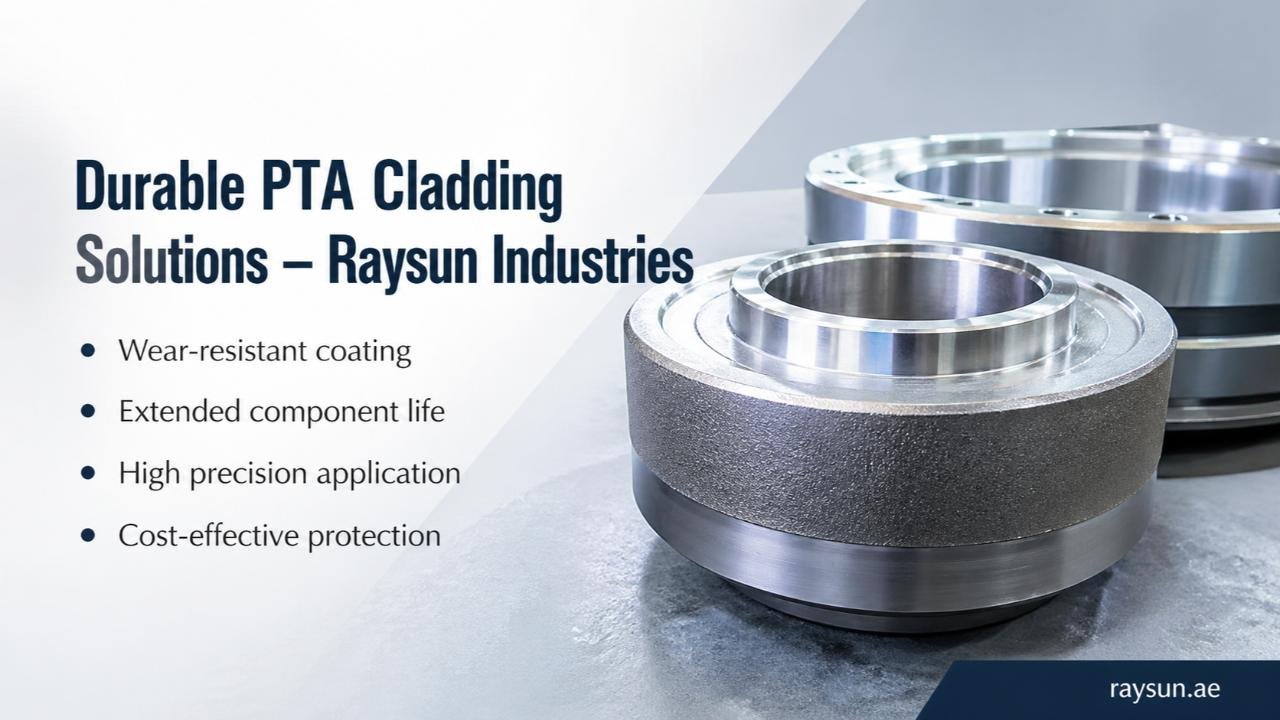
If you’ve ever wondered how heavy-duty machinery survives the brutal world of mining or oil drilling without snapping like a twig, the secret often lies in a process called PTA Cladding. Think of it like giving a piece of soft metal a suit of indestructible armor, but instead of just strapping the armor on, you’re actually fusing it into the skin of the metal itself. When we talk about making things last, we aren't just looking for a coat of paint; we want a deep, permanent connection. That is exactly what happens during PTA Cladding.
The Secret Sauce of Plasma Transferred Arc
To understand how we get such a tough bond, you have to picture a lightning bolt that is being controlled with surgical precision. In this setup, we use a specialized torch that creates a high-energy plasma arc. This isn't just hot, it's intense enough to turn metal powder into a liquid state almost instantly.
The magic happens when this molten powder meets the surface of the base part. Unlike traditional welding, where you might just slap some filler on top, this method creates a very shallow but incredibly strong melt pool. Because the heat is so focused, the Hardfacing layer doesn't just sit on top like a scab. It mixes slightly with the base metal, creating a transition zone where the two materials become one. It’s this molecular handshake that ensures the alloy doesn't flake off when the pressure gets high.
Note: Raysun Techno Industries LLC is a leading provider of PTA Cladding, a vital service for refurbishing worn parts and preventing premature failure. Our advanced plasma technology ensures a smooth, dense coating that outperforms traditional methods. Trust our expertise to improve your equipment’s efficiency and reduce long-term operational overhead effectively.
Why the Bond Strength is Off the Charts
The reason engineers get so excited about this process is the dilution factor—or rather, the lack of it. In many other coating methods, you end up melting too much of the base metal, which waters down the expensive, tough alloy you’re trying to apply.
Key Features of the Bonding Process
-
Refined Grain Structure: Because the cooling happens relatively quickly after the arc passes, the metal crystals form in a very tight, organized way. This makes the surface much harder than if it had cooled slowly.
-
Minimal Heat Affected Zone (HAZ): We want the bond to be strong, but we don't want to warp the whole part. The precision of the arc keeps the damage to a tiny area, preserving the integrity of the rest of the tool.
-
Dense Deposition: There are no tiny air bubbles or gaps (called porosity) in the layer. It’s a solid, thick wall of protection.
-
Customizable Chemistry: You can choose specific metal powders—like cobalt or tungsten carbides—to match the exact type of abuse the machine will face.
By maintaining a Metallurgical bond, the system ensures that the coating becomes a physical part of the component. You could beat it with a sledgehammer or drag it through abrasive sand for a month, and that outer layer isn't going anywhere because it is anchored at a microscopic level.
How PTA Cladding Beats Traditional Methods
In the old days, people used simple thermal sprays. While those are okay for some things, they are basically just sticking stuff to a surface. If you hit a thermal spray coating hard enough, it can peel off like an old sticker.
With this plasma method, we are moving into the realm of fusion. The bond strength is high because the arc creates a high-density energy field that forces the atoms of the alloy to settle into the lattice of the base metal. It’s the difference between using glue and actually welding two pieces of plastic together. One is a surface-level fix; the other is a structural transformation. Because the heat is so concentrated, we get a super clean finish that requires very little grinding afterward, which is a nice bonus for anyone trying to stay on schedule.
Conclusion
At the end of the day, making industrial parts last longer is all about the chemistry of that first millimeter of contact. By using a high-energy plasma stream to marry tough alloys to tough steel, we create a shield that is virtually inseparable from the core. This level of reliability is exactly why experts trust the solutions provided by Raysun Techno Industries LLC. Whether you are fighting off rust, heat, or extreme grinding, the deep-rooted strength of PTA Cladding is the ultimate insurance policy for your equipment.

 English
 Arabic
 French
 Spanish
 Portuguese
 Deutsch
 Dutch
Dutch
 Italiano
 Russian
 Romaian
 Portuguese (Brazil)
 Greek
Greek