


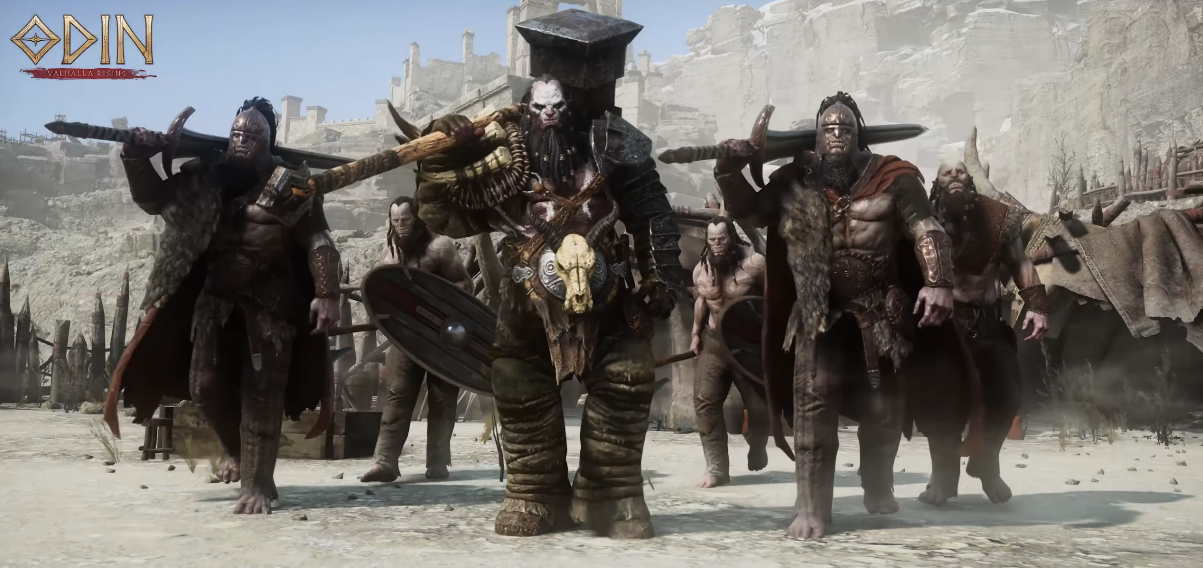
Odin: Valhalla Rising is built around large-scale exploration, mythological combat, and progression systems that increasingly reward coordinated group play. Among its most important cooperative features is the Party Dungeon system, a structured PvE activity where players team up to challenge bosses, clear waves of monsters, and earn valuable rewards.
Unlike solo content, Party Dungeons emphasize teamwork, Odin Diamonds, and efficient execution under limited entry resources. Understanding how the system works is essential if you want to maximize rewards and avoid wasting your weekly entries or tickets.
This guide breaks down everything you need to know: entry rules, matchmaking systems, dungeon flow, combat progression, rewards, and important restrictions.
1. Party Dungeon Overview & Entry System
Party Dungeons are designed as 4-player cooperative instances, consisting of:
1 Party Leader
3 Party Members
Each dungeon contains:
Regular monsters
Mini-boss encounters
A final boss fight
Available Party Dungeons
There are four themed dungeons, each inspired by Norse mythology:
Sea Serpent’s Lair
Face relentless waves of monsters and ultimately defeat the massive sea serpent Jormungandr.
Lost Giant’s Den
Battle rogue giants and legendary beasts like Skoll and Hati, culminating in a fight against Fenrir, the legendary wolf.
Dwarven Royal Tombs
Navigate ancient tomb defenses while stopping Loki, the Champion of the Void, from capturing Surtr.
Deadman’s Dock
Wield the fragmented power of Surtr’s Shard and face Hel, Queen of Doom, alongside her undead army.
Each dungeon is not just a boss fight—it is a progression gauntlet requiring coordination and sustained combat efficiency.
Entry Requirements
Before you can enter any Party Dungeon:
You must complete the required main questline tied to that dungeon.
Entry is restricted by a weekly system and ticket economy.
Weekly Free Entries
Every Monday at 04:00, each character receives 3 free entries.
After Free Entries Are Used
Additional entries require Party Dungeon Tickets.
Important Rule
Entry counts (free or ticket-based) are only consumed when rewards are claimed, not when you enter.
This means you can complete a run but fail to receive rewards if conditions are not met at completion.
2. Joining a Party Dungeon & Matchmaking
Each dungeon supports flexible party formation. A party always consists of four players, but how you form it can vary depending on your preference and speed needs.
Party Structure Rules
1 leader + 3 members
Leader can transfer leadership anytime
Parties can start even if not full
Ways to Join a Dungeon
1. Enter (Manual Join)
You browse available parties and join one directly.
Best for experienced players who want control
Lets you choose parties with specific goals or strength levels
2. Backfill (Mid-Run Join)
You join a dungeon already in progress.
You enter at the current progression point
Useful for quick runs or filling empty slots
Risk: less control over early dungeon progression
3. Matchmaking (Random Party)
The system automatically places you into a party.
Fastest entry method
No need to manually select groups
However, coordination may vary
⚠️ Important limitation:
If you die in a matchmaking party, you cannot re-enter that same party.
4. Create Party (Leader Role)
You form your own group and lead the dungeon run.
Full control over party composition
Can invite friends, guild members, or recommended players
Leadership management includes kicking or transferring leader role
Party Invitations
Once a party is created, leaders can:
Invite friends
Invite guild members
Invite recommended players
This allows flexible team building based on power level or strategy.
3. Starting the Party Dungeon
Once the party is formed, the dungeon does not begin immediately.
Ready System
Each member must press “Get Ready”
A “Ready” icon appears above prepared players
When all members are ready:
The party leader can press Start
Key Notes
Dungeons can start even without a full party of four
This allows quick entry if coordination is limited
Leadership can be transferred at any time via the party menu (三 icon)
Party Management Tools
From the same menu, leaders can:
Transfer leadership
Kick members
This ensures the party can stay functional even if a leader disconnects or underperforms.
4. Party Dungeon Progression System
Once inside the dungeon, progression becomes structured around objectives, combat flow, and automation tools.
Dungeon Objective Navigation
Players can click on dungeon objectives to:
Automatically move toward the next goal
Reduce manual navigation time
Maintain smooth pacing during combat loops
AUTO Battle System
The AUTO system is a major gameplay feature in Party Dungeons.
AUTO Modes:
1. Attack Party Leader’s Target
Syncs attacks with the leader’s chosen enemy
Best for coordinated boss focus
2. Follow Party Leader
Moves alongside leader
Attacks nearby enemies automatically
Good for grouped clearing
3. General AUTO Battle
Independent AI combat mode
No leader dependency
Useful for less coordinated groups
Party Scaling & Penalties
More party members = bonus monster hunting rewards
Large level gaps (5+ levels difference) trigger penalties
This system encourages balanced party composition rather than power boosting.
Dungeon Exit Rules
Leaving the dungeon automatically removes you from the party
Stability is important—disconnecting or quitting disrupts participation
5. Completion & Rewards System
Clearing a Party Dungeon is based on defeating the final boss.
Completion Condition
At least one surviving party member must defeat the final boss
Once this happens:
Dungeon ends immediately
Reward Distribution
All players receive rewards if they were inside the dungeon at completion, even if:
They died earlier
They were inactive during parts of the run
Reward Types:
Basic rewards (shared)
Personal rewards (individual loot-based bonuses)
Entry Consumption Rule
Entry usage is determined at reward claim:
Free entries are deducted when rewards are claimed
Tickets are consumed the same way
If no entries remain:
The player is removed from the party automatically
Leadership Transfer on Exit
If the party leader leaves:
Leadership automatically shifts to another member
The run continues without interruption
6. Important Notes & Restrictions
Party Dungeons come with several system restrictions designed to maintain balance and focus.
Gameplay Restrictions
Camera mode switching is disabled
World map is inaccessible inside dungeons
Party members cannot engage in PK (player killing)
Death Mechanics
If a player dies:
They can choose to leave the party
Or enter Spectate Mode
Spectate Mode
Lets you observe live party members in real time
Provides a way to stay engaged without active participation
If all party members die while spectating:
Players can exit the dungeon
Backfill System Rules
Leaders can enable backfill during dungeon runs
Maximum party size remains 4 total players
Backfill helps replace disconnected or absent members
Stability Rules
Game crashes or forced closures remove you from the party
Disconnecting mid-run can result in lost participation
Final Thoughts: Why Party Dungeons Matter
Party Dungeons in Odin: Valhalla Rising are not just optional content—they are a core progression pillar that blends teamwork, efficiency, and resource management.
What makes them especially important is the layered system behind them:
Limited weekly entries create meaningful decision-making
Flexible matchmaking supports all player types
Auto systems reduce friction while maintaining coordination
Reward structure encourages full completion rather than partial participation
To get the most out of Party Dungeons, players should focus on:
Consistent weekly entry usage
Building stable party compositions (guild or friend groups preferred)
Understanding AUTO modes for each situation
Avoiding unnecessary deaths in matchmaking parties
Mastering this system doesn’t just improve dungeon efficiency—it directly impacts your overall progression speed, Odin Valhalla Rising Diamonds for sale, and long-term power scaling in the game.
If you treat Party Dungeons as a structured weekly routine rather than random content, they become one of the most reliable sources of progression in the entire game.

 English
 Arabic
 French
 Spanish
 Portuguese
 Deutsch
 Turkish
 Dutch
Dutch
 Russian
 Romaian
 Portuguese (Brazil)
 Greek
Greek