


Cybersecurity teams today are responsible for protecting far more than a single website. Modern businesses operate across web applications, APIs, cloud-connected infrastructure, mobile applications, servers, CMS platforms, and third-party integrations. Each component can introduce vulnerabilities—and testing them with disconnected security tools can create visibility gaps.
This is where a Next-Gen VAPT & Cybersecurity Platform takes a different approach.
Instead of functioning as only a vulnerability scanner, a unified platform brings multiple security testing capabilities together so security teams can discover vulnerabilities, assess risk, prioritize remediation, and generate actionable security reports from one environment.
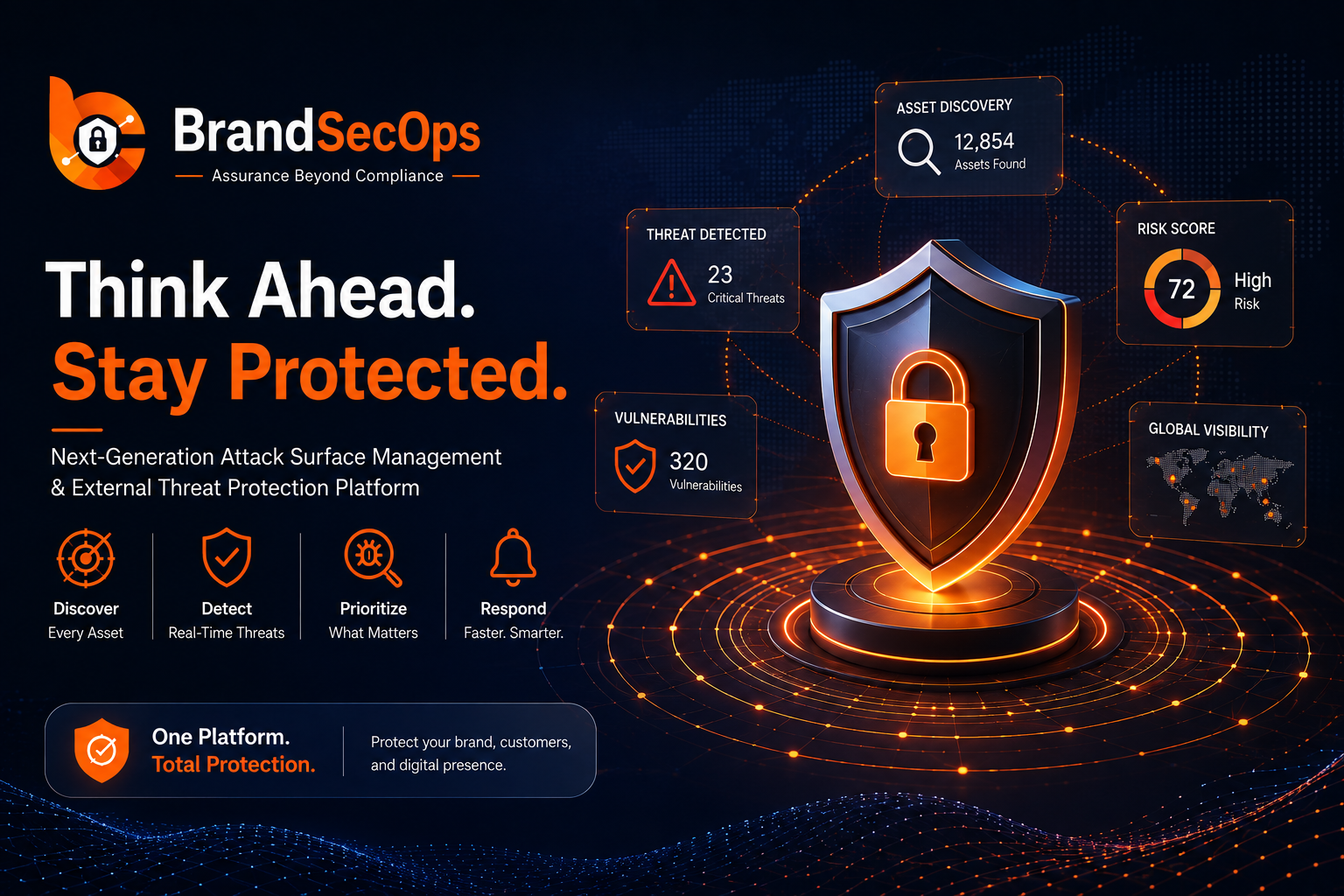
Next-Gen VAPT & Cybersecurity Platform from BrandSecOps is designed around this unified security model, combining VAPT, compliance-oriented scanning, CMS security scanning, and multiple penetration-testing areas into a centralized platform.
What Is a Next-Gen VAPT & Cybersecurity Platform?
A Next-Gen VAPT & Cybersecurity Platform combines vulnerability assessment, penetration testing capabilities, attack-surface discovery, security reporting, and compliance visibility into a single security workflow.
Traditional security programs often depend on separate tools for web applications, APIs, networks, mobile applications, CMS platforms, and compliance checks. While individual tools can be useful, managing results across multiple dashboards can make it harder to understand the organization's overall security posture.
A unified platform simplifies this process.
BrandSecOps provides Quick Scan and Deep Scan options and presents security findings through a centralized VAPT dashboard. Its dashboard includes areas for Web App Pentesting, API Pentesting, Network Pentesting, and Android Pentesting, allowing teams to approach different attack surfaces through one platform.
One Platform for Multiple Attack Surfaces
The biggest advantage of a unified cybersecurity platform is broader visibility. Security teams can assess different parts of their technology environment without building a completely separate workflow for every asset type.
1. Web Application Security Testing
Web applications remain one of the most important attack surfaces for businesses.
BrandSecOps' Website Vulnerability Scanner is a DAST-based solution designed to analyze running web applications. It identifies vulnerabilities including SQL injection, cross-site scripting (XSS), command injection, XXE, HTTP prototype pollution, directory traversal, and many additional web application vulnerabilities.
This allows organizations to identify weaknesses in applications before attackers can exploit them.
2. API Pentesting
APIs are increasingly responsible for connecting applications, mobile apps, payment systems, databases, and third-party services.
An insecure API can expose sensitive information or create unauthorized access paths even when the front-end application appears secure.
A unified VAPT platform therefore needs API security testing as part of its broader security workflow. BrandSecOps includes API Pentesting within its VAPT dashboard, helping organizations treat API security as part of the overall attack surface rather than an isolated security concern.
3. Network Pentesting
Applications do not operate in isolation. They depend on servers, network infrastructure, and supporting systems.
Network security testing can help organizations identify weaknesses in their infrastructure that could contribute to broader compromise.
By bringing Network Pentesting into the same platform as application and API testing, security teams gain a more connected view of vulnerabilities across their technology environment.
4. Android Security Testing
Mobile applications can expose authentication mechanisms, APIs, sensitive data, and backend functionality.
For organizations offering Android applications, mobile security should therefore be part of a wider VAPT strategy.
BrandSecOps includes Android Pentesting as one of the testing areas presented in its centralized dashboard.
This unified approach helps security teams avoid treating mobile applications as a separate security silo.
5. CMS Security Scanning
Content management systems are common targets because they frequently involve public-facing software, plugins, themes, extensions, configurations, and administrative interfaces.
BrandSecOps positions CMS scanning alongside VAPT and compliance scanning, giving organizations another layer of security visibility within the same ecosystem.
More Than Scanning: A Security Testing Pipeline
A modern VAPT platform should not simply send requests to an application and produce a list of vulnerabilities. Effective testing starts with understanding the target's attack surface.
BrandSecOps describes a multi-stage web application scanning workflow that includes:
- Resource discovery – identifying endpoints, sensitive files, and hidden paths.
- Spidering – mapping application resources and links.
- Active scanning – actively testing discovered resources for vulnerabilities.
- Passive scanning – analyzing traffic and application behavior for security issues.
- Version-based CVE detection – identifying vulnerabilities associated with detected software versions.
Its resource-discovery process can include directory brute-forcing, robots.txt inspection, sitemap parsing, known-path lookups, and JavaScript-based endpoint enumeration.
This matters because incomplete discovery can result in incomplete security coverage.
Quick Scan vs. Deep Scan
Different security situations require different levels of testing.
A Quick Scan can be useful when a team needs rapid visibility into potential issues. It can fit into routine security checks or early-stage assessments.
A Deep Scan can provide a more comprehensive testing approach when teams need greater depth.
Having both options makes a unified VAPT platform more practical for day-to-day security operations. Teams can choose a faster assessment when speed matters and a deeper assessment when a more extensive review is appropriate.
Compliance Mapping and Security Visibility
Security testing and compliance are closely connected, but they are not the same thing.
A strong cybersecurity platform can help organizations connect security findings with broader compliance requirements and maintain evidence that supports their security program.
BrandSecOps positions its platform around VAPT, compliance, and CMS scans and displays compliance-related credentials including GDPR, ISO 27001, and PCI DSS on its website.
Organizations should still treat compliance as a broader organizational responsibility. A VAPT platform can support vulnerability management and security evidence, but using a platform alone does not automatically make an organization compliant with every applicable regulation or standard.
Centralized Reporting Helps Teams Prioritize Risk
Finding vulnerabilities is only the first step.
Security teams also need to know which issues deserve immediate attention.
A centralized dashboard can make this process easier by organizing findings according to severity and providing a consolidated view of security results.
The BrandSecOps sample dashboard displays vulnerability categories including Critical, High, Medium, Low, and Informational, alongside metrics such as vulnerabilities found, critical issues, and scan coverage.
This type of reporting helps teams move from simply collecting vulnerabilities to prioritizing remediation.
Why Unified VAPT Is Better Than Disconnected Security Tools
A unified platform can simplify several parts of the vulnerability-management lifecycle:
| Security Requirement | Disconnected Approach | Unified Platform Approach |
|---|---|---|
| Web testing | Separate web scanner | Integrated web testing |
| API security | Separate API tool | API testing in one workflow |
| Network security | Separate infrastructure tool | Centralized network assessment |
| Android testing | Separate mobile solution | Integrated mobile testing |
| CMS security | Separate CMS scanner | CMS scanning within the platform |
| Reporting | Multiple dashboards | Centralized security reporting |
| Compliance visibility | Manual correlation | Security findings aligned with compliance efforts |
| Remediation | Scattered findings | Consolidated vulnerability view |
The goal is not simply to reduce the number of tools. The bigger objective is to create a clearer security operating model.
The Future of VAPT Is Unified and Continuous
Modern applications change constantly. New deployments, API updates, infrastructure changes, software versions, and mobile releases can introduce new security risks.
That makes periodic testing important—but not sufficient as the only security activity.
A more mature model combines automated and repeatable vulnerability assessments with expert security testing where deeper analysis is required.
Next-Gen VAPT & Cybersecurity Platform can serve as the centralized layer for organizations looking to bring web, API, network, Android, CMS, vulnerability discovery, reporting, and compliance-oriented security workflows together.
The objective is simple: give security teams broader visibility without forcing them to manage every security function through a separate tool.
Why Choose BrandSecOps?
BrandSecOps is positioned as a cybersecurity platform rather than merely a standalone scanner. Its security environment combines VAPT capabilities with compliance and CMS scanning, multiple testing categories, Quick and Deep Scan options, vulnerability discovery, and centralized reporting.
For growing organizations, security teams, agencies, and businesses with multiple digital assets, this unified approach can make vulnerability management more organized and scalable.
Ultimately, the value of a Next-Gen VAPT platform is not just the number of vulnerabilities it can identify. It is how effectively it helps an organization discover, understand, prioritize, and act on security risk.
Explore BrandSecOps to bring multiple security-testing needs into one unified cybersecurity workflow.
Frequently Asked Questions
1. What is a Next-Gen VAPT & Cybersecurity Platform?
A Next-Gen VAPT & Cybersecurity Platform combines vulnerability assessment, penetration testing, attack-surface discovery, security reporting, and compliance-oriented security workflows in one centralized environment.
2. What security areas should a unified VAPT platform cover?
A comprehensive platform should cover major attack surfaces such as web applications, APIs, networks, mobile applications, and CMS environments. It should also provide centralized reporting and support compliance-related security activities.
3. Is a VAPT platform only a vulnerability scanner?
No. A modern platform can combine automated vulnerability discovery with broader VAPT capabilities, attack-surface discovery, multiple testing areas, severity-based reporting, and compliance visibility. Automated testing can complement—but does not necessarily replace—expert penetration testing.
4. How does BrandSecOps support cybersecurity teams?
BrandSecOps brings Web App Pentesting, API Pentesting, Network Pentesting, Android Pentesting, VAPT scanning, CMS scanning, compliance-oriented scanning, Quick and Deep Scan options, and centralized vulnerability reporting into one platform.

 English
 Arabic
 French
 Spanish
 Portuguese
 Deutsch
 Turkish
 Italiano
 Russian
 Romaian
 Portuguese (Brazil)
 Greek
Greek