


A Complete Guide for Your Skin
Sun protection is an important part of healthy skincare, especially in a country where sunlight can be intense for much of the year. Many people buy sunscreen simply by looking at the SPF number, but choosing the right product involves several other factors. The best sunblock in Pakistan should provide reliable UV protection while also feeling comfortable on your skin and fitting easily into your daily routine.
Whether you have oily, dry, combination, acne-prone, or sensitive skin, the right sunscreen can help protect your skin from excessive UV exposure. Understanding SPF, broad-spectrum protection, application, and reapplication can make it easier to choose a product that actually works for your lifestyle.
Why Is Sunblock Important?
Sunlight contains ultraviolet radiation that can affect the skin. The two types most commonly discussed in skincare are UVA and UVB rays.
UVA rays can penetrate deeper into the skin and are associated with premature skin aging, including fine lines and loss of skin elasticity. UVB rays are more strongly associated with sunburn and also contribute to long-term skin damage.
Regular sun protection helps reduce direct UV exposure. It is particularly important for people who spend time outdoors, commute during daylight hours, work outside, or participate in outdoor activities.
Sunblock is not only a product for beach holidays or summer vacations. Daily exposure can add up over time, making sunscreen a useful part of a regular morning skincare routine.
What Does SPF Actually Mean?
SPF stands for Sun Protection Factor. It primarily indicates how well a sunscreen protects against UVB radiation.
You may see products labelled SPF 30, SPF 50, or higher. A higher SPF generally provides greater UVB protection when the product is applied correctly.
However, SPF should not be the only thing you consider. A product with a very high SPF is not automatically the right choice if it feels uncomfortable, irritates your skin, or is applied incorrectly.
For everyday skincare, SPF 30 or higher is commonly recommended. People who spend considerable time outdoors may prefer SPF 50, particularly during periods of strong sunlight.
Look for Broad-Spectrum Protection
When buying sunscreen, check whether it offers broad-spectrum protection.
Broad-spectrum sunscreen is designed to protect against both UVA and UVB radiation. This is important because different types of UV rays affect the skin in different ways.
A product that focuses only on UVB protection may not provide the level of overall protection you expect. Reading the product label carefully can help you understand what type of protection you are getting.
How to Choose Sunblock for Your Skin Type
There is no single sunscreen formula that is perfect for everyone. Your skin type should influence your choice.
Sunscreen for Oily Skin
If your skin becomes shiny or greasy during the day, a heavy sunscreen may feel uncomfortable.
Look for lightweight, non-greasy, gel, fluid, or oil-control formulas. A product with a suitable finish can make it easier to wear sunscreen consistently without feeling like your skin is covered with a thick layer.
If you are prone to clogged pores, consider products labelled non-comedogenic, although individual skin reactions can still vary.
Sunscreen for Dry Skin
Dry skin may benefit from a sunscreen that also provides moisturizing ingredients.
A hydrating formula can help reduce the tight or uncomfortable feeling that sometimes occurs after applying sunscreen. If you already use a moisturizer, you can select a sunscreen based on how your skin feels after both products are applied.
Sunscreen for Combination Skin
Combination skin usually has both oily and dry areas.
A lightweight sunscreen with a comfortable finish can be a practical choice. You may not need an extremely rich formula, especially if your T-zone becomes oily during the day.
Sunscreen for Sensitive Skin
People with sensitive skin should pay close attention to the ingredients and overall formulation.
Fragrance-free options may be preferable for some individuals. Mineral sunscreens containing ingredients such as zinc oxide can also be an option for people who find certain chemical sunscreen formulas irritating.
If a product causes persistent burning, redness, or discomfort, stop using it and consider discussing suitable alternatives with a dermatologist.
Sunscreen and Pakistan's Climate
Weather and lifestyle can affect how comfortable a sunscreen feels.
During hot and humid weather, thick products may feel sticky and can mix with sweat. This can make people less likely to use sunscreen regularly.
A lightweight sunscreen can be easier to wear in warm conditions. If you sweat heavily or spend a lot of time outside, consider a water-resistant formula when appropriate.
Remember that water resistance does not mean waterproof protection. Sunscreen may still need to be reapplied after swimming, excessive sweating, or towel drying.
How Much Sunscreen Should You Apply?
Using sunscreen but applying too little can reduce the protection you receive.
For the face, a commonly used practical approach is the two-finger method: apply a line of sunscreen along the length of two fingers and use an appropriate amount for the face and neck.
The exact amount can vary depending on the product and the size of the area being covered. The key point is to avoid using an extremely thin layer simply to make the product last longer.
Do not forget commonly missed areas such as the ears, neck, hairline, and other exposed parts of the skin.
When Should You Apply Sunblock?
Sunscreen should generally be applied as the final step of your morning skincare routine before makeup, if you wear it.
Give the product enough time to settle before prolonged outdoor exposure.
If you are going outside for several hours, reapplication becomes important. Sweat, rubbing, washing, and towel drying can reduce the amount of sunscreen remaining on the skin.
People who spend most of their time indoors may have different exposure levels, but sunscreen remains particularly important whenever significant outdoor exposure is expected.
Can Sunscreen Prevent Tanning?
No sunscreen can promise that your skin will never tan.
Tanning occurs when the skin responds to UV exposure. Sunscreen can reduce the amount of UV radiation reaching your skin, which may help reduce UV-related tanning and pigmentation.
If uneven skin tone or dark spots are a concern, sunscreen should be used consistently. It is difficult for other skincare products to deliver their best results if the skin continues to receive substantial unprotected UV exposure.
Along with sunscreen, using shade, sunglasses, hats, and protective clothing can provide additional protection.
Common Sunblock Mistakes to Avoid
Even a good sunscreen will not provide its intended protection if it is used incorrectly.
One common mistake is applying sunscreen only on sunny summer days. UV exposure can occur throughout the year.
Another mistake is using too little product. Some people also forget the neck and ears or fail to reapply after sweating.
Applying sunscreen only once in the morning may not be enough for someone who spends many hours outdoors.
It is also important not to rely on sunscreen alone. Physical protection, including shade and suitable clothing, should be part of your overall sun-safety habits.
Can You Wear Sunscreen Under Makeup?
Yes, sunscreen can generally be incorporated into a makeup routine.
Apply your skincare products first, followed by sunscreen. Allow it to settle before applying foundation or other makeup.
Some cosmetic products contain SPF, but makeup should not necessarily replace a dedicated sunscreen. People often do not apply enough makeup to achieve the level of protection indicated on its packaging.
A comfortable sunscreen underneath makeup can therefore be a more practical approach.
What About QHC Sunblock?
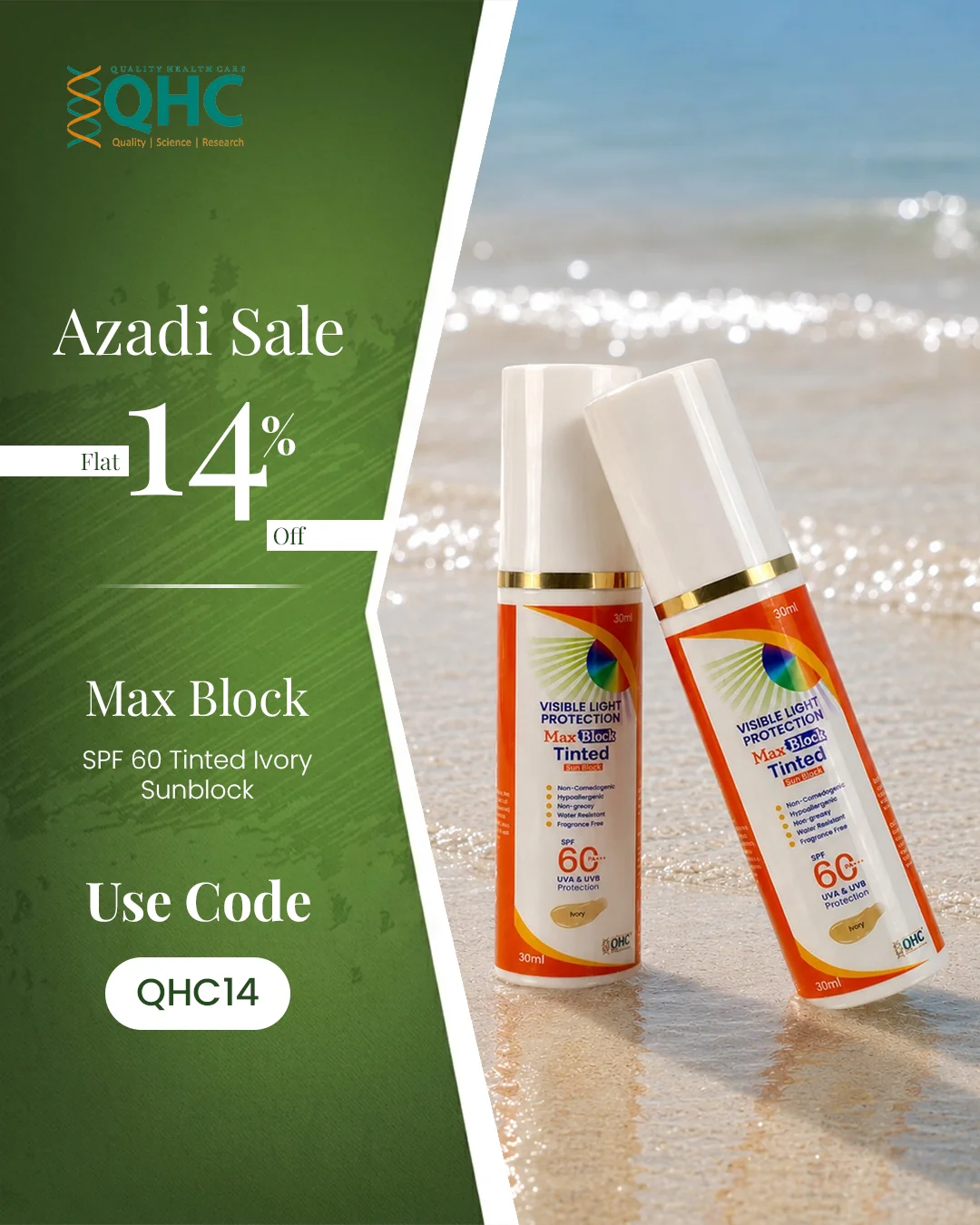
When comparing local skincare options, consumers may come across brands such as QHC. If you are considering a QHC sunblock, review the product label and check its SPF, protection claims, texture, ingredients, and suitability for your particular skin type.
The important thing is not simply choosing a familiar brand. A sunscreen should meet your protection needs and be comfortable enough for regular use.
Frequently Asked Questions
Is SPF 30 enough for everyday use?
SPF 30 can provide useful protection when applied properly. People with substantial outdoor exposure may prefer a higher SPF, such as SPF 50.
Is SPF 50 suitable for oily skin?
Yes. SPF describes the level of UVB protection, not whether a product is suitable for oily skin. Look for lightweight or oil-control formulas if you have oily skin.
Should I use sunblock every day?
If your skin is exposed to daylight, daily sunscreen can be a useful part of your skincare routine. It becomes especially important when you expect significant outdoor exposure.
Can sunscreen remove existing dark spots?
Sunscreen does not directly remove pigmentation. However, reducing UV exposure can help prevent sun-related darkening and support a skincare routine designed to improve uneven skin tone.
How do I find the best sunblock in Pakistan for my skin?
Look for broad-spectrum protection, a suitable SPF, a formula that matches your skin type, and a texture you can comfortably use every day. Consistent application and proper reapplication are just as important as the product you select.
Final Word
Choosing sunscreen should not be complicated. Focus on broad-spectrum UV protection, an appropriate SPF, your skin type, the local weather, and your daily level of sun exposure. A product that feels comfortable is more likely to become a consistent part of your routine.
Remember to apply enough sunscreen, cover exposed areas, and reapply when needed, particularly during extended outdoor activities. Combining sunscreen with shade, hats, sunglasses, and protective clothing can provide additional protection.
Ultimately, the best sunblock in Pakistan is not simply the one with the highest SPF or the most attractive packaging. It is a product that provides suitable protection, works well with your skin, and is comfortable enough for you to use consistently.

 English
 Arabic
 French
 Spanish
 Portuguese
 Deutsch
 Turkish
 Dutch
Dutch
 Italiano
 Russian
 Romaian
 Portuguese (Brazil)