


Introduction
If you've ever worked with audio files, chances are you've come across two of the most common formats: MP3 and WAV. While MP3 is the go-to format for everyday music listening thanks to its small file size, WAV is often required for professional audio work, editing, and archiving. Understanding how and why to convert MP3 to WAV can save you time and headaches, whether you're a musician, podcaster, video editor, or simply someone who wants better audio quality.
This article breaks down what MP3 and WAV files actually are, why you might need to convert between them, and how to do it easily.
What Is an MP3 File?
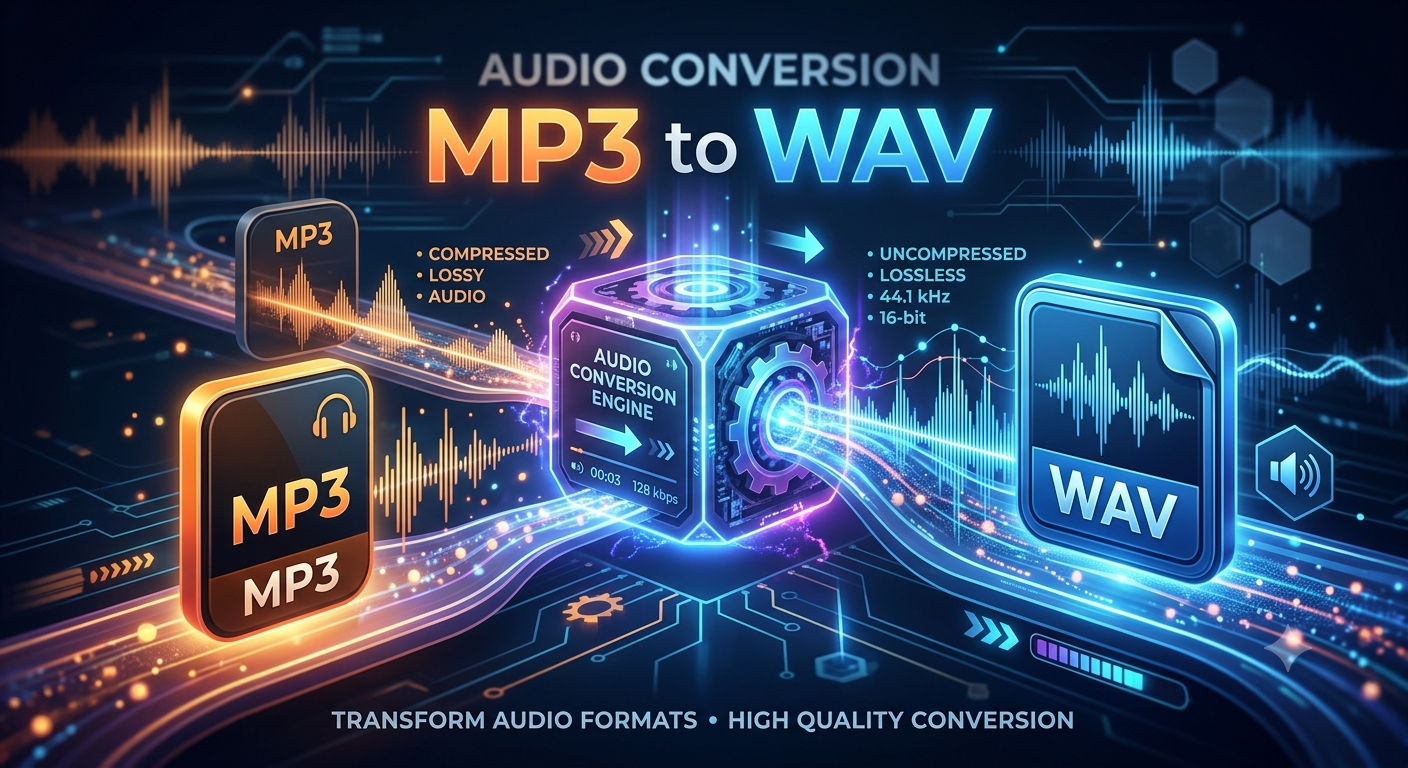
MP3 (MPEG-1 Audio Layer 3) is a compressed audio format designed to reduce file size while keeping most of the audio quality intact. It achieves this through "lossy" compression, meaning some audio data is permanently MP3 to WAV removed during the compression process. This is why MP3 files are so much smaller than uncompressed formats but it also means some quality is sacrificed.
Key characteristics of MP3:
- Small file size, making it easy to store and share
- Lossy compression (some audio data is discarded)
- Widely supported across nearly every device and platform
- Ideal for everyday listening, streaming, and storage efficiency
What Is a WAV File?
WAV (Waveform Audio File Format) is an uncompressed audio format that preserves the complete, original quality of a recording. Because no data is discarded, WAV files sound identical to the source audio but this comes at the cost of much larger file sizes compared to MP3.
Key characteristics of WAV:
- Uncompressed, lossless audio quality
- Much larger file size than MP3
- Preferred format for audio editing, mixing, and mastering
- Common standard in professional studios and broadcasting
Why Convert MP3 to WAV?
At first glance, converting a compressed MP3 to an uncompressed WAV might seem counterintuitive after all, you can't recover audio data that was already removed during MP3 compression. However, there are several practical reasons people still choose to convert:
- Software Compatibility: Some audio editing programs, DAWs (Digital Audio Workstations), or hardware devices only accept WAV files.
- Editing and Production: WAV files are easier to edit without introducing additional compression artifacts, since every edit and re-save of an MP3 can degrade quality further.
- Professional Standards: Broadcasting, film production, and professional audio work often require WAV as the standard delivery format.
- Avoiding Generational Loss: Editing directly on an MP3 and re-exporting as MP3 again causes repeated quality loss. Converting to WAV first prevents further degradation during editing.
- Universal Playback on Certain Devices: Some older hardware, editing consoles, or specialized software only recognize WAV files.
Does Converting MP3 to WAV Improve Sound Quality?
This is one of the most common misconceptions. Converting an MP3 to WAV does not restore lost audio quality. Once data is removed during MP3 compression, it's gone for good. The WAV file created from an MP3 will be larger in size, but it won't sound better than the original MP3 it simply stores the same (already compressed) audio data in an uncompressed container.
The real benefit of conversion isn't improved quality it's compatibility and workflow. Converting is useful when you need a file in WAV format for technical reasons, not for improving audio fidelity.
How to Convert MP3 to WAV
There are several easy ways to convert MP3 files to WAV, depending on your needs and available tools.
1. Online Conversion Tools
Numerous free websites allow you to upload an MP3 and download a converted WAV file within seconds. These are quick and convenient for one-off conversions but may have file size limits or require an internet connection.
2. Desktop Software
Programs like Audacity (free and open-source), Adobe Audition, or VLC Media Player can convert MP3 to WAV locally on your computer. This method is often preferred for batch conversions or when working offline.
3. Command-Line Tools
For those comfortable with more technical methods, tools like FFmpeg allow fast, scriptable conversion useful for converting large batches of files at once.
4. Built-In Media Player Features
Some media players and operating systems include built-in export or "save as" options that support format conversion without needing additional software.
Things to Keep in Mind
- File Size: WAV files are significantly larger than MP3s often 5 to 10 times bigger so ensure you have enough storage space.
- Purpose: Only convert to WAV if you specifically need it for editing, compatibility, or professional use. For everyday listening, MP3 remains perfectly suitable.
- Batch Conversions: If you're converting many files, look for software that supports batch processing to save time.
Also Check Out : Multiconverters
Conclusion
Converting MP3 to WAV is a simple but useful process for anyone who needs uncompressed audio for editing, production, or compatibility with specific software and hardware. While it won't magically improve the quality of your original MP3, it provides a lossless container that's easier to work with in professional and technical settings. Whether you use an online tool, desktop software, or command-line utility, the conversion process itself takes just a few clicks making it accessible to beginners and professionals alike.

 English
 Arabic
 French
 Spanish
 Portuguese
 Deutsch
 Turkish
 Italiano
 Russian
 Romaian
 Portuguese (Brazil)
 Greek
Greek