


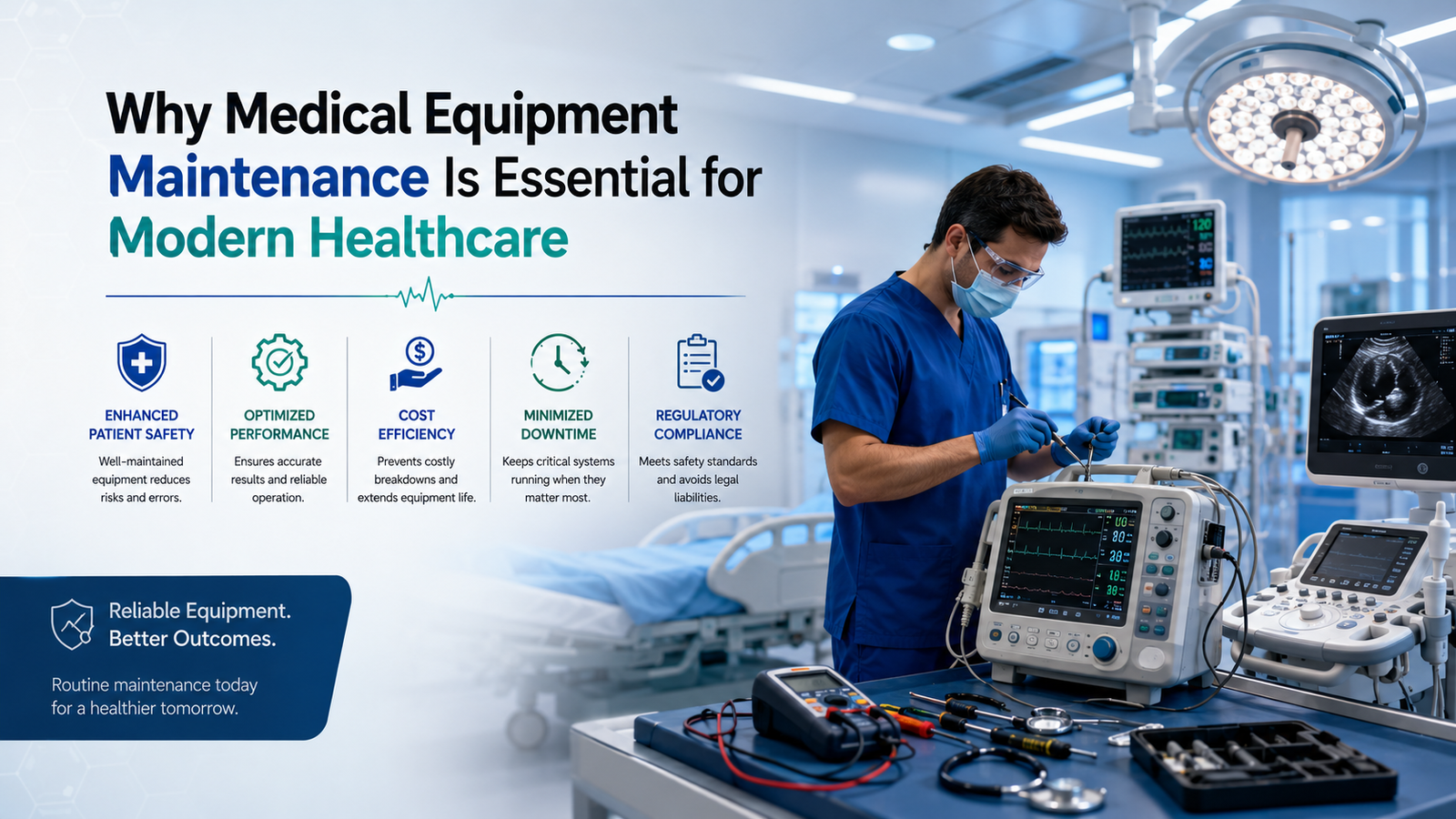
Medical equipment maintenance has become a critical component of healthcare delivery as hospitals, diagnostic centers, and specialty clinics increasingly depend on sophisticated technologies for patient diagnosis, monitoring, and treatment. From imaging systems and surgical tools to patient monitoring devices, the reliability of healthcare equipment directly influences operational efficiency and patient outcomes.
As healthcare facilities continue expanding their technological capabilities, maintaining equipment performance has emerged as a strategic priority. The growing adoption of advanced diagnostic and therapeutic systems is creating a stronger need for preventive servicing, timely repairs, and lifecycle management to minimize downtime and ensure uninterrupted patient care.
Growing Dependence on Advanced Medical Technologies
Healthcare providers today rely on highly specialized equipment that requires regular calibration, testing, and servicing. Advanced technologies such as MRI scanners, CT systems, ultrasound devices, and digital imaging platforms have become central to modern medical practice. Their increasing complexity has elevated the importance of maintenance programs that support accuracy, reliability, and compliance.
According to the medical equipment maintenance and repair industry analysis, the sector was valued at around USD 55 billion in 2024 and is projected to reach USD 92 billion by 2030, reflecting the expanding role of maintenance services across healthcare ecosystems. As per a study published by MarkNtel Advisors, the industry is expected to grow at a CAGR of around 10.8% during the forecast period.
Rising Healthcare Demand and Aging Populations
Demographic changes are significantly influencing equipment utilization rates worldwide. Aging populations require more frequent medical interventions, diagnostic evaluations, and long-term disease management. As a result, healthcare facilities are operating critical medical devices for longer periods and at higher capacities.
The increasing prevalence of chronic conditions such as diabetes, cardiovascular disorders, and cancer further intensifies the demand for dependable medical equipment. Consistent maintenance helps healthcare organizations ensure that these devices remain operational and capable of delivering accurate clinical results, reducing the risks associated with equipment failure.
Predictive Maintenance Is Transforming Equipment Management
One of the most notable developments in healthcare technology management is the adoption of predictive maintenance. Unlike traditional reactive repair models, predictive maintenance leverages digital technologies, sensors, data analytics, and artificial intelligence to identify potential equipment issues before failures occur.
This approach allows healthcare facilities to schedule maintenance proactively, reduce unexpected downtime, and optimize asset performance. Research published by the U.S. National Library of Medicine highlights that effective maintenance strategies can improve equipment reliability while supporting cost-efficient healthcare operations.
Diagnostic Imaging Equipment Remains a Key Focus Area
Among various equipment categories, diagnostic imaging systems continue to require extensive maintenance attention. MRI machines, CT scanners, X-ray systems, and ultrasound equipment play a crucial role in clinical decision-making, making their operational reliability essential.
These systems involve complex hardware and software components that must function with high precision. Routine inspections, software updates, calibration procedures, and component replacements help maintain imaging quality and ensure compliance with healthcare regulations. The increasing integration of artificial intelligence into imaging technologies is also expanding maintenance requirements for both hardware and digital systems.
Healthcare Infrastructure Expansion Creates New Opportunities
Healthcare infrastructure investments are accelerating across developed and emerging economies. Governments and private healthcare providers are establishing new hospitals, diagnostic centers, and specialized treatment facilities to meet growing healthcare demands.
Every new healthcare facility introduces additional medical assets that require ongoing support throughout their operational lifecycle. This trend is generating opportunities for original equipment manufacturers, independent service organizations, and in-house maintenance teams that provide specialized technical expertise and equipment management services.
The World Health Organization continues to emphasize strengthening healthcare systems and improving access to essential medical technologies, further reinforcing the importance of maintaining healthcare equipment at optimal performance levels.
North America’s Strong Position in Equipment Servicing
North America remains a prominent region for medical equipment maintenance activities due to its advanced healthcare infrastructure and high concentration of medical technology providers. The presence of large hospital networks, research institutions, and specialized healthcare facilities contributes to sustained demand for maintenance and repair services.
Stringent regulatory requirements and patient safety standards also encourage healthcare providers to implement comprehensive equipment management programs. These factors support continuous investments in preventive maintenance, performance monitoring, and equipment lifecycle optimization.
The Future of Medical Equipment Reliability
The future of healthcare technology management will increasingly focus on proactive service models, digital monitoring, and data-driven maintenance strategies. As medical devices become more interconnected and technologically sophisticated, maintenance practices will evolve beyond traditional repair services toward predictive and performance-based approaches.
Healthcare organizations are recognizing that equipment reliability is closely linked to clinical efficiency, patient safety, and operational sustainability. Consequently, maintenance and repair services are expected to remain a vital element of healthcare infrastructure, supporting the safe and effective use of medical technologies across the global healthcare landscape.

 English
 Arabic
 French
 Portuguese
 Deutsch
 Turkish
 Dutch
Dutch
 Italiano
 Russian
 Romaian
 Portuguese (Brazil)
 Greek
Greek