


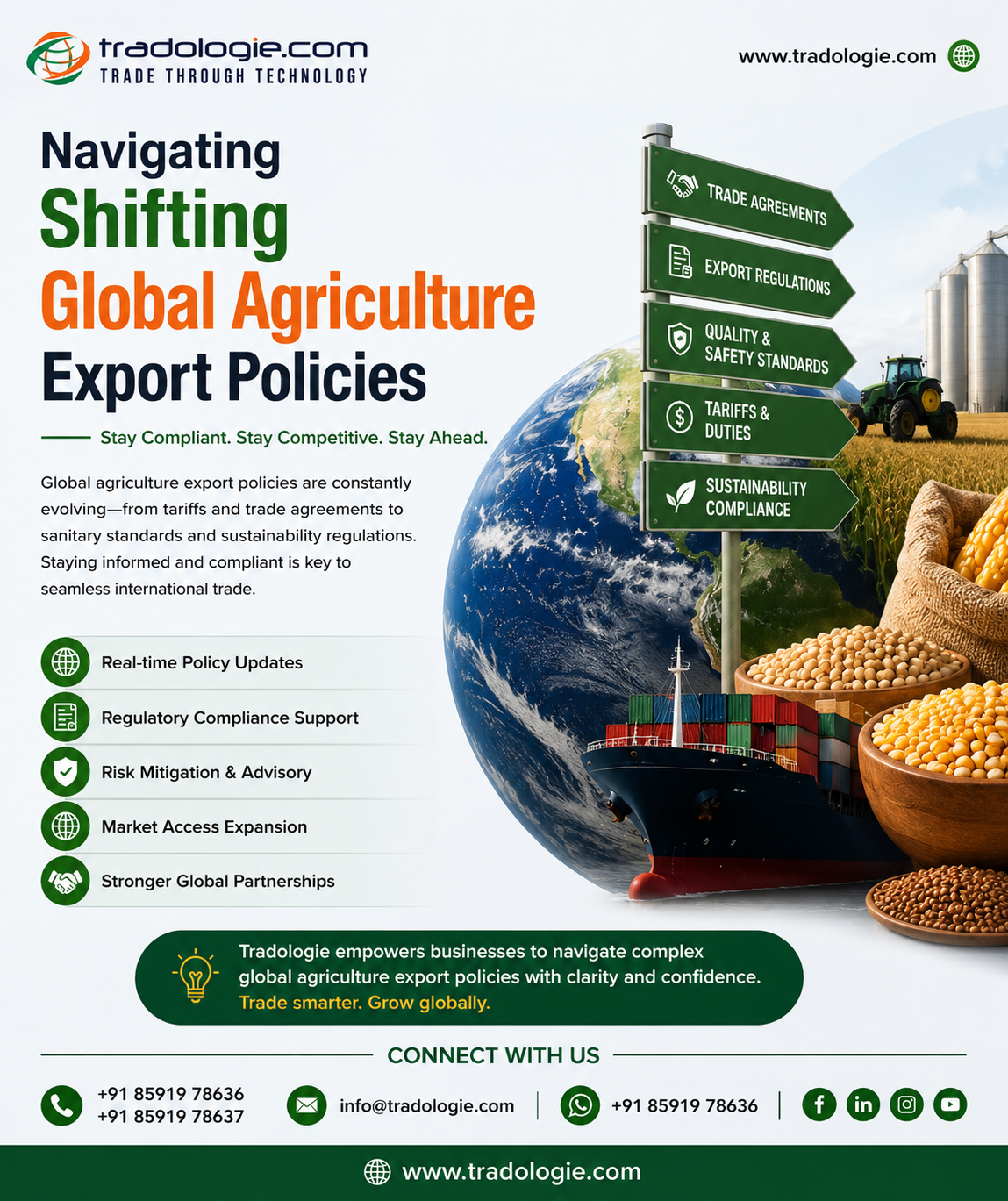
Why Agricultural Trade Matters More Than Ever to Government Policy
For most B2B agro-exporters, the focus is, of course, on production, pricing, logistics, and buyer acquisition. But some of the best profit opportunities—and losses—in agricultural trade are often driven not by market forces but by government policy.
One notification of an export duty, tariff change, minimum export price, export quota, or temporary ban can alter the course of global trade flows almost overnight. Commodities that were very competitive yesterday can be very expensive today. A policy change can turn a market that was out of reach last month into one that suddenly looks attractive.
In today’s agricultural trade, policy awareness is not just a responsibility of governments. It has become a key business function for exporters.
The New Reality of Global Commodity Trade
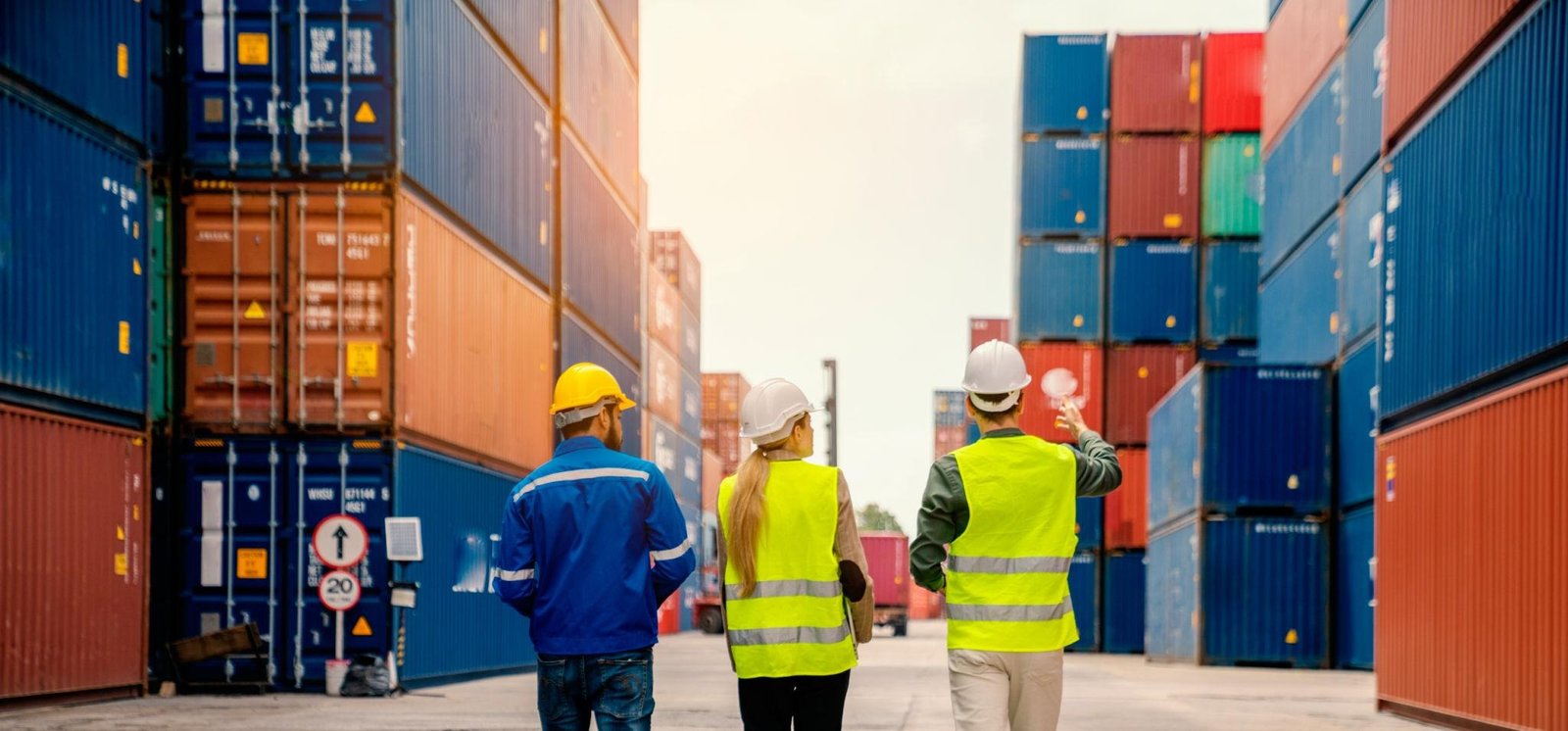
Agricultural commodities have special significance in the world economy as they directly influence food security, inflation, farmers’ welfare, and national strategic interests. In contrast to many industrial products, governments intervene in agricultural markets whenever domestic priorities demand action.
This can be done in many ways. Export duties on agricultural commodities can also be used to control domestic prices. Export bans may be imposed to protect domestic supply. Import tariffs could be adjusted to promote local production. Trade agreements open new doors for exporters, helping to break down barriers in key markets.
Such policy changes can have immediate commercial implications for exporters of rice, wheat, sugar, onions, pulses, edible oils, spices, and other commodities.
The problem is that these changes happen much faster than business can adapt.
Why Exporters Need to Think Beyond Commodity Prices
Most exporters closely check mandi rates for agro-commodities, international prices, freight costs, and currency fluctuations. These factors are still important, but they are only part of the picture.
Consider what happens when a major producer imposes an export restriction. Buyers immediately start looking for other sources. Supply chains shift. Prices move. The procurement strategies are reformulated.
Also, when export duties are lowered or eliminated, global demand often accelerates as buyers race to get hold of supplies at more competitive prices.
The lesson is simple: understanding market prices without understanding policy is like reading half the market. The best exporters watch both.
Rice, Sugar and Wheat. What Have We Learned in Recent Years
Several examples in recent years of how government policies can reshape global trade.
As rice exporters have seen, export duties, restrictions, and minimum export pricing mechanisms have had a significant impact on international demand patterns.
Sugar traders keep a close watch on sugar export quotas and allocation policies because these have a direct impact on shipment volumes and profitability. B2B wheat exporters are watching food security measures and export permissions closely, as they can dramatically alter market access.
These examples illustrate a broader reality. Policy is playing an increasingly important role in shaping agricultural trade.
Exporters that can read these shifts early often have the ability to adjust their pricing, inventory, sourcing, and sales strategies ahead of competitors.
The Cost of Being Uninformed
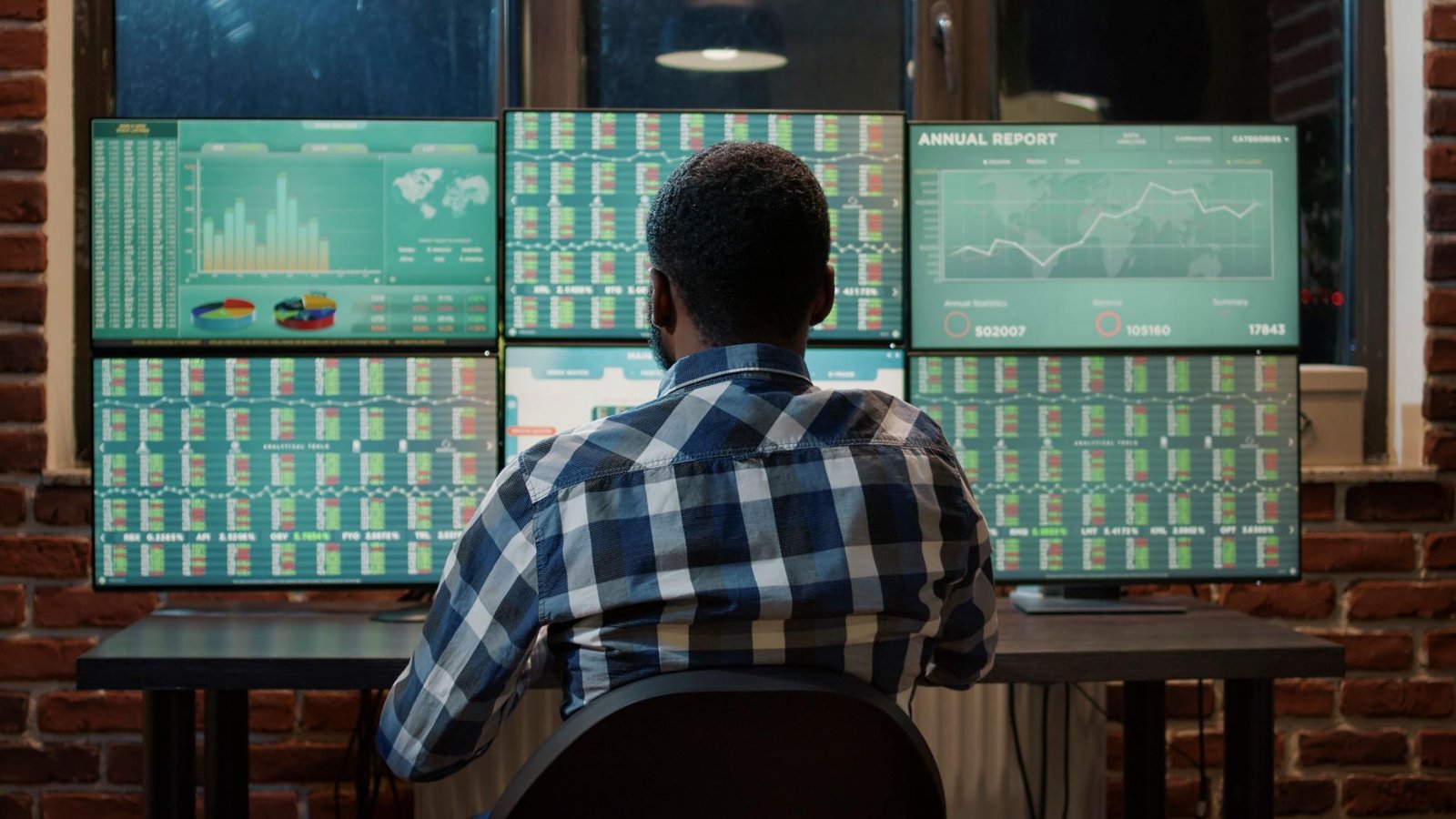
Many companies underestimate the cost of delayed information.
If an exporter lags on a major policy shift, they may continue to quote obsolete prices, sign contracts based on outdated assumptions, or allocate inventory to markets that have just become less attractive.
In commodities, timing is often the key to profitability. Having knowledge of an agricultural export policy change can have a significant impact on commercial results.
Why Information Alone Is Not Enough
Today most exporters have access to information. Government notifications, trade news portals, industry associations, and market reports are easily available.
The real challenge is in the interpretation.
What does a government’s announcement of an export duty on rice mean for a supplier’s competitiveness in Africa? If a country changes import tariffs of spices, which buyers are going to increase procurement? Which markets are more attractive alternatives once the minimum export price is introduced?
To understand these implications, market awareness, expertise, and constant monitoring are needed.
This is where many exporters find difficulty. They may know a policy has changed but often don't have the resources to quickly and accurately assess the commercial impact.
Tradologie.com's Trade Managers' Competitive Advantage
Exporters in global agricultural trade need more than a platform; they need guidance.
This is where Tradologie.com’s specialized Trade Managers come in. While Tradologie.com’s Trade Managers go beyond the traditional marketplace model of connecting buyers and sellers, they provide end-to-end support through the trade journey.
They help companies understand how changes in export duties, tariffs, restrictions, and policy can influence procurement opportunities and market dynamics. More importantly, they also help exporters and importers adapt to these changes and make sure transactions are done smoothly and efficiently.
Trade managers serve as strategic trade partners at every point of the procurement process, assisting with everything from buyer identification and negotiation to documentation and transaction coordination.
This greatly reduces uncertainty and speeds up decision-making for exporters entering new markets.
Combining Human Expertise with AI-Powered Trade Intelligence
What makes Tradologie.com's approach unique is the combination of human expertise and technology.
Dedicated trade managers work with businesses to interpret market developments and execute transactions in an efficient manner. Tradologie.com’s AI-led algorithms are always at work to analyze buyer requirements, supplier capabilities, market conditions, and prevailing trade realities.
It helps the platform to match relevant buyers and suppliers better than traditional sourcing methods.
As agricultural trade export policies change and trade routes evolve, businesses benefit from both human guidance and intelligent matchmaking—creating a procurement ecosystem that is faster, more transparent, and more responsive to global market changes.
How Tradologie.com's Digital Trade Managers Help Exporters Stay Ahead
Tradologie.com understands that modern-day agricultural trade needs both market access and market intelligence.
In addition to its AI-driven procurement ecosystem, the platform’s digital trade managers keep a watchful eye on global commodity developments, export regulations, tariff changes, duties, restrictions, and procurement trends. This enables exporters to understand how changes in policies can affect their products and preferred markets.
Meanwhile, Tradologie.com’s AI algorithms assist in connecting buyers and suppliers on the basis of current trade realities, thus ensuring that businesses are connected to opportunities that are still commercially viable in the current market conditions.
Combining human expertise with intelligent technology allows exporters to make faster and better decisions, reducing uncertainty while increasing responsiveness to changing global trade environments.

 English
 French
 Spanish
 Portuguese
 Deutsch
 Turkish
 Dutch
 Italiano
 Russian
 Romaian
 Portuguese (Brazil)
 Greek