


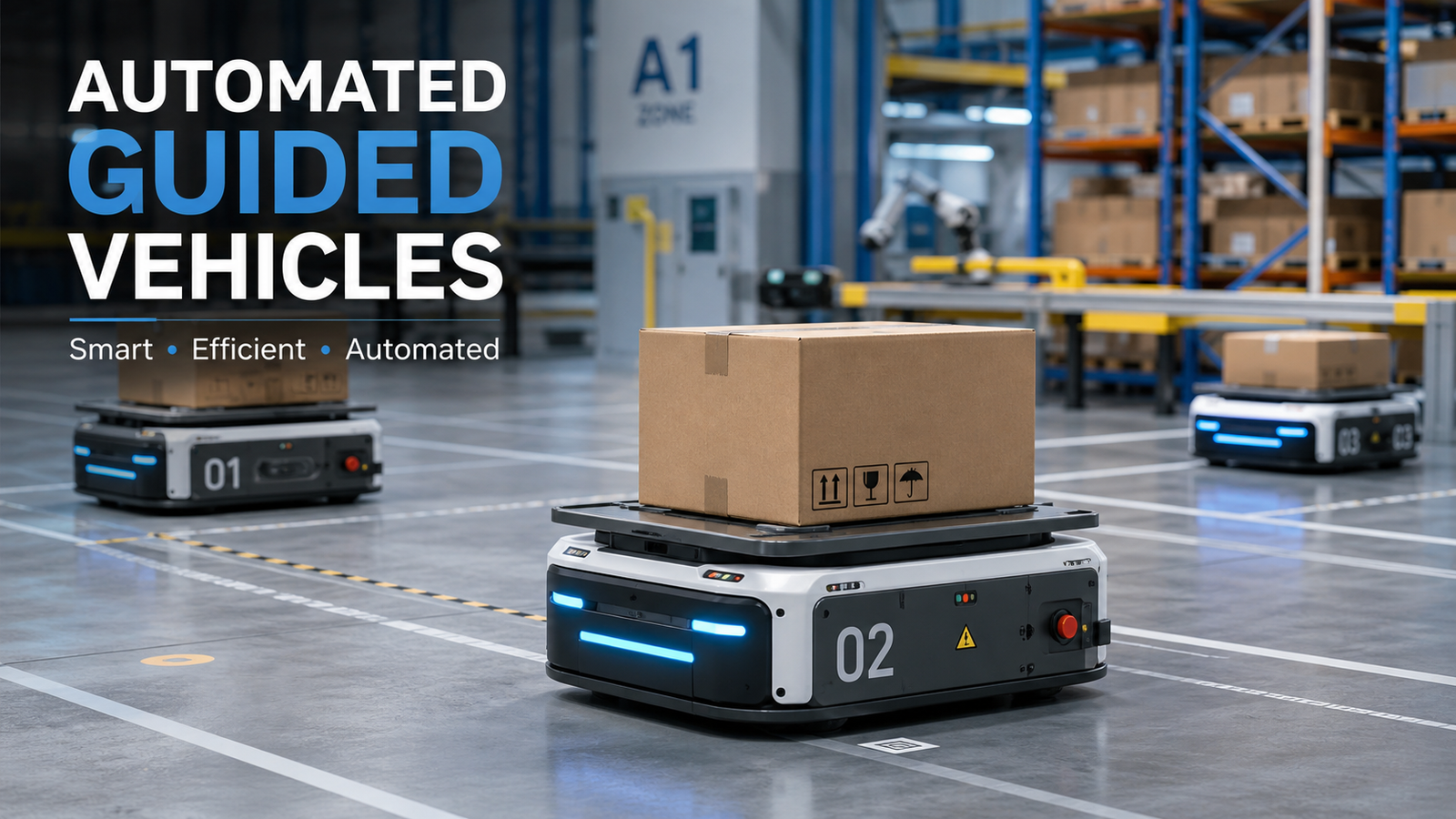
Introduction: The Real Cost of Factory Automation
A factory approves an automated transport vehicle, but the budget changes once installation begins. Floor repairs, charging points, safety equipment and software integration were missing from the original quotation. Suddenly, the purchase price no longer tells the full story.
The Automated Guided Vehicle (AGV) cost depends on the vehicle's payload, navigation method, operating hours, site conditions and integration requirements. For Indian manufacturers, the challenge is not simply finding the lowest price. It is calculating what the system will actually cost to operate.
Here's the catch: a cheaper vehicle can become an expensive purchase if it cannot handle the factory's traffic, load variation or shift schedule.
Specification: What Changes the AGV Price?
Payload, Navigation and Battery Requirements
A light-duty AGV moving small containers requires a different configuration from a heavy-duty vehicle transporting industrial components. Laser navigation, magnetic guidance and other navigation methods also affect hardware, installation and route flexibility.
Battery capacity matters, too. A vehicle running across multiple shifts may require a different charging strategy from one operating intermittently.
The Specification Buyers Often Miss
Ask how the AGV handles narrow aisles, pedestrian crossings, uneven flooring and temporary obstructions. These details affect productivity and safety, even if they barely appear in a headline quotation.
There is no reliable universal AGV price without a defined application. Request itemised quotations covering the vehicle, navigation, safety systems, software, commissioning and training.
Objective: Five Criteria for Evaluating Suppliers
1. Application assessment: A credible supplier asks about payload, travel distance and shifts. A bad answer is a fixed quotation before reviewing your workflow.
2. Technical documentation: Check specifications, safety features and battery details. Vague claims without documented performance should trigger concern.
3. Integration capability: Confirm compatibility with existing warehouse systems, production lines and material-handling equipment. “Integration is easy” means little without a defined scope.
4. After-sales support: Ask about spare parts, maintenance and response commitments. A supplier who promises to resolve every fault case by case has not established a dependable support process.
5. Total cost of ownership: Compare energy, maintenance, software fees and downtime alongside the purchase price. Choosing the lowest initial quote without calculating these costs is poor procurement, not savings.
Benefits: Where the Investment Can Protect Margins
-
Lower repetitive handling costs: Automated transport can reduce reliance on manual movement for suitable, repetitive routes.
-
More predictable material flow: Scheduled movements can help reduce production delays caused by missed deliveries.
-
Better workforce allocation: Employees can focus on inspection, assembly and other higher-value tasks.
-
Reduced handling-related damage: Controlled transport may lower damage risk when loads and routes are properly configured.
-
Improved operational visibility: System data can help identify bottlenecks and recurring delays.
-
Scalable material handling: Additional vehicles may expand capacity when demand grows, provided the traffic and control systems support them.
These benefits are not automatic. Calculate expected savings using actual labour costs, transport frequency, downtime and maintenance requirements before approving the investment.
Availability: Finding AGV Suppliers in India
India's manufacturing clusters have different logistics requirements, from automotive production in Pune and Chennai to warehousing around Delhi NCR and industrial facilities in Gujarat. Proximity to the installation site can affect commissioning travel, spare-parts delivery and maintenance scheduling.
When comparing Automated Guided Vehicle Manufacturers, evaluate technical capability alongside location. An Automated Guided Vehicle Manufacturer in India may be easier to coordinate with for site assessments, but distance alone does not guarantee better service.
Shortlist Automated Guided Vehicle Suppliers and Automated Guided Vehicle Suppliers in India that can document their installation scope, service arrangements and replacement-part availability. Buyers considering imports should also compare freight, customs duties and local support before selecting Automated Guided Vehicle Exporters or Automated Guided Vehicle Exporters in India.
About Airox Technologies
At Airox Technologies, we understand that industrial automation decisions must make commercial sense as well as technical sense. We encourage buyers to define their load requirements, route layout and daily operating schedule before comparing quotations.
We've found that the difficult part of automation planning is often not selecting a vehicle; it is identifying every handover point, obstruction and workflow exception before installation starts. We want our customers to evaluate the application carefully rather than commit based on a headline price alone.
Visit our website to explore our industrial solutions and discuss your material-handling requirements.
Get an AGV Cost Estimate
We invite procurement teams to contact us with their application details so we can discuss suitable options and quotation requirements.
Send us:
-
Required payload and load dimensions
-
Travel distance and factory layout
-
Operating shifts and estimated trips per hour
-
Navigation and integration preferences
-
Installation location and expected commissioning date
We'll review the information and aim to respond within one business day. Minimum order quantity (MOQ), configuration, pricing and project scope should be confirmed with our team before an order is placed.
Contact Airox Technologies
-
Email: sales@airoxtechnologies.com
-
Phone: +91-9764634964
Conclusion
The Automated Guided Vehicle investment should be assessed against operating costs, production requirements and long-term service needs—not just the initial quotation. Compare specifications carefully and demand clear answers on integration, maintenance and commissioning. With the right planning, your next automation investment can support a more predictable material-handling operation.
Frequently Asked Questions
1. What determines Automated Guided Vehicle cost?
Payload, navigation technology, battery capacity, safety equipment and software integration are major factors. Installation conditions can also change the final price, so request an application-specific quotation.
2. How do I select an Automated Guided Vehicle Manufacturer in India?
Compare technical documentation, site-assessment capability, spare-parts access and after-sales support. A local supplier may simplify coordination, but service coverage and proven application experience still need verification.
3. What should I ask Automated Guided Vehicle Suppliers before purchasing?
Request an itemised quotation, commissioning scope, maintenance requirements and warranty terms. Be cautious: the cheapest quotation may exclude integration work or recurring software charges.
4. Are Automated Guided Vehicle Exporters in India suitable for large projects?
They may suit projects requiring specialised configurations or international sourcing. However, import lead times, customs costs and local technical support can affect the total investment.
5. Can Automated Guided Vehicle Suppliers in India calculate my return on investment?
Yes, if you provide reliable operating data, including labour costs, trips per shift, downtime and maintenance expenses. The result remains an estimate, not a guarantee; actual savings depend on utilisation and site conditions.

 English
 Arabic
 French
 Spanish
 Portuguese
 Turkish
 Dutch
 Italiano
 Russian
 Romaian
 Portuguese (Brazil)
 Greek