


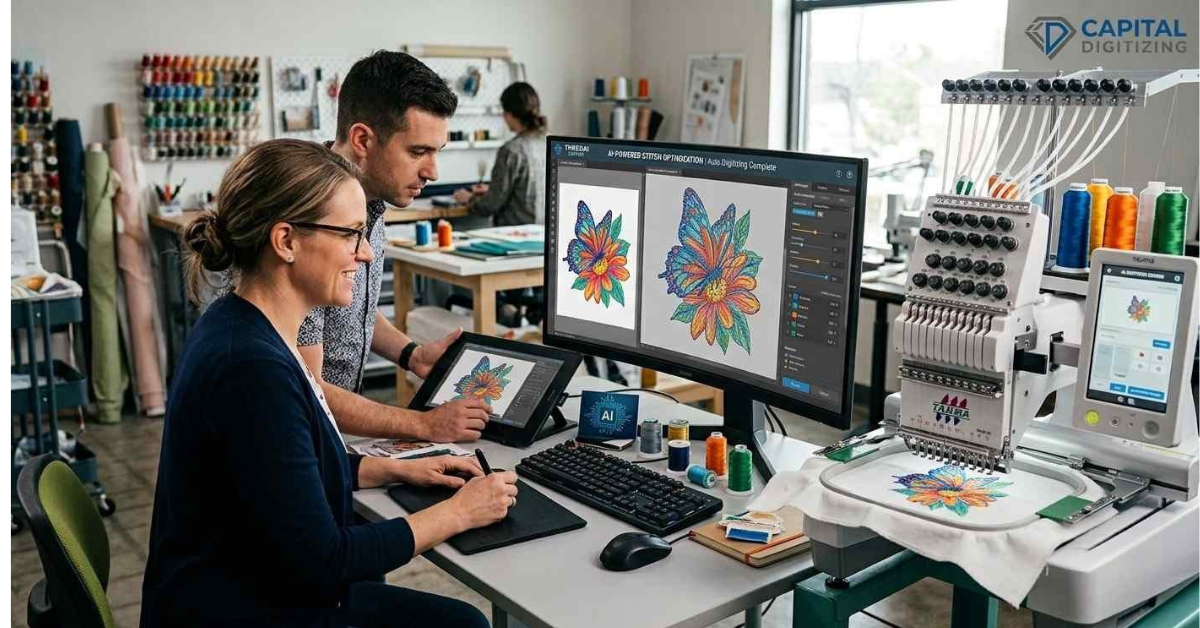
Artificial Intelligence (AI) is transforming industries around the world, and embroidery digitizing is no exception. What was once a completely manual process now benefits from intelligent software that improves speed, accuracy, and efficiency. While experienced digitizers remain essential for producing high-quality embroidery files, AI is helping professionals streamline workflows and deliver better results.
Today, many providers of Custom embroidery digitizing services are adopting AI-powered tools to automate repetitive tasks, reduce errors, and shorten turnaround times. This technological shift allows businesses, apparel manufacturers, and embroidery shops to complete projects faster without compromising quality.
What Is AI in Embroidery Digitizing?
AI in embroidery digitizing refers to the use of intelligent software that analyzes artwork and assists in converting it into machine-readable embroidery files. Instead of relying entirely on manual input, AI can recognize shapes, detect colors, recommend stitch types, and optimize stitch paths.
Rather than replacing professional digitizers, AI works as a powerful assistant. Skilled digitizers still review every design to ensure it stitches correctly on different fabrics and embroidery machines.
Faster Turnaround Times
One of the biggest advantages of AI is speed. Traditional digitizing requires careful planning of stitch angles, stitch density, underlay, and sequencing. AI-powered software can automate many of these repetitive tasks, allowing digitizers to complete projects much faster.
Businesses that rely on embroidery digitizing services benefit from quicker production schedules, making it easier to meet customer deadlines and manage large orders.
Improved Stitch Accuracy
Embroidery quality depends on accurate stitch placement. AI helps identify potential problems before production begins by analyzing artwork and suggesting the most suitable stitch types.
Some AI features can automatically:
-
Optimize stitch paths
-
Reduce unnecessary trims
-
Minimize jump stitches
-
Improve stitch sequencing
-
Recommend proper stitch density
These improvements help create cleaner embroidery with fewer production issues.
Better Design Optimization
Not every logo or image is embroidery-ready. Small text, thin lines, and complex gradients often require adjustments before stitching.
AI assists digitizers by analyzing artwork and recommending modifications that improve embroidery quality. This helps preserve important design details while ensuring the finished embroidery looks clean and professional.
Although AI makes excellent recommendations, experienced digitizers still make the final decisions based on fabric type, thread selection, and embroidery machine capabilities.
Reducing Human Error
Manual digitizing can sometimes lead to mistakes such as incorrect stitch angles, uneven density, or poor sequencing.
AI helps reduce these errors by identifying inconsistencies before production starts. Many embroidery digitizing programs now include automated quality checks that flag potential issues and allow digitizers to make corrections early in the process.
This results in more consistent embroidery and fewer production delays.
Helping Embroidery Businesses Scale
As demand for custom embroidery continues to grow, embroidery businesses must process more orders without sacrificing quality.
AI enables companies to manage higher workloads by automating repetitive tasks while allowing skilled digitizers to focus on complex designs. This improves productivity and helps embroidery shops serve more customers efficiently.
Many businesses looking for reliable embroidery digitizing services USA prefer providers that combine experienced professionals with modern AI technology to deliver fast, accurate results.
AI-Powered Embroidery Digitizing Software
Modern embroidery software now includes AI-powered features that simplify the digitizing process. These intelligent tools can recognize artwork, recommend stitch types, adjust stitch angles, and optimize embroidery files with minimal manual input.
Some advanced software can even learn from previous projects, helping digitizers improve consistency and efficiency over time. While these innovations save valuable time, professional review is still necessary to ensure every design meets production standards.
Benefits for Customers
AI is not only improving the workflow for digitizers—it also provides significant benefits for customers.
Some of the biggest advantages include:
-
Faster order completion
-
Improved embroidery accuracy
-
Consistent stitching quality
-
Reduced production errors
-
Better handling of complex artwork
-
Cost-effective production for larger orders
Customers receive high-quality embroidery files more quickly, making AI a valuable addition to the digitizing process.
Why Human Expertise Still Matters
Although AI has made remarkable progress, it cannot completely replace the knowledge and creativity of experienced digitizers.
Professional digitizers understand how different fabrics react during stitching. Materials such as denim, fleece, leather, caps, and performance fabrics all require different stitch settings and adjustments. An experienced digitizer can modify underlay, pull compensation, stitch density, and sequencing to achieve the best possible results.
AI may recommend settings based on design analysis, but only a skilled professional can evaluate how a design will perform during actual embroidery production.
This is why choosing an experienced embroidery digitizing company remains essential for businesses that demand premium-quality embroidery.
AI and Custom Embroidery Projects
Custom embroidery often involves unique logos, intricate artwork, and detailed branding elements. AI can speed up the initial conversion process by recognizing shapes and suggesting embroidery settings, but custom projects still require manual refinement.
Professional digitizers ensure that:
-
Small lettering remains readable.
-
Fine details are preserved.
-
Stitch directions enhance the design.
-
Thread colors match the original artwork.
-
The design stitches smoothly on the selected fabric.
The combination of AI technology and human expertise produces embroidery files that are both accurate and production-ready.
The Future of Embroidery Digitizing
Artificial Intelligence will continue to shape the embroidery industry in the years ahead. As machine learning becomes more advanced, embroidery software will provide even smarter recommendations, improved automation, and enhanced quality control.
Future developments may include:
-
Automatic fabric detection
-
Real-time stitch simulations
-
Predictive error correction
-
Cloud-based AI digitizing platforms
-
Faster design processing
-
Improved integration with embroidery machines
These innovations will help businesses complete projects more efficiently while maintaining exceptional embroidery quality.
However, creativity, technical knowledge, and production experience will remain essential. AI is a powerful tool, but it works best when combined with skilled professionals who understand the art of embroidery digitizing.
Choosing the Right Embroidery Digitizing Partner
When selecting a digitizing provider, look for a company that combines experienced digitizers with modern technology. A reliable provider should offer fast turnaround times, accurate stitch files, quality assurance, and responsive customer support.
Businesses seeking embroidery digitizing services USA should also consider factors such as file compatibility, revision policies, pricing, and turnaround time. Working with a trusted provider ensures your designs are optimized for excellent stitching on every project.
Conclusion
Artificial Intelligence is transforming the embroidery industry by making the digitizing process faster, smarter, and more efficient. From optimizing stitch paths to reducing production errors and improving workflow, AI is helping professionals deliver better results in less time.
Despite these advancements, AI is not a replacement for skilled digitizers. Human expertise remains critical for handling complex artwork, selecting the right stitch techniques, and ensuring flawless embroidery on different fabrics. The best results come from combining intelligent technology with professional craftsmanship.
Whether you're a small embroidery shop or a large apparel brand, partnering with an experienced provider of embroidery digitizing services ensures your designs are accurate, durable, and production-ready. As AI continues to evolve, businesses that embrace both innovation and expert craftsmanship will stay ahead in the ever-changing embroidery industry.

 English
 Arabic
 French
 Portuguese
 Deutsch
 Turkish
 Dutch
Dutch
 Italiano
 Russian
 Romaian
 Portuguese (Brazil)
 Greek
Greek