


Good vision plays an important role in everyday life, from reading and driving to working on digital devices. While many people only think about having their eyes examined when they notice a significant problem, subtle changes in eyesight can often develop gradually. Recognising the early warning signs can help prevent minor issues from becoming more serious.
Whether you're experiencing changes in your vision or simply keeping up with routine eye care, scheduling an eye test Manchester appointment can help identify potential concerns before they affect your daily life.
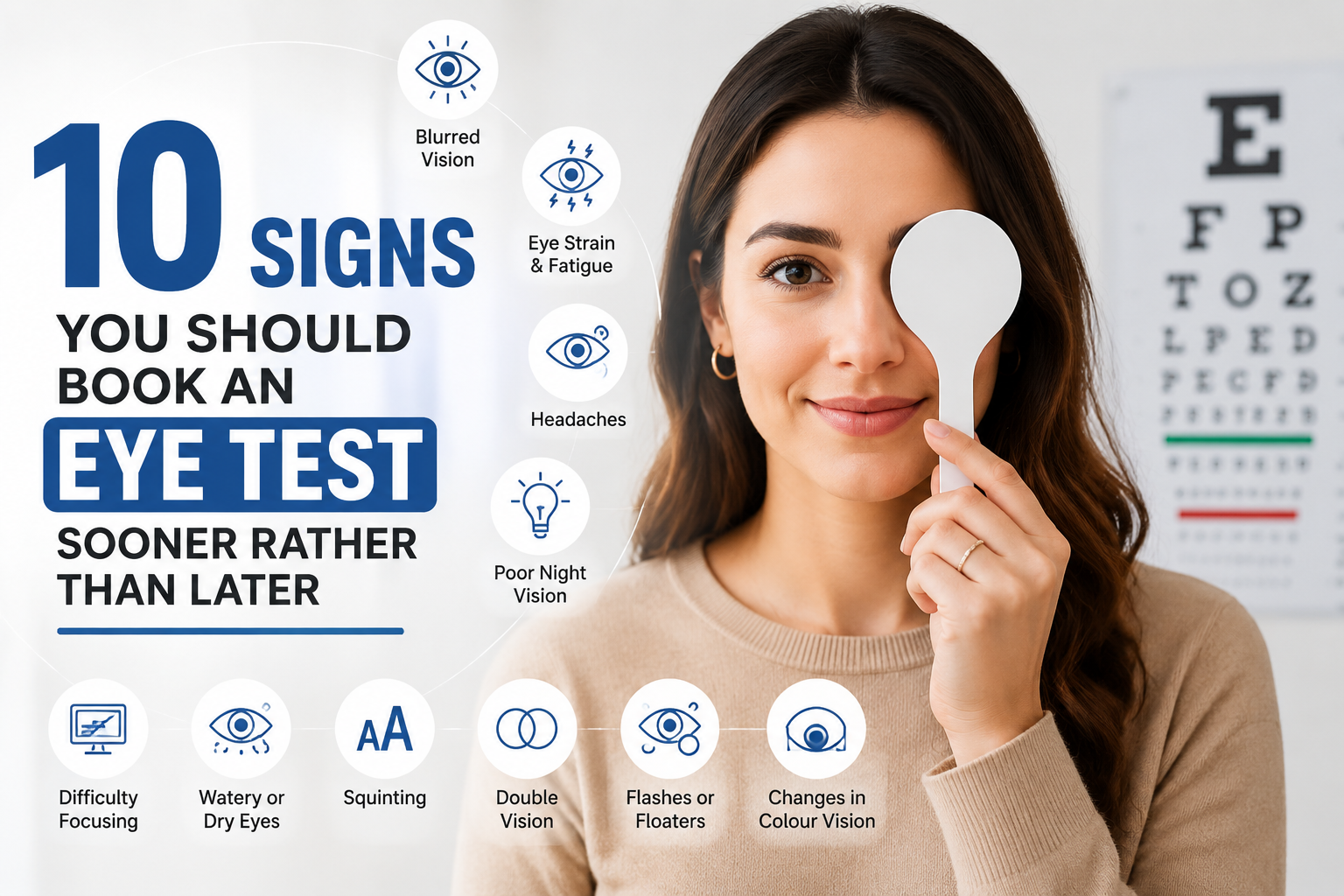
If you've been putting off a routine eye examination, here are ten signs that suggest you should arrange an eye test sooner rather than later.
1. Frequent Headaches
Regular headaches can sometimes be linked to vision problems. When your eyes struggle to focus properly, the muscles around them work harder, leading to eye strain and discomfort.
Common causes may include:
- Uncorrected refractive errors
- Outdated prescription lenses
- Extended screen use
- Focusing difficulties
An eye health check can help identify whether your headaches are connected to your vision.
2. Blurred or Distorted Vision
One of the most obvious indicators that it's time for an eye examination is blurred vision. Whether objects appear fuzzy at a distance or reading small text becomes difficult, changes in visual clarity should never be ignored.
You may notice:
- Difficulty reading road signs
- Trouble focusing on screens
- Blurred text when reading books
- Distorted shapes or lines
Early detection often makes vision correction more effective and comfortable.
3. Increased Sensitivity to Light
Becoming unusually sensitive to sunlight, bright indoor lighting, or vehicle headlights could signal an underlying issue.
Light sensitivity may be associated with:
- Eye infections
- Dry eye syndrome
- Cataracts
- Migraines
- Other eye conditions
A comprehensive sight test can help determine the cause and recommend appropriate treatment.
4. Difficulty Seeing at Night
Struggling to see clearly in low-light conditions can affect daily activities, particularly driving after dark.
Common symptoms include:
- Glare from headlights
- Poor visibility at dusk
- Reduced contrast in dim environments
- Difficulty adjusting between light and dark settings
Night vision changes should be assessed promptly, especially if they interfere with safety.
5. Squinting More Often
Squinting temporarily improves focus by reducing the amount of light entering the eye. If you find yourself squinting regularly to read signs, view screens, or recognise faces, your eyes may be compensating for a vision problem.
Persistent squinting often indicates:
- Nearsightedness
- Farsightedness
- Astigmatism
- Changes in prescription needs
An updated vision assessment can identify the underlying cause.
6. Eye Strain and Fatigue
Many people spend hours each day using computers, tablets, and smartphones. Prolonged screen exposure can place significant stress on the eyes.
Signs of digital eye strain include:
- Tired eyes
- Burning sensations
- Difficulty focusing
- Neck and shoulder discomfort
- Dryness and irritation
Regular eye checks can ensure your vision supports modern digital lifestyles.
7. Double Vision
Seeing two images of a single object is never considered normal and should be investigated as soon as possible.
Double vision may occur due to:
- Eye muscle problems
- Corneal abnormalities
- Cataracts
- Neurological conditions
Prompt evaluation can help determine whether the issue is related to eye health or another medical concern.
8. Sudden Appearance of Floaters or Flashes
Occasional floaters are common, particularly with age. However, a sudden increase in floaters or flashes of light could indicate a more serious issue requiring immediate attention.
Watch for:
- Numerous new floaters
- Bright flashes in peripheral vision
- A shadow or curtain effect across vision
- Sudden vision changes
These symptoms can sometimes be associated with retinal problems and should be assessed urgently.
9. Difficulty Reading Small Print
If menus, books, labels, or mobile phone screens are becoming harder to read, your eyes may be undergoing natural age-related changes.
Many adults experience:
- Holding reading materials further away
- Needing brighter lighting
- Struggling with fine print
- Eye fatigue during reading
A routine eye test can determine whether reading glasses or prescription adjustments are needed.
10. It Has Been More Than Two Years Since Your Last Eye Test
Even if you haven't noticed any obvious symptoms, regular eye examinations remain essential. Many eye conditions develop slowly and may not present noticeable warning signs in their early stages.
Routine vision checks can help detect:
- Glaucoma
- Cataracts
- Age-related macular degeneration
- Diabetic eye disease
- General changes in visual acuity
Early diagnosis often improves treatment outcomes and helps preserve long-term eye health.
Why Regular Eye Examinations Matter
Eye tests do more than assess how clearly you can see. They provide valuable insight into overall eye health and may even reveal signs of wider health concerns.
Benefits of regular eye examinations include:
- Detecting vision changes early
- Monitoring existing eye conditions
- Updating prescriptions when necessary
- Identifying eye diseases before symptoms appear
- Supporting long-term visual wellbeing
Many common eye conditions can be managed more effectively when discovered early.
When Should Adults Have an Eye Test?
Although recommendations can vary depending on age and individual circumstances, many adults benefit from having a sight examination every two years. More frequent appointments may be advised for people who:
- Wear glasses or contact lenses
- Have diabetes
- Have a family history of eye disease
- Are over 60 years old
- Notice changes in their eyesight
Consulting an eye care professional can help determine the most suitable schedule.
Final Thoughts
Your eyesight can change gradually, making it easy to overlook warning signs until they begin affecting daily life. Symptoms such as blurred vision, headaches, eye strain, difficulty seeing at night, or increased sensitivity to light should never be ignored.
Booking an eye test promptly can help identify potential issues early, support healthy vision, and provide peace of mind. Even if your eyesight seems normal, regular eye examinations remain one of the most effective ways to protect your long-term eye health.

 Arabic
 French
 Spanish
 Portuguese
 Deutsch
 Turkish
 Dutch
Dutch
 Italiano
 Russian
 Romaian
 Portuguese (Brazil)
 Greek
Greek