


Clean and well-maintained commercial premises play an important role in workplace safety, operational efficiency, and business reputation. Car parks, warehouse floors, factory spaces, access roads, and loading zones experience continuous activity that introduces dust, loose debris, tyre marks, packaging waste, and other contaminants. Without regular maintenance, these materials can accumulate, affect the appearance of the property, and create additional cleaning challenges for facility managers. Commercial sweeping provides a practical solution for removing loose dirt and debris from extensive paved areas that are difficult to maintain through manual cleaning alone. As businesses place greater emphasis on professional presentation and organised facilities, specialised sweeping services have become an important part of routine property maintenance. A structured cleaning programme helps organisations maintain cleaner working environments while allowing employees and management teams to concentrate on their primary responsibilities.
Choosing an appropriate cleaning provider requires businesses to consider more than the visible cleanliness of their premises. Factors such as surface type, vehicle movements, operating hours, debris levels, and the size of the property influence the equipment and maintenance schedule required. Professional Commercial sweeping can help businesses manage these demands through planned cleaning, specialised machinery, and services tailored to individual site conditions. All Zones Sweeping & Scrubbing provides commercial and industrial cleaning solutions across South East Queensland and Northern NSW, including services for car parks, warehouses, factories, and roads. Understanding the benefits of mechanical cleaning, the differences between sweeping and scrubbing, and the importance of consistent maintenance can help property owners select a solution that supports long-term cleanliness and operational requirements.
Understanding Commercial Sweeping and Its Role in Property Maintenance
Commercial premises often cover large areas where dirt and debris accumulate faster than conventional cleaning methods can manage. Parking facilities collect leaves, sand, gravel, and litter, while warehouses and industrial yards may experience dust buildup caused by vehicle movements, deliveries, and everyday operations. Mechanical sweeping uses specialised equipment to collect loose materials efficiently across these expansive surfaces. Depending on the machine and site requirements, operators can address open floor areas, kerb lines, access routes, and other locations where debris commonly gathers. Regular maintenance also makes it easier to identify recurring problems, such as waste accumulating near drainage points or particular areas receiving excessive dirt from incoming vehicles. However, sweeping is not a universal solution for every form of contamination. Stubborn grease, bonded grime, and certain tyre marks may require scrubbing or pressure washing. Understanding these distinctions helps facility managers create a cleaning plan that addresses the actual condition of their premises rather than relying on a single method for every task.
Why Businesses Benefit from Professional Sweeping Services
A consistently clean property can contribute to a more organised workplace and create a positive impression on customers, employees, tenants, and visitors. Loose debris on access roads or warehouse floors may interfere with routine activities, while excessive dust can complicate housekeeping and maintenance. Professional cleaning services help businesses manage these concerns using suitable equipment and a planned approach. Mechanical sweeping can cover substantial areas more efficiently than manual methods, making it particularly useful for shopping centres, industrial estates, distribution facilities, and multi-level parking structures. Regular cleaning may also reduce the accumulation of materials that obstruct drainage channels or spread into adjoining areas. For businesses operating around delivery vehicles, forklifts, or frequent pedestrian traffic, maintenance should be coordinated with site safety procedures and operational schedules. Sweeping does not replace inspections, repairs, spill response, or other safety controls, but it can form an important part of an integrated property management strategy. By establishing clear cleaning standards and reviewing results periodically, businesses can maintain a professional environment without unnecessary disruption to daily operations.
Choosing the Right Commercial Sweeping Provider
Selecting a cleaning contractor requires careful consideration of experience, equipment, reliability, and the specific demands of the site. Businesses should begin by identifying the areas that need attention, the type of debris present, the condition of the surfaces, and the times when cleaning can take place safely. A large industrial facility may require heavy-duty mechanical equipment, whereas a smaller commercial property might need a more compact machine capable of navigating restricted access areas. Contractors should also understand how to work around parked vehicles, pedestrians, loading activities, and other site operations. Before agreeing to a service, property managers should clarify the scope of work, expected cleaning frequency, waste handling arrangements, insurance coverage, and relevant safety procedures. All Zones Sweeping & Scrubbing offers sweeping and scrubbing services for commercial and industrial environments, with flexible scheduling options designed to accommodate different operational requirements. Businesses should assess whether a proposed service matches their location, site layout, and maintenance objectives. Clear communication from the beginning helps establish realistic expectations and supports a dependable working relationship.
Developing a Practical Cleaning Schedule for Commercial Properties
An effective cleaning schedule should reflect how a property is used rather than follow an arbitrary timetable. High-traffic shopping centres, logistics facilities, and busy warehouse entrances may accumulate debris rapidly and require frequent attention. Lower-traffic properties may need less frequent visits, depending on environmental conditions, landscaping, and the activities taking place on-site. Facility managers can develop an appropriate schedule by inspecting the premises, identifying contamination hotspots, and recording how quickly different areas become dirty. Mechanical sweeping should also be considered after events that increase debris levels, including storms, construction work, landscaping, or unusually heavy deliveries. For many facilities, scheduling cleaning outside peak business hours can improve access and reduce interference with daily operations. A well-planned commercial sweeping programme should also include periodic reviews to determine whether the current frequency remains appropriate. If certain locations repeatedly collect debris, managers may need to investigate nearby waste sources, drainage issues, vehicle access points, or inadequate waste storage. Addressing these underlying causes can improve maintenance efficiency and help ensure cleaning resources are used where they provide the greatest practical benefit.
Mechanical Sweeping, Scrubbing, and Pressure Washing Explained
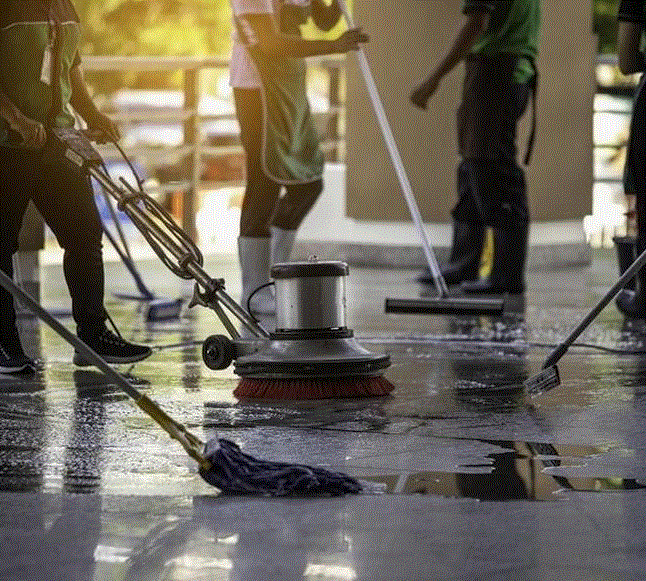
Different surface conditions require different cleaning methods, and understanding their capabilities helps businesses avoid unnecessary work. Mechanical sweeping is primarily designed to collect loose materials such as dust, leaves, grit, and general litter. Scrubbing uses specialised machines, brushes, water, and suitable cleaning solutions to address more persistent dirt and surface residue. Pressure washing can help remove stubborn deposits from compatible exterior surfaces, provided that the pressure, cleaning method, and wastewater management arrangements are appropriate. In many commercial environments, these techniques work best together. A parking facility might first require sweeping to remove loose debris, followed by scrubbing to address traffic grime or tyre marks. A warehouse may benefit from regular sweeping to control dust, with deeper floor cleaning scheduled according to the surface condition and operational requirements. All Zones Sweeping & Scrubbing provides a range of services covering car parks, warehouse floors, factory areas, roadways, and pressure washing. Property managers should discuss the condition of their surfaces with the contractor before selecting a method, particularly where protective coatings, drainage systems, sensitive equipment, or environmental considerations affect the cleaning process.
Cost Considerations and Long-Term Maintenance Value
The cost of professional cleaning depends on several factors, including the size of the area, the amount and type of debris, site accessibility, required equipment, and the frequency of service. Operating restrictions can also influence scheduling and labour requirements, especially at facilities that need cleaning during evenings or weekends. When reviewing quotations, businesses should establish exactly which areas are included and whether the proposed service covers kerb lines, loading zones, difficult corners, and waste collection. Additional treatments such as scrubbing or pressure washing may need to be priced separately. Comparing contractors solely on their initial rates can overlook important differences in service scope, reliability, and equipment suitability. A more useful approach considers the expected quality of work, consistency of attendance, communication standards, and ability to adapt when site conditions change. Routine cleaning can also help managers identify developing maintenance concerns, including damaged pavement, persistent staining, and drainage problems. Although sweeping cannot prevent every form of surface deterioration, incorporating it into a broader maintenance plan supports more organised property care and helps businesses make informed decisions about their ongoing cleaning expenditure.
Improving Workplace Standards Through Consistent Cleaning
Maintaining clean commercial premises requires coordination between facility managers, cleaning contractors, employees, and other service providers. Businesses should establish clear expectations for cleanliness, identify priority areas, and ensure that cleaning activities align with workplace safety procedures. In warehouses and factories, this may involve coordinating machinery movements, pedestrian access, loading schedules, and temporary restrictions during cleaning. Outdoor facilities may require additional attention following rainfall, seasonal leaf fall, or periods of heavy vehicle activity. Managers should also ensure that collected debris is handled appropriately and that cleaning methods do not create avoidable drainage or environmental problems. Consistent communication helps contractors respond to changing conditions and enables managers to evaluate whether the maintenance programme is achieving its intended results. For businesses across Brisbane, the Gold Coast, the Sunshine Coast, and Northern NSW, choosing a provider familiar with commercial and industrial sites can simplify the management of recurring cleaning requirements. Regular inspections, documented service expectations, and sensible schedule adjustments provide a practical foundation for maintaining professional standards across busy facilities.
Conclusion
Keeping commercial properties clean involves more than occasional sweeping; it requires suitable equipment, an appropriate maintenance schedule, and a clear understanding of the site's operational needs. From car parks and warehouse floors to factory spaces and access roads, different environments demand cleaning methods that match their surfaces, traffic levels, and types of contamination. Businesses should evaluate service providers according to equipment capabilities, safety procedures, reliability, communication, and the scope of work included in their quotations. Combining mechanical sweeping with scrubbing or pressure washing where necessary can help address a wider range of cleaning challenges while supporting consistent property maintenance. Professional commercial sweeping remains a practical investment for organisations seeking cleaner surroundings, improved presentation, and more organised facility management. All Zones Sweeping & Scrubbing offers commercial and industrial cleaning solutions for businesses throughout South East Queensland and Northern NSW, with services suited to a variety of demanding environments. By prioritising consistent maintenance and selecting a service that meets their specific requirements, property managers can support cleaner, more functional premises and maintain professional standards over the long term.

 Arabic
 French
 Spanish
 Portuguese
 Deutsch
 Turkish
 Dutch
 Italiano
 Russian
 Romaian
 Portuguese (Brazil)
 Greek