


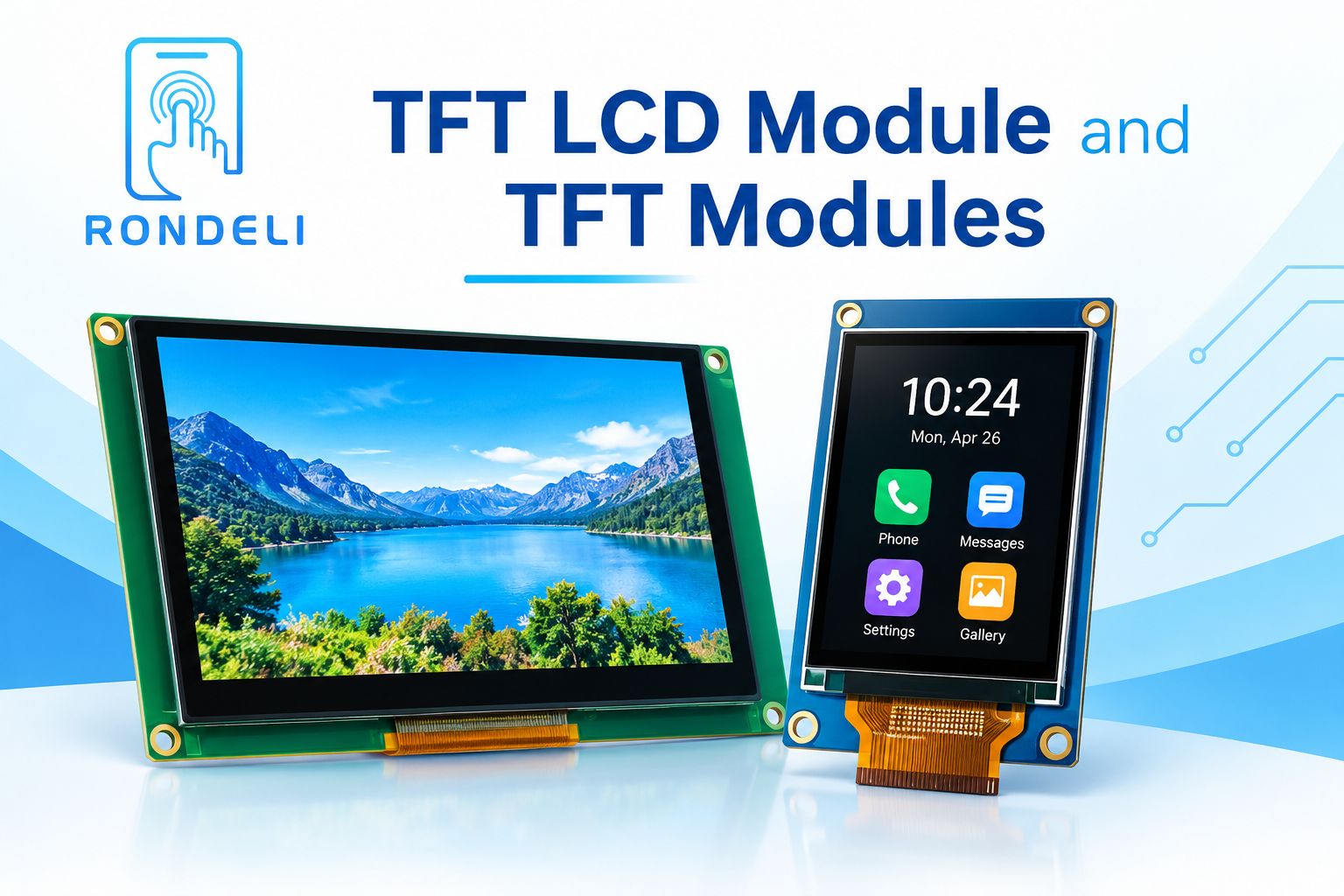
TFT LCD Module and TFT Modules have become essential display technologies across modern electronics, industrial equipment, medical devices, automotive systems, consumer products, and smart control interfaces. With their ability to deliver sharp images, consistent brightness, accurate colors, and reliable performance, TFT-based displays provide manufacturers with flexible solutions for applications where visual information needs to be clear and easy to understand.
Understanding TFT LCD Technology
Thin-Film Transistor Liquid Crystal Display technology uses individual transistors to control pixels on the screen. This structure allows each pixel to respond efficiently and produce detailed images. Compared with traditional display technologies, TFT displays can provide improved image quality, faster response, and better viewing performance.
A TFT LCD module generally combines the LCD panel with essential components that make it easier to integrate into an electronic product. Depending on the application, modules can include a backlight, driver circuitry, interface connections, and other supporting components.
Why TFT Modules Are Widely Used
One of the biggest advantages of TFT modules is their versatility. Manufacturers can select different screen sizes, resolutions, aspect ratios, viewing angles, and interface configurations according to their product requirements.
TFT displays are commonly used in industrial control panels, instrumentation systems, automotive dashboards, medical equipment, home appliances, POS machines, handheld devices, and communication equipment. Their ability to present graphics, numerical information, icons, menus, and real-time data makes them particularly valuable in interactive electronic systems.
Important Factors When Selecting a TFT Display
Screen size should be one of the first considerations when choosing a display. A compact product may require a smaller screen, while industrial control equipment may benefit from a larger viewing area.
Resolution is equally important because it determines how much detail the display can provide. Applications that display photographs, complex graphics, technical diagrams, or detailed interfaces may require higher resolution.
Brightness and viewing angle should also be evaluated. Displays used in outdoor or brightly illuminated environments may require stronger backlighting, while equipment intended for multiple users may benefit from wider viewing angles.
TFT Modules for Industrial Applications
Industrial environments often demand displays that can operate reliably for extended periods. TFT modules can be designed for control systems, automation equipment, testing instruments, monitoring systems, and factory machinery.
A suitable display should match the environmental conditions of the equipment. Temperature range, vibration resistance, operating lifetime, interface compatibility, and mechanical dimensions can all influence the selection process.
Customization and Integration
Another advantage of TFT technology is the ability to customize displays for specialized products. Manufacturers may require unusual dimensions, specific connectors, custom mounting arrangements, different brightness levels, or specialized interfaces.
Working with an experienced display supplier can simplify the integration process. Technical support can help manufacturers identify compatible specifications and avoid problems during product development.
The Future of TFT Display Technology
As electronic devices become more sophisticated, display requirements continue to evolve. Higher resolutions, improved brightness, thinner designs, lower power consumption, and enhanced interfaces are becoming increasingly important.
TFT technology remains relevant because it offers manufacturers a practical combination of performance, flexibility, and scalability.
Frequently Asked Questions
What is a TFT LCD module?
A TFT LCD module is a display assembly based on thin-film transistor technology that is designed for integration into electronic products.
Where are TFT modules used?
They are used in industrial equipment, medical devices, automotive systems, consumer electronics, control panels, instruments, and many other applications.
How do I select the right TFT display?
Consider screen size, resolution, brightness, viewing angle, interface, operating temperature, dimensions, and application requirements.
CTA
Choosing the right display can significantly improve the usability and performance of an electronic product. Discuss your project requirements with a reliable display technology provider to identify the appropriate size, resolution, interface, and configuration.
For dependable solutions across modern electronic applications, TFT LCD Module and TFT Modules remain an excellent choice.

 English
 Arabic
 French
 Spanish
 Portuguese
 Deutsch
 Turkish
 Dutch
Dutch
 Italiano
 Romaian
 Portuguese (Brazil)
 Greek
Greek