


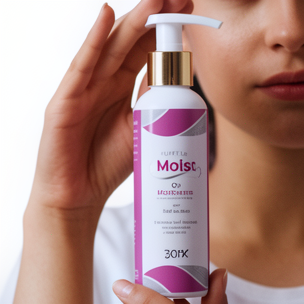
Sensitive skin can be difficult to manage. One day, a moisturizer may leave your skin soft and comfortable, while another product may cause redness, itching, dryness, or stinging within minutes.
That is why choosing a moisturizer for sensitive skin is not simply about finding the most expensive cream or the product with the longest ingredient list. The goal is to find a formula that provides hydration while supporting the skin barrier and minimizing potential irritation.
If you are searching for the Best Moisturizer In Pakistan for sensitive skin, understanding the ingredients can help you make a much better choice.
Ingredients such as ceramides, hyaluronic acid, glycerin, and other moisturizing agents can support hydration and skin comfort. At the same time, people with sensitive skin may want to be careful with fragrance and other ingredients that can trigger irritation. The American Academy of Dermatology also recommends looking for ingredients such as ceramides and hyaluronic acid while avoiding fragrance when choosing a moisturizer for sensitive or dry skin.
Let's look at the most useful moisturizer ingredients and how to choose the right formula for sensitive skin.
Why Does Sensitive Skin Need the Right Moisturizer?
Your skin has a natural barrier that helps keep moisture inside while protecting the skin from external irritants.
When this barrier becomes weakened, the skin may lose moisture more easily. As a result, it can feel dry, tight, rough, itchy, or irritated.
A suitable moisturizer can help improve skin comfort by adding hydration and supporting the barrier.
However, sensitive skin does not necessarily need a complicated skincare routine. In fact, keeping your routine simple can sometimes make it easier to identify and avoid products that trigger a reaction.
The right moisturizer should leave your skin feeling comfortable rather than burning, excessively greasy, or tight.
Which Ingredients Are Best for Sensitive Skin?
Different moisturizing ingredients perform different jobs. Some attract water, while others help reduce moisture loss or support the skin barrier.
Here are some of the ingredients worth looking for when choosing a moisturizer for sensitive skin.
1. Ceramides
Ceramides are lipids naturally found in the skin. They play an important role in maintaining the skin barrier.
A moisturizer containing ceramides can help support the barrier and reduce the feeling of dryness.
This makes ceramides particularly useful when your skin feels rough, tight, or easily irritated.
For people searching for the Best Moisturizer In Pakistan, a formula containing ceramides can be a useful option, particularly if barrier support is one of your main concerns.
However, the presence of ceramides alone does not automatically make a product suitable for everyone. You should still consider the complete formulation and your individual skin needs.
2. Hyaluronic Acid
Hyaluronic acid is a popular hydrating ingredient because it helps attract and retain water.
It can make dehydrated skin feel softer and more comfortable without necessarily creating a heavy or greasy finish.
This can be especially useful for people who want hydration but dislike thick creams.
Hyaluronic acid is also found in several modern skincare formulations because it can work well alongside other moisturizing ingredients.
For sensitive skin, however, the complete formula matters. If a product contains potentially irritating ingredients alongside hyaluronic acid, the hyaluronic acid itself does not guarantee that the product will be irritation-free.
3. Glycerin
Glycerin is another well-established moisturizing ingredient.
It works as a humectant, meaning it helps attract water to the outer layers of the skin.
Because of its moisturizing properties, glycerin can be helpful for skin that feels dry, rough, or dehydrated.
It is also commonly used in skincare products because it can provide hydration without requiring a very heavy texture.
The American Academy of Dermatology lists glycerin among ingredients that can help smooth and soften dry or sensitive skin.
4. Shea Butter
Shea butter is a rich moisturizing ingredient that can be useful for dry skin.
It helps soften the skin and can provide a more nourishing feel than lightweight gel moisturizers.
However, people with oily or acne-prone skin may prefer lighter formulations.
For very dry or sensitive body skin, a richer moisturizer containing ingredients such as shea butter can be particularly appealing.
QHC's Intense Moisturizing Body Cream, for example, contains shea butter along with urea and other moisturizing ingredients and is marketed for very dry and sensitive skin.
5. Urea
Urea may sound unusual as a skincare ingredient, but it is commonly used in moisturizers designed for dry and rough skin.
It helps improve hydration and can make rough skin feel softer.
The concentration matters, though. Different concentrations can serve different purposes, so it is important to use the product according to its intended use.
QHC's Intense Moisturizing Body Cream includes urea and is positioned for very dry and sensitive skin.
6. Squalene and Skin-Softening Ingredients
Some moisturizers use emollients to make the skin feel smoother and reduce roughness.
Squalene is one example of an emollient used in skincare formulations.
QHC's Ultra Moist Oil-Free Moisturizer contains olive squalene along with sodium hyaluronate, ceramides, and other moisturizing ingredients. The product is marketed for oily, combination, and acne-prone skin.
This type of combination can be useful for someone who wants hydration without relying on an extremely heavy cream.
What Ingredients Should Sensitive Skin Avoid?
Choosing a moisturizer is not only about knowing what to look for. It is also important to recognize ingredients that may cause problems for your particular skin.
Fragrance
Fragrance is one of the ingredients that people with sensitive skin may want to approach carefully.
A product can smell pleasant but still irritate reactive skin.
The American Academy of Dermatology recommends avoiding fragrance when choosing moisturizers for dry skin and notes that fragrance can be irritating.
If your skin frequently becomes red or itchy after using skincare products, a fragrance-free option may be worth considering.
Harsh Exfoliating Ingredients
Sensitive skin does not always respond well to frequent exfoliation.
Ingredients such as strong acids can be useful for specific skincare concerns, but excessive use may lead to dryness and irritation.
If your primary goal is to restore comfort and hydration, a simple moisturizer may be more appropriate than adding several exfoliating products.
Essential Oils
“Natural” does not automatically mean “irritation-free.”
Some essential oils and botanical ingredients can trigger sensitivity in certain individuals.
If your skin reacts easily, choosing a simple formula with fewer potential irritants may be a more practical approach.
Is a Fragrance-Free Moisturizer Better for Sensitive Skin?
For many people with sensitive skin, fragrance-free products can be a sensible choice.
This does not mean that every fragranced product will cause irritation, but fragrance is an unnecessary potential trigger for someone whose skin already reacts easily.
When shopping for the Best Moisturizer In Pakistan, check the ingredient list rather than relying only on claims such as “gentle,” “natural,” or “for sensitive skin.”
A shorter or simpler formula can also make it easier to identify a problematic ingredient if your skin reacts.
How Do You Choose a Moisturizer for Sensitive Skin?
Choosing the right product becomes easier when you consider your skin's actual needs.
If Your Skin Is Very Dry
Look for richer moisturizers containing ingredients such as:
-
Ceramides
-
Glycerin
-
Urea
-
Shea butter
-
Other emollients and occlusive ingredients
A richer formula can help reduce moisture loss and improve the feeling of dry skin.
If Your Skin Is Oily but Sensitive
You do not have to avoid moisturizer.
Instead, look for a lightweight formula that provides hydration without feeling excessively heavy.
QHC's Ultra Moist Oil-Free Moisturizer is formulated with ingredients including sodium hyaluronate, ceramides, and olive squalene and is marketed for oily, combination, and acne-prone skin.
If Your Skin Is Combination and Sensitive
A lightweight moisturizer may work well for areas that become oily, while drier areas may need additional hydration.
Pay attention to how different areas of your face respond rather than assuming that your entire face needs exactly the same amount of moisturizer.
Can Moisturizer Help Repair the Skin Barrier?
A suitable moisturizer can support the skin barrier by improving hydration and reducing moisture loss.
Ingredients such as ceramides are particularly relevant because they are naturally present in the skin barrier.
However, “repair” should not be interpreted as an instant cure for every skin problem.
If your skin barrier is severely irritated because of over-exfoliation, harsh products, or a skin condition, simplifying your routine may be just as important as choosing the right moisturizer.
Avoid repeatedly adding new active ingredients when your skin is already uncomfortable.
How Often Should You Apply Moisturizer?
For most people, moisturizer can be used once or twice daily depending on their skin needs and the product's directions.
Applying moisturizer after cleansing can help maintain comfortable hydration.
If your skin is very dry, you may benefit from applying it more consistently throughout the day when needed.
For a simple routine, you can use:
Morning:
Cleanser → Moisturizer → Broad-spectrum sunscreen
Evening:
Cleanser → Treatment, if appropriate → Moisturizer
If your skin is highly sensitive, introduce new products one at a time rather than changing your entire routine at once.
Is QHC a Good Moisturizer Option for Sensitive Skin?
QHC offers several moisturizers designed for different skin types and hydration needs.
For very dry and sensitive skin, QHC's Intense Moisturizing Body Cream contains ingredients including shea butter and urea and is marketed for dry, sensitive, and irritation-prone body skin. The brand states that the product is designed to support the skin barrier and provide long-lasting hydration.
QHC also offers an Ultra Moist Oil-Free Moisturizer containing ceramides and sodium hyaluronate, which the brand markets for oily, combination, and acne-prone skin.
The best choice depends on where you intend to use the moisturizer and what your skin actually needs. A product designed for very dry body skin may not be the ideal choice for an oily facial T-zone.
Before purchasing, check the current ingredient list, product instructions, and warnings. QHC advises stopping use if an allergic reaction occurs and avoiding application to broken or irritated skin for its Ultra Moist Oil-Free Moisturizer.
What Is the Best Moisturizer In Pakistan for Sensitive Skin?
There is no single moisturizer that will be perfect for every person with sensitive skin.
The Best Moisturizer In Pakistan for you should:
-
Provide enough hydration for your skin type
-
Support the skin barrier
-
Feel comfortable after application
-
Avoid ingredients that you personally react to
-
Match your skin's oiliness or dryness
-
Come from a reliable source
-
Have clear ingredient and usage information
For dry or highly sensitive skin, ingredients such as ceramides, glycerin, hyaluronic acid, urea, and shea butter can be useful depending on the formulation.
For oily and sensitive skin, a lightweight moisturizer containing hydrating and barrier-supporting ingredients may be more comfortable.
Common Moisturizer Mistakes People With Sensitive Skin Make
Using Too Many Products
Adding five new skincare products at the same time makes it difficult to know which product is causing irritation.
Skipping Moisturizer Because of Oily Skin
Oily skin still needs hydration. The solution is usually to find a lighter formula rather than eliminating moisturizer completely.
Choosing Products Based Only on “Natural” Claims
Natural ingredients can still cause sensitivity. Always look at the full ingredient list.
Applying Too Much
A thick layer does not necessarily mean better hydration. Use an appropriate amount for the product and your skin.
Ignoring Sunscreen
Moisturizer supports hydration, but it does not replace sunscreen. The American Academy of Dermatology recommends broad-spectrum sunscreen with SPF 30 or higher as part of daily sun protection.
Frequently Asked Questions
Which moisturizer ingredients are best for sensitive skin?
Ceramides, glycerin, hyaluronic acid, and other gentle moisturizing ingredients can be useful for sensitive skin. The overall formulation matters, not just one ingredient.
Is hyaluronic acid safe for sensitive skin?
Hyaluronic acid is generally used as a hydrating ingredient and can be suitable for many skin types. However, always consider the complete formulation and your personal sensitivity.
Are ceramides good for sensitive skin?
Yes. Ceramides support the skin barrier and are commonly used in moisturizers for dry and sensitive skin.
Should sensitive skin avoid fragrance?
Fragrance can irritate some sensitive skin. If your skin reacts easily, a fragrance-free moisturizer may be a safer starting point.
Can oily and sensitive skin use moisturizer?
Absolutely. Oily skin still needs hydration. A lightweight moisturizer can provide moisture without making the skin feel excessively heavy.
How do I know if a moisturizer is irritating my skin?
Burning, persistent redness, itching, swelling, or worsening discomfort may indicate irritation. Stop using a product that causes a significant reaction and seek professional advice if symptoms are severe or persistent.
Final Words
Choosing a moisturizer for sensitive skin is less about finding a “miracle” product and more about understanding what your skin needs.
Ingredients such as ceramides, glycerin, hyaluronic acid, and suitable emollients can provide valuable hydration and support the skin barrier. At the same time, sensitive skin may benefit from avoiding unnecessary fragrance and overly complicated formulations.
If you are searching for the Best Moisturizer In Pakistan, start with your skin type rather than a marketing claim. Dry and sensitive skin may benefit from richer barrier-supporting formulas, while oily and sensitive skin often feels better with lightweight hydration.
QHC offers different moisturizer formulations for different skin needs, including products positioned for oily, combination, dry, and sensitive skin.
Most importantly, listen to your skin. A good moisturizer should leave it feeling hydrated, comfortable, and supported—not burning, tight, or irritated.
This article provides general skincare information and does not replace personalized advice from a qualified dermatologist. If your skin has persistent redness, itching, swelling, eczema, or repeated reactions to skincare products, consult a healthcare professional.

 Arabic
 French
 Spanish
 Portuguese
 Deutsch
 Turkish
 Dutch
Dutch
 Italiano
 Russian
 Romaian
 Portuguese (Brazil)
 Greek
Greek