


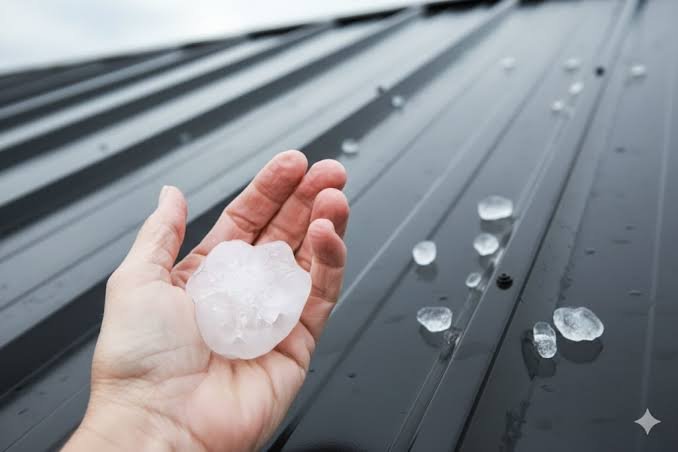
I’ll never forget the first time I walked a homeowner through the aftermath of a violent hailstorm. Maria stood in her driveway, staring up at a roof that just hours before had felt like an unshakable shield. Now, tiny craters dotted the shingles, granules were collecting in the gutters like black sand, and a small crack in a skylight whispered the threat of water damage. Her voice cracked: “Is this as bad as it looks?” The answer wasn’t a simple yes or no and that’s exactly why I’m writing this guide. Hail damage roof repair can feel overwhelming, but when you break it down step by step, it becomes a problem you can solve with clarity, not chaos.
Whether you’re a homeowner seeing your roof for the first time after a storm or a creator trying to build a helpful resource, this comprehensive guide is built to give you real, actionable answers. And because search engines and AI assistants now prioritize content that answers questions directly, I’ve structured this to work beautifully for both human readers and answer engines. No fluff, no jargon just the road map you need.
Spotting the Storm’s Fingerprint: What Hail Damage Actually Looks Like
Before you even think about repairs, you need to know what you’re looking at. Hail doesn’t just “hit” a roof; it bruises it. On asphalt shingles, the classic sign is a dark, circular depression where granules have been knocked away, exposing the underlying mat. If you gently run your thumb over a suspicious spot and feel a slight indentation think of a golf ball’s dimple that’s likely a hail hit. You might also notice granule loss concentrated in one direction, matching the wind-driven angle of the storm. Siding, fascia, and even exterior air-conditioner fins often carry matching dent patterns, which serve as collateral clues that the roof took a beating.
But here’s where things get tricky: not every dark spot is hail damage. Blistering from heat or poor ventilation often looks similar to the untrained eye, but blisters tend to pop and leave a crater without bruising the mat. And if you’re peering at the roof from the ground with binoculars, you’ll miss the subtle bruises that a roof inspection from a pro would catch. Many insurance claims hinge on that distinction, so if you’re unsure, that’s a perfect time to bring in a trusted roofing contractor for a professional hail damage roof inspection.
A quick mental checklist: you want to see impressions that are random, not in a straight line (which points to mechanical damage), and you want to see the damage spread across multiple roof slopes and adjacent metal surfaces. If all the dents face the same direction, you’ve got a solid case for storm-related damage.
First Steps After the Sky Clears
Once it’s safe, document everything. Take clear photos and videos from the ground use a zoom lens or a drone if you have one capturing not only the roof but also gutters, downspouts, and any dents on window trim. Lay a coin or a ruler next to a hailstone you find for scale. Write down the date and time of the storm; adjusters love precision. If you have a leak or missing shingles, your immediate priority is emergency roof repair after hail to stop water from getting inside. Tarping the affected area is a solid temporary fix, but please don’t risk your safety on a wet, steep roof. That’s a job for a pro.
Once you’ve done the triage, reach out to your insurance company to file a claim. A good tip: have a reputable local roofing company meet the adjuster on-site. A roofer who understands storm damage can advocate for you, pointing out bruises the adjuster might overlook. This turns the claims process from a nerve-wracking guessing game into a collaborative walkthrough, increasing your chance of a fair settlement.
Should You Repair or Replace? A Hard Question Made Simple
After the adjuster’s report, you’ll be staring at a number and a decision: pay for a few shingle repairs or push for a full roof replacement. If the damage is confined to one small slope and the rest of the roof is relatively young and in good shape, spot repair is a reasonable path. You can replace individual hail damaged shingles without breaking the bank, and the fix can last for years. But when hail damage is widespread dozens of bruises scattered across every plane the roof’s integrity is compromised. At that point, repairing a patchwork of spots is like putting Band-Aids on a cracked windshield. Many building codes today also require bringing the roof up to current standards if you’re replacing more than a certain percentage, which can tilt the scales toward a full replacement.
I always tell homeowners: consider your roof’s age. If it’s already 15-18 years into a 25-year lifespan, investing in a partial repair may not be the best move. You could face a second deductible if another storm rolls through next year. A comprehensive hail damage roof replacement, while a bigger upfront hit to your wallet (usually just your deductible), resets the clock and often comes with improved impact-resistant materials that might even lower your insurance premium.
What Does Hail Damage Roof Repair Cost?
Let’s talk numbers, because this is what keeps people up at night. For minor repairs, you might spend $300 to $1,000 depending on how many shingles need replacing and the roof’s pitch. But if you’re looking at a full roof replacement after hail, costs vary widely: in the U.S., you’re often seeing $8,000 to $25,000+ for a standard asphalt shingle roof, with your insurance deductible typically being your only out-of-pocket cost if the claim is approved. Labor, material, regional rates, and roof complexity all pull the price up or down. Be wary of any contractor who gives you a quote over the phone without an inspection, or who promises to “waive your deductible” that’s a red flag for insurance fraud and subpar workmanship
A trustworthy roofer will provide a detailed estimate, line by line, and walk you through it without pressure. They’ll also discuss options like Class 4 impact-resistant shingles, which can withstand larger hail and might earn you a discount on future premiums. If you’re in a hail-prone state like Texas or Colorado, that upgrade is worth its weight in peace of mind.
Finding a Roofing Partner You Can Actually Trust
After a major storm, your neighborhood suddenly blooms with signs from out-of-state contractors. Some are legitimate; many are storm chasers who will take your money and vanish before the first leak appears. Protect yourself: ask for proof of local licensing, liability insurance, and workers’ comp. Look for manufacturer certifications like GAF Master Elite or CertainTeed SELECT those require ongoing training and a solid reputation. Check online reviews but also ask for local references from past hail damage repairs. A real pro won’t mind.
When you meet the contractor, pay attention to how they communicate. Do they listen to your concerns, or do they bulldoze the conversation with a one-size-fits-all pitch? The relationship should feel collaborative, because you’ll be living under that roof for years to come.
Future-Proofing Against the Next Big Storm
Once your roof is repaired or replaced, it’s natural to want to never go through this again. Modern materials give you that option. Impact-resistant shingles rated Class 4 are engineered to take a beating from hailstones up to 2 inches in diameter. They’re not hail-proof, but they dramatically reduce the kind of bruising that shortens a roof’s life. Pair them with a high-quality synthetic underlayment and properly sealed flashing, and you’ve created a defensive shell. Maintenance matters, too: keep gutters clean so ice dams don’t worsen minor damage, trim overhanging branches, and schedule a roof checkup every couple of years. A little proactive care keeps small issues from turning into budget-busting emergencies.
Conclusion
A hailstorm can leave you feeling exposed, but you’re not helpless. Hail damage roof repair is a process one that begins with a clear-eyed inspection, moves through a fair insurance claim, and ends with a roof that’s either expertly patched or reborn stronger than before. I’ve seen homeowners go from panicked to empowered simply by knowing what to look for and who to call. So take a deep breath, document what you can, and lean on a trusted local professional. Your roof has protected you through the storm; now it’s your turn to protect it, one smart decision at a time.

 Arabic
 French
 Spanish
 Portuguese
 Deutsch
 Turkish
 Dutch
 Italiano
 Russian
 Romaian
 Portuguese (Brazil)
 Greek