


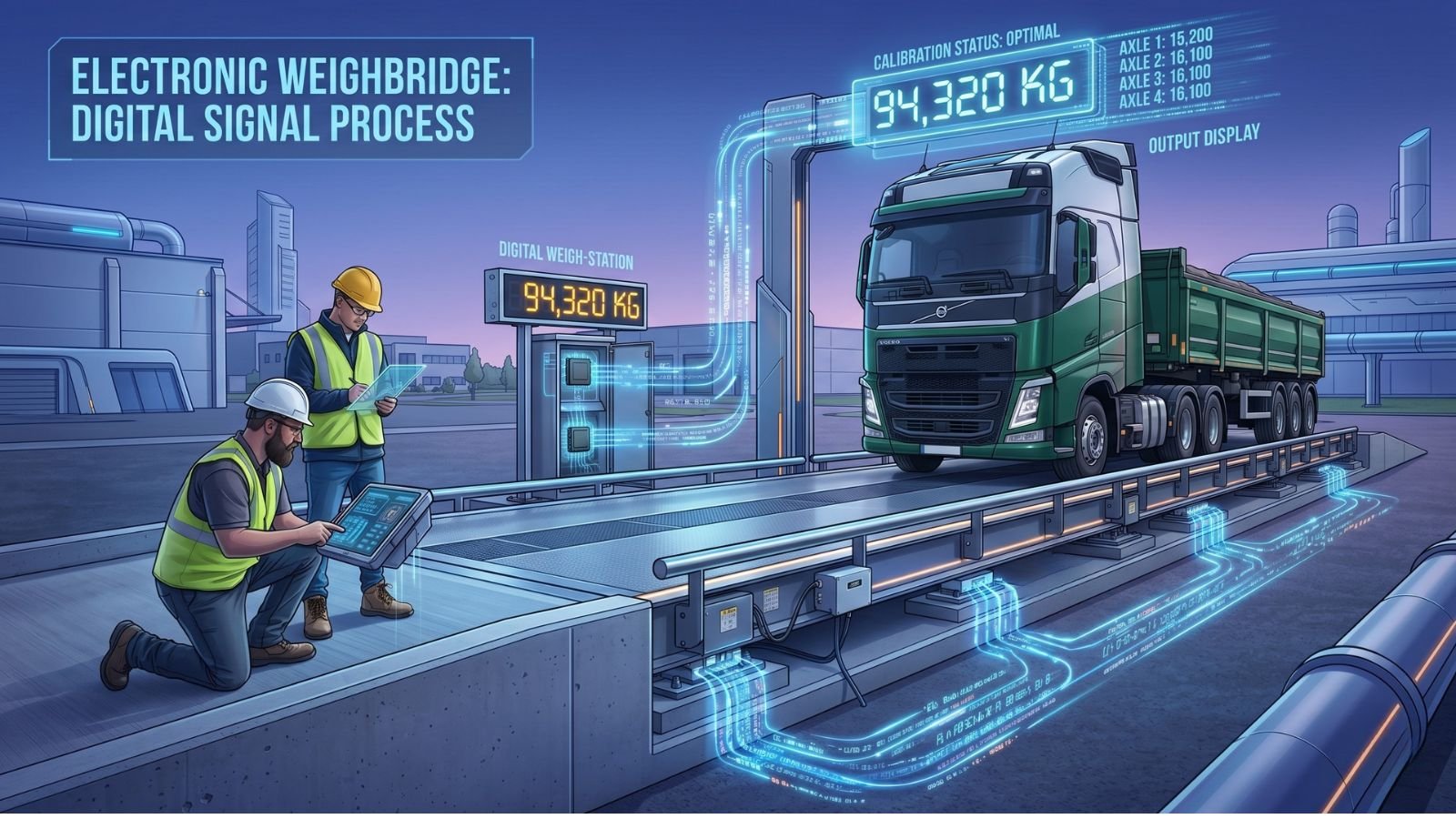
In industries like logistics, construction, mining, agriculture, and manufacturing, accurate weight measurement is critical for operations, billing, and compliance. Traditional weighing methods are no longer sufficient for modern business needs.
This is where an electronic weighbridge comes into play — a highly accurate, digital solution designed to weigh heavy vehicles like trucks and trailers efficiently.
In this blog, we will explain what an electronic weighbridge is, how it works, its components, benefits, and why businesses are rapidly adopting it.
What is an Electronic Weighbridge?
An electronic weighbridge is a large industrial weighing system that uses digital technology and sensors (load cells) to measure the weight of vehicles.
Unlike mechanical weighbridges, electronic systems:
- Provide high accuracy
- Offer real-time data display
- Can be integrated with software and automation systems
These weighbridges are commonly installed at:
- Factories
- Warehouses
- Mining sites
- Toll plazas
- Logistics hubs
Key Components of an Electronic Weighbridge
Understanding the components helps you understand how the system works.
1. Weighbridge Platform (Deck)
- The surface where vehicles stand
- Made of steel or concrete
- Designed to handle heavy loads (30–100 tons or more)
2. Load Cells (Sensors)
- The heart of the weighbridge
- Convert weight into electrical signals
- Ensure precise measurement
3. Junction Box
- Connects multiple load cells
- Balances signals
- Ensures accurate readings
4. Weight Indicator
- User interface for operators
- Displays weight digitally
- May include printer and data logging
5. Software & Computer System
- Stores weight data
- Generates reports
- Integrates with ERP systems
- Enables automation (RFID, unmanned systems)
How Does an Electronic Weighbridge Work?
The working process is simple but technologically advanced.
Step-by-Step Process:
Step 1: Vehicle Positioning
The truck is driven onto the weighbridge platform.
Step 2: Load Detection
- Load cells detect pressure
Step 3: Signal Conversion
- Load cells convert force into electrical signals
- Signals are sent to the junction box
Step 4: Data Processing
- The indicator processes signals
- Converts them into weight values
Step 5: Display & Recording
- Weight is displayed on the screen
- Data is stored in software
- Optional: print slip generated
In simple terms:
Weight → Load Cell → Electrical Signal → Indicator → Digital Output
Types of Electronic Weighbridges
1. Pit Type
- Installed at ground level
- Ideal for limited space
2. Pitless Type
- Installed above ground
- Requires ramps
- Easier maintenance
3. Portable Weighbridge
- Temporary installation
- Used in remote locations
Advantages of Electronic Weighbridges
High Accuracy
Digital sensors ensure precise readings, reducing errors and losses.
Faster Operations
Quick weighing process improves vehicle turnaround time.
Data Management
- Automatic data storage
- Easy report generation
- Integration with software
Automation Capabilities
Supports:
- RFID systems
- Unmanned weighing
- Camera integration
Low Maintenance
Compared to mechanical systems, electronic weighbridges require less maintenance.
Applications of Electronic Weighbridges
Electronic weighbridges are widely used in:
- Logistics & Transport – For truck weight measurement
- Construction – For raw material tracking
- Mining Industry – For heavy load management
- Agriculture – For weighing crops and produce
- Manufacturing Units – For inventory control
Electronic vs Mechanical Weighbridge
| Feature | Electronic | Mechanical |
|---|---|---|
| Accuracy | High | Moderate |
| Maintenance | Low | High |
| Data Storage | Available | Not available |
| Automation | Yes | No |
| Speed | Fast | Slow |
Clearly, electronic weighbridges are more efficient and future-ready.
Factors to Consider Before Buying
- Capacity (30 ton, 50 ton, 100 ton)
- Platform size
- Installation type (pit/pitless)
- Budget
- Software integration needs
Common Challenges & Solutions
Issue: Incorrect readings
Solution: Regular calibration
Issue: Load cell damage
Solution: Use high-quality sensors
Issue: Water accumulation
Solution: Proper drainage system
Future of Electronic Weighbridges
The future is moving toward smart weighing systems:
- IoT-enabled weighbridges
- Cloud-based data storage
- AI-powered analytics
- Fully automated unmanned systems
These innovations are making weighbridges more efficient and intelligent.
Conclusion
An electronic weighbridge is an essential investment for businesses dealing with heavy vehicle movement. It offers accuracy, speed, automation, and data management, making it far superior to traditional systems.
Understanding how it works helps you:
- Make better purchasing decisions
- Improve operational efficiency
- Reduce losses and errors

 English
 Arabic
 French
 Spanish
 Portuguese
 Deutsch
 Turkish
 Italiano
 Russian
 Romaian
 Portuguese (Brazil)
 Greek
Greek