The Concept of Real Estate Tokenization
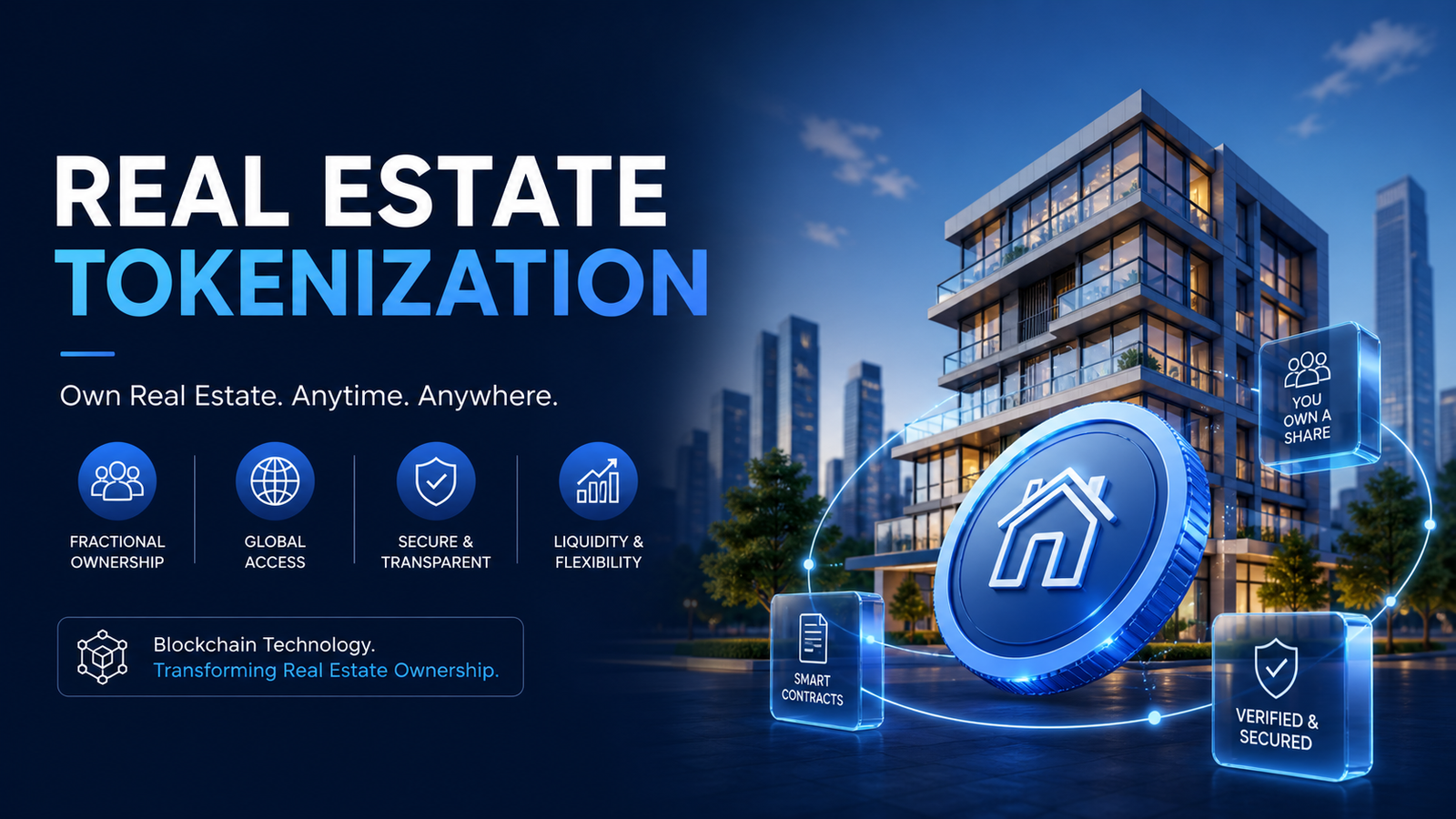
Real estate tokenization involves representing ownership or financial rights associated with a property as digital tokens on a blockchain. Each token corresponds to a fraction of the asset, enabling investors to hold partial ownership or receive a share of income generated by the property.
Tokenization leverages blockchain technology to provide:
- Immutable records of ownership
- Smart contract automation for transactions and distributions
- Secure and transparent data management
- Digital marketplaces for trading tokenized assets
By digitizing property rights, tokenization introduces a new layer of functionality that extends beyond traditional real estate structures.
Redefining Property Through Structural Innovation
Real estate tokenization is redefining property as an asset class by introducing several structural innovations that reshape its core characteristics.
1. From Illiquid Holdings to Liquid Digital Assets
One of the most significant changes is the transformation of real estate from an illiquid asset into a more liquid, tradable instrument. Tokenized property can be divided into smaller units and traded on digital platforms, enabling investors to buy and sell fractions of assets with greater ease.
This liquidity alters the fundamental nature of real estate investing. Instead of committing capital for extended periods, investors can adjust their positions dynamically, similar to trading stocks. The ability to access secondary markets reduces the friction associated with property transactions and enhances overall market efficiency.
2. Democratization of Access
Tokenization lowers the financial barriers to entry by enabling fractional ownership. Investors no longer need large amounts of capital to participate in high-value real estate opportunities. Instead, they can acquire tokens representing small portions of properties.
This democratization expands the investor base, allowing individuals from diverse financial backgrounds and geographic regions to access real estate markets. As a result, property transitions from an exclusive asset class to a more inclusive investment option.
3. Integration of Programmability
Traditional real estate assets are static in their structure. Tokenized assets, however, are programmable through smart contracts. These contracts define how income is distributed, how ownership is transferred, and how governance decisions are made.
Programmability introduces a new dimension to property investment. Rental income can be automatically distributed to token holders, compliance rules can be enforced in real time, and governance mechanisms can be embedded within the asset itself.
This shift transforms real estate into a dynamic financial instrument with built-in operational logic.
4. Enhanced Transparency and Data Accessibility
Blockchain technology provides a transparent and immutable record of all transactions and ownership changes. This transparency addresses one of the longstanding challenges in real estate: limited visibility into asset performance and ownership structures.
Investors can access real-time data on:
- Ownership distribution
- Transaction history
- Revenue streams
- Asset performance metrics
This level of transparency enhances trust and enables more informed decision-making, contributing to the redefinition of real estate as a data-driven asset class.
5. Globalization of Property Investment
Real estate markets have traditionally been localized, with access often restricted by geographic and regulatory barriers. Tokenization enables global participation by allowing investors to access properties through digital platforms.
While regulatory considerations remain, blockchain-based systems streamline cross-border transactions and reduce the complexity associated with international investments. This globalization expands the reach of real estate markets and integrates them into a broader financial ecosystem.
6. Creation of Hybrid Financial Instruments
Tokenization enables the development of hybrid asset structures that combine elements of equity, debt, and utility. For example, a token may represent ownership rights, a share of rental income, and access privileges within a property.
These hybrid structures allow for more flexible investment models, catering to different risk-return preferences. Investors can choose tokens that align with their strategic objectives, whether focused on income generation, capital appreciation, or utility-based benefits.
7. Real-Time Valuation and Market Responsiveness
Traditional real estate valuation is often periodic and based on appraisals. Tokenized assets, by contrast, can reflect real-time market dynamics through trading activity.
This continuous price discovery enhances market responsiveness, allowing investors to react to changes in demand, economic conditions, or asset performance. Real estate becomes more aligned with other financial markets in terms of pricing efficiency.
Implications for Investment Strategy
The redefinition of real estate as an asset class has significant implications for investment strategies.
Portfolio Diversification
Tokenization enables investors to diversify across multiple properties, regions, and asset types with smaller capital allocations. This diversification reduces risk and enhances long-term stability.
Active Portfolio Management
With increased liquidity, investors can actively manage their real estate portfolios, adjusting allocations based on market conditions. This contrasts with traditional buy-and-hold strategies.
Income Optimization
Automated distribution of rental income allows for more efficient income management. Investors can reinvest returns or allocate them across different assets seamlessly.
Risk Management
Transparency and real-time data improve risk assessment, enabling investors to make more informed decisions and adapt strategies as needed.
Challenges in Redefining the Asset Class
Despite its transformative potential, real estate tokenization faces several challenges:
Regulatory Frameworks
Tokenized assets often fall under securities regulations, requiring compliance with complex legal requirements across jurisdictions.
Market Adoption
Widespread adoption depends on investor confidence and understanding of tokenized systems.
Technology Infrastructure
Ensuring scalability, security, and interoperability of blockchain platforms is critical for long-term success.
Standardization
The lack of standardized frameworks can create inconsistencies in token design and market practices.
Future Outlook
As tokenization continues to evolve, its impact on real estate as an asset class is expected to deepen. Future developments may include:
- Integration with decentralized finance ecosystems
- Tokenized real estate indices and funds
- Cross-platform interoperability
- Advanced analytics for asset performance
These advancements will further enhance the flexibility and efficiency of property investments, solidifying tokenization’s role in reshaping the asset class.
Conclusion
Real estate tokenization is redefining property as an investable asset class by transforming its core characteristics. Through fractional ownership, enhanced liquidity, programmability, and global accessibility, tokenization addresses many of the limitations that have historically constrained real estate investments. The shift from static, illiquid holdings to dynamic, digital assets represents a fundamental evolution in how property is perceived and utilized within investment portfolios. While challenges remain, the trajectory of innovation suggests that tokenization will play a central role in the future of real estate. As the ecosystem matures, real estate is likely to become more integrated with global financial markets, offering investors a more flexible, transparent, and inclusive asset class that aligns with the demands of modern investment strategies.



 Arabic
 French
 Spanish
 Portuguese
 Deutsch
 Turkish
 Dutch
Dutch
 Italiano
 Russian
 Romaian
 Portuguese (Brazil)
 Greek
Greek