


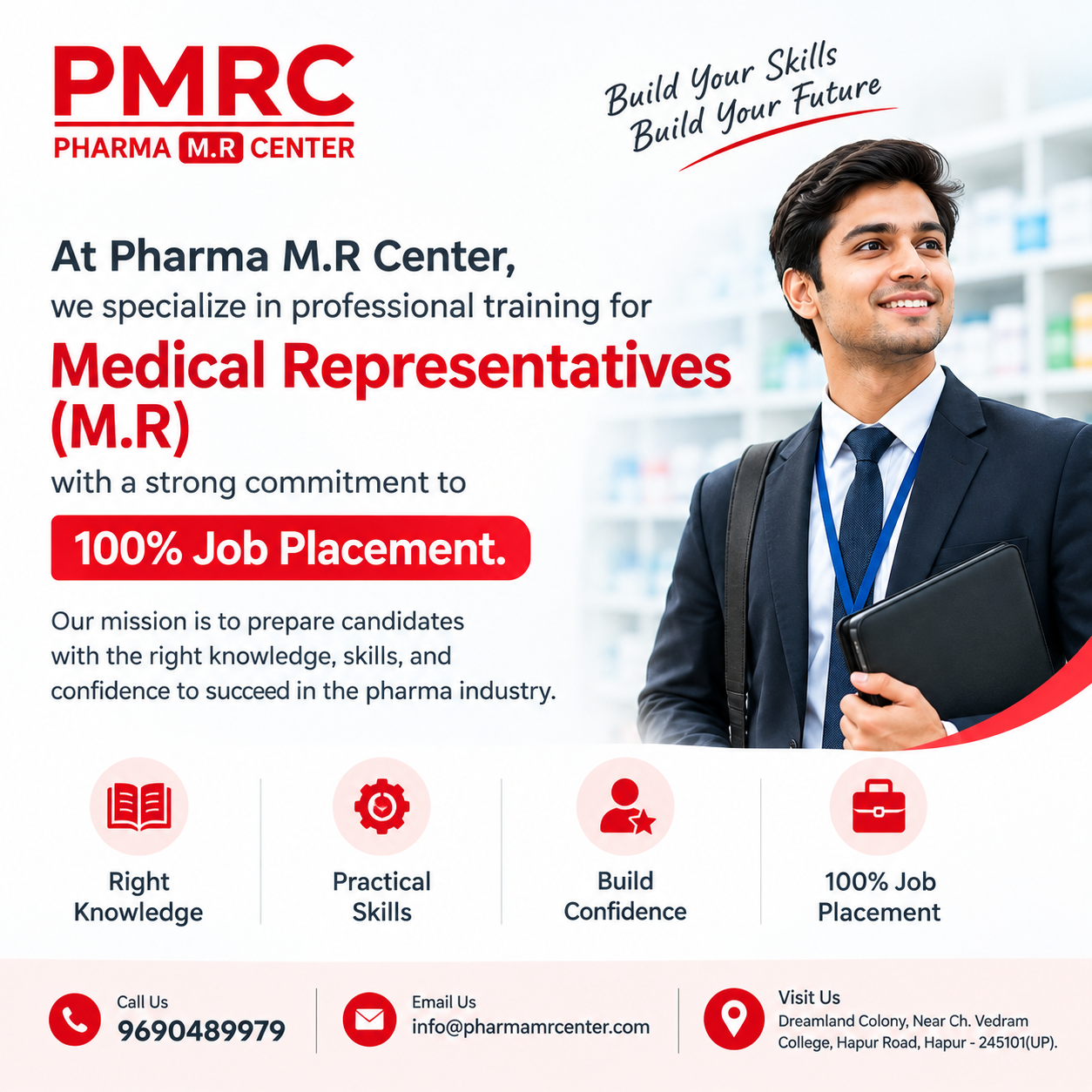
Starting a career in the pharmaceutical industry can be a good option for candidates who enjoy communication, learning about medicines, and working with people. One of the common career opportunities in this field is a Medical Representative (MR) position. Medical Representatives work with pharmaceutical companies to share approved product information with doctors, pharmacists, and other healthcare professionals.
Before applying for a Medical Representative Job, many candidates have questions about the required qualifications. They want to know whether a pharmacy degree is compulsory, whether graduates from other streams can apply, and whether freshers need previous experience. These are important questions because eligibility criteria can differ between pharmaceutical companies and job vacancies.
The good news is that some employers recruit freshers for entry-level positions, while others prefer candidates with specific educational backgrounds or previous sales experience. Understanding the requirements can help you identify suitable vacancies and prepare for interviews.
In this article, we will explain the educational qualifications, skills, training options, and other requirements that candidates should consider before applying for a Medical Representative position.
1. What Is a Medical Representative Job?
A Medical Representative is a professional who represents a pharmaceutical company and communicates approved information about its products to relevant healthcare professionals.
The role generally combines product knowledge, professional communication, fieldwork, and sales activities. Representatives may visit doctors, meet pharmacists, maintain customer relationships, and work towards assigned business targets.
Their responsibilities may include:
- Visiting healthcare professionals according to an assigned schedule.
- Learning about the company's pharmaceutical products.
- Explaining approved product information and supporting materials.
- Answering questions within the limits of their knowledge and training.
- Maintaining records of visits and reporting relevant market feedback.
- Working towards sales targets set by the company.
- Following company policies and ethical promotional guidelines.
Understanding these responsibilities is useful before choosing this career. A Medical Representative position may involve regular travel, interaction with different people, and the need to learn product information continuously.
2. Which Educational Qualifications Are Required?
Educational qualifications are among the first requirements employers consider when hiring Medical Representatives. However, there is no single qualification that applies to every company.
Many pharmaceutical employers consider candidates with backgrounds in pharmacy, science, or life sciences. Some companies also recruit graduates from other streams for sales-oriented positions.
Here are some educational backgrounds that may be considered.
Bachelor of Pharmacy (B.Pharm)
A B.Pharm degree provides knowledge of pharmaceutical sciences, medicines, and related subjects. It can be relevant for Medical Representative positions where employers prefer candidates with a pharmacy background.
Candidates with this qualification may already be familiar with pharmaceutical terminology, although they will still need to learn the company's specific products and sales procedures.
Diploma in Pharmacy (D.Pharm)
Some employers may accept candidates with a D.Pharm qualification, depending on their recruitment policies and the requirements of the vacancy.
Before applying, check whether the job advertisement accepts diploma holders or specifically requires a graduate degree.
Bachelor of Science (B.Sc.)
Candidates with a B.Sc. degree in subjects such as chemistry, biology, microbiology, or other relevant life sciences may be suitable for certain pharmaceutical sales positions.
A science background can help candidates understand basic pharmaceutical concepts and learn product information.
Bachelor of Arts (B.A.) or Bachelor of Commerce (B.Com.)
Some pharmaceutical companies may consider graduates from arts, commerce, or other academic streams, particularly for entry-level sales roles.
However, this is not universal. Some vacancies require a science or pharmacy qualification, so candidates should always confirm the employer's eligibility criteria.
Important: Do not assume that every pharmaceutical company accepts the same qualifications. Read the official job advertisement carefully before applying.
3. Can Freshers Apply for a Medical Representative Job?
Yes, freshers can apply for a Medical Representative Job when the employer accepts entry-level candidates.
Previous experience is not compulsory for every MR position. Some companies provide initial training to help new employees understand their products, reporting procedures, territory responsibilities, and sales expectations.
However, freshers should still prepare before attending interviews. Employers may assess communication skills, confidence, willingness to travel, and the ability to learn pharmaceutical product information.
If you are applying for your first job, focus on:
- Preparing a clear self-introduction.
- Understanding the responsibilities of a Medical Representative.
- Learning basic pharmaceutical terminology.
- Improving communication and presentation skills.
- Researching the company and its products.
- Practising common interview questions.
For example, if the interviewer asks why you want to become a Medical Representative, explain your interest in the pharmaceutical industry and your willingness to develop product knowledge and professional sales skills.
Be honest about your experience. A fresher can present themselves confidently without claiming to have skills or qualifications they do not possess.
4. Are Communication Skills Important for an MR Job?
Yes. Communication skills are important because Medical Representatives regularly interact with doctors, pharmacists, managers, and other professionals.
They need to introduce themselves politely, explain approved product information clearly, listen to questions, and respond professionally.
Candidates do not necessarily need perfect English. Depending on the assigned territory, Hindi and other regional languages may also be useful. The important point is being able to communicate accurately and respectfully.
You can improve communication skills by practising short presentations, participating in group discussions, reading aloud, and preparing answers to common interview questions.
It is also important to learn how to listen carefully. If a healthcare professional asks a question that you cannot answer, you should verify the information through the appropriate company channel rather than guess.
Strong communication skills can help freshers feel more comfortable during interviews and prepare them for professional interactions after joining.
5. Is Previous Sales Experience Necessary?
Experience requirements depend on the company and the position.
Some employers recruit freshers for entry-level Medical Representative roles. Others prefer candidates who have already worked in pharmaceutical sales, field sales, customer service, or related positions.
Previous sales experience may help candidates understand customer communication, daily planning, follow-ups, and sales targets. However, it does not replace the need to learn pharmaceutical products and follow industry-specific requirements.
If you have worked in retail, customer service, or another sales role, highlight transferable skills in your resume. For example, you may have experience handling customer questions, maintaining records, or working towards targets.
If you are a fresher, focus on your education, communication skills, practical training, and willingness to learn.
Always check whether the vacancy specifies previous experience or clearly states that freshers are welcome.
6. What Other Requirements Should Candidates Consider?
Apart from education and experience, pharmaceutical companies may consider other requirements when hiring Medical Representatives.
These can vary depending on the employer, location, and responsibilities of the position.
Common requirements may include:
- Good communication and interpersonal skills.
- Willingness to travel within an assigned territory.
- Ability to work towards sales objectives.
- Basic computer and reporting knowledge.
- Professional behaviour and punctuality.
- Ability to learn product information.
- A valid driving licence, if required for the particular role.
Some positions may also specify age preferences or other employment conditions. There is no single age limit or universal set of requirements for every Medical Representative vacancy.
Before applying, review the job description and ask the recruiter about any unclear conditions, including travel expectations, working hours, and reporting responsibilities.
7. Is a Medical Representative Training Course Necessary?
A medical representative training course is not a universal requirement for every Medical Representative Job. Some employers provide their own training after selection, while others may prefer candidates who have completed relevant preparation.
Even when a course is not compulsory, it can be useful for freshers who want to understand the role before applying.
Depending on the institute and curriculum, training may cover:
- Basic pharmaceutical terminology.
- Product knowledge and product presentation.
- Communication and personality development.
- Sales fundamentals and customer interaction.
- Interview preparation and mock interviews.
- Territory planning and daily reporting.
- Professional behaviour and workplace expectations.
A course can help candidates identify their strengths and areas for improvement. Practical exercises may also make it easier to understand how pharmaceutical sales conversations are conducted.
Before enrolling, review the syllabus, course duration, fees, practical sessions, and trainer experience. If the institute advertises placement assistance, ask what support is provided and whether the claims can be verified.
Completing a course does not automatically guarantee a job. Employers will still assess whether your qualifications and skills match their requirements.
8. How to Prepare Your Resume for a Medical Representative Job
Your resume should clearly explain your educational background, skills, and suitability for the position.
If you are a fresher, you do not need to fill the resume with unrelated information. Focus on the details that help the employer understand your potential.
Include the following:
- Full name and contact information.
- Educational qualifications.
- Relevant skills and languages.
- Completed training or certifications.
- Internships or relevant work experience, if applicable.
- Basic computer knowledge.
- A short career objective related to pharmaceutical sales.
For example, your career objective can mention that you want to begin a career in pharmaceutical sales, develop strong product knowledge, and contribute through professional communication and consistent fieldwork.
Use a simple layout and check your spelling before submitting the document. Make sure every qualification, certification, and experience listed is accurate.
9. Common Interview Questions for Medical Representative Candidates
After meeting the basic eligibility requirements, you should prepare for the interview.
Employers may ask questions such as:
- Tell me about yourself.
- Why do you want to become a Medical Representative?
- What are the main responsibilities of an MR?
- What qualifications make you suitable for this role?
- Are you comfortable with fieldwork and travel?
- How would you respond if a doctor asked a question you could not answer?
- How would you manage your daily schedule?
- Why should we hire you as a fresher?
Practise answering these questions in your own words. Research the company, understand its job requirements, and prepare a few questions about training and responsibilities.
Interviewers may not expect freshers to know everything, but they may want to see that you have prepared seriously and understand the nature of the position.
10. Career Opportunities After Becoming a Medical Representative
A Medical Representative position can provide practical experience in pharmaceutical sales, product promotion, communication, and territory management.
With relevant experience and suitable performance, professionals may have opportunities to progress into positions such as Senior Medical Representative or Area Sales Manager. Other career paths may become available depending on qualifications, experience, company structure, and individual performance.
Career progression is not automatic. It generally depends on consistent results, professional conduct, product knowledge, and the ability to handle additional responsibilities.
Freshers should focus first on learning their responsibilities, understanding company procedures, and building good working habits. These foundations can support further professional growth.
Conclusion
Understanding the qualifications required for a Medical Representative Job can help you choose suitable vacancies and prepare for the recruitment process. Educational requirements vary between employers, and some companies accept freshers while others prefer specific degrees or previous experience.
If you are searching for a medical representative job MR job opportunity, begin by checking the eligibility criteria in the official vacancy announcement. Develop your communication skills, learn basic pharmaceutical terminology, and prepare a professional resume.
A suitable medical representative training course may provide additional guidance through structured learning, interview practice, and job-related exercises. However, training should be combined with consistent preparation and a realistic understanding of the job.
You do not need to know everything before starting your career. Focus on meeting the employer's requirements, demonstrating your willingness to learn, and developing the skills needed to work responsibly in the pharmaceutical industry.

 English
 Arabic
 French
 Spanish
 Portuguese
 Deutsch
 Turkish
 Dutch
Dutch
 Russian
 Romaian
 Portuguese (Brazil)
 Greek
Greek