


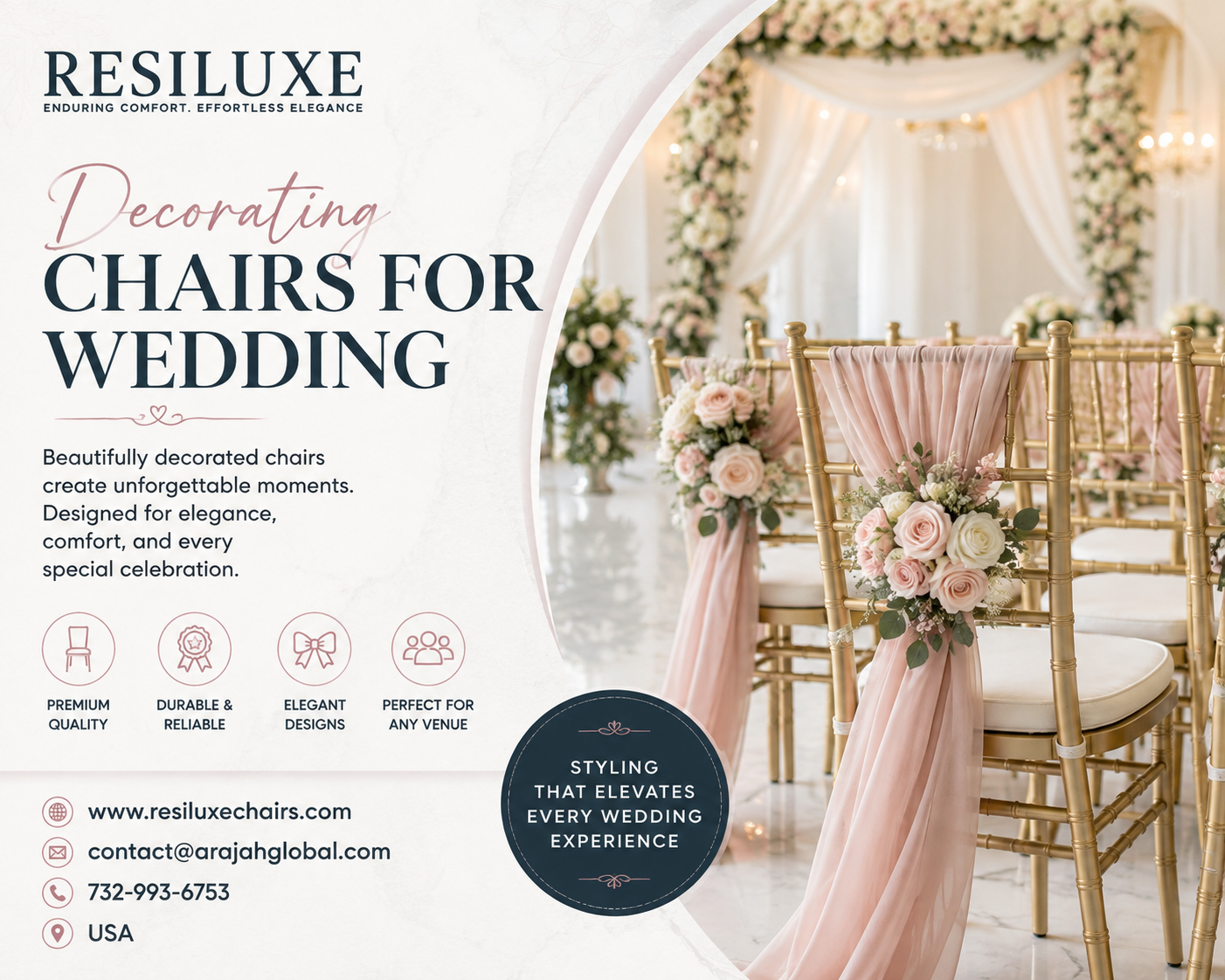
A well-decorated event space does not always require expensive furniture or elaborate decorations. Sometimes, the difference comes down to how the seating is selected, arranged, and coordinated with the rest of the venue. Decorating chairs for wedding celebrations, formal dinners, and receptions can change the appearance of a room without requiring a complete redesign. With suitable chair styles, thoughtful color choices, and a few carefully selected details, event planners can make ordinary seating feel like a natural part of the décor.
Start With the Right Chair Style
Before adding decorative elements, consider the chair itself. Its shape, finish, and overall appearance influence how it fits into the event setting. A simple chair may work well for a casual gathering, while a more structured design can suit a formal reception or banquet.
For instance, Resiluxe Chairs offers several event seating styles, including Chiavari, Royale, Elegance, Napolean, Ornate, Cross Back, Willow, and Windsor chairs. These options demonstrate how different chair designs can create distinct impressions without relying on excessive decoration.
Match the Chair to the Venue
A grand banquet hall, an outdoor wedding space, and a modern reception venue have different visual requirements. Traditional chair designs can complement formal interiors, while Cross Back or Windsor styles may suit settings with a more relaxed appearance.
Ceremony chairs should also fit the space available and the character of the occasion. A design that looks attractive in a product photograph may not be the best choice for every venue. Consider the room's architecture, table arrangements, floor space, and existing décor before making a selection.
Use Color to Create a More Refined Setting
Color coordination is one of the simplest ways to improve the appearance of event seating. Chairs do not necessarily need elaborate coverings or accessories to look appropriate. A finish that complements the event's palette can make the entire arrangement appear more organized.
White seating works with many wedding themes, including pastel arrangements, bold floral displays, and neutral table settings. Gold finishes can suit more formal celebrations, while clear chairs may help maintain an open appearance in spaces where planners want the surrounding décor to remain visible.
Keep the Color Scheme Consistent
When decorating chairs for wedding receptions, begin with two or three main colors and use them consistently throughout the room. This helps the seating feel connected to the tables, flowers, and other decorative details.
A few practical ideas include:
-
Pair white chairs with soft-colored linens and seasonal flowers.
-
Use gold chairs alongside restrained metallic accents.
-
Choosing clear seating when maintaining an open visual layout is important.
-
Coordinate chair finishes with the venue's existing colors instead of introducing unnecessary shades.
Add Decorative Details Without Overdoing Them
Chair decorations can contribute to a wedding theme, but too many additions can make the seating look crowded. Before attaching ribbons, fabric, or floral accents, consider whether the chair already has a distinctive design. A detailed chair may need little extra decoration, whereas a simpler style may offer more room for creative touches.
Choose Details That Suit the Occasion
For formal weddings, small floral accents or neatly arranged fabric details can complement the surrounding décor. For understated receptions, keeping the chairs unadorned may create a cleaner result.
When decorating chairs for wedding ceremonies, planners should also consider how securely decorations are attached and whether they interfere with guests sitting comfortably. Loose fabric, oversized bows, or decorations extending into walkways can create practical problems during an event.
Keep these points in mind:
-
Use decorations that remain secure throughout the occasion.
-
Avoid details that obstruct seating or create trip hazards.
-
Keep embellishments consistent across the same seating area.
-
Check the finished arrangement from different points in the venue.
Arrange Seating With Both Appearance and Function in Mind
Even attractive chairs can look out of place when arranged poorly. Straight rows, balanced spacing, and clear walking routes help a venue look organized. For ceremonies, the seating plan should provide guests with a clear view while allowing convenient access to their places.
Ceremony chairs need to be selected with the event layout in mind, especially when the space also accommodates photography, floral displays, an aisle, or a stage. The number of chairs, their dimensions, and the available floor area all affect the final arrangement.
For receptions, planners should consider how seating fits around dining tables and whether guests can move comfortably between tables. A visually appealing layout should not come at the expense of accessibility or convenience.
Consider Maintenance Before the Event Begins
Luxury-looking décor must also hold up during the occasion. Chairs may be moved several times during setup, used throughout the event, and prepared for future bookings. Their finish and construction should therefore suit the venue's practical requirements.
When comparing options, buyers should check the specifications of individual models, including material, finish, and maintenance requirements, rather than assuming every chair has the same features.
Ceremony chairs should be inspected before guests arrive. Check for visible marks, loose components, and misplaced decorations. Cleaning the seating and arranging it consistently can improve the overall presentation without adding unnecessary costs.
Conclusion
Transforming basic event seating into something more refined comes down to making deliberate choices. The right chair style, a coordinated color scheme, restrained decoration, and a well-planned layout can make a noticeable difference without an excessive budget. Decorating chairs for celebrations is most effective when the design suits the venue and remains practical for guests. By treating the ceremony chairs as part of the overall event plan rather than a last-minute requirement, planners can create a setting that looks considered, comfortable, and appropriate for the occasion.

 English
 Arabic
 French
 Spanish
 Portuguese
 Deutsch
 Turkish
 Dutch
Dutch
 Italiano
 Romaian
 Portuguese (Brazil)
 Greek
Greek