


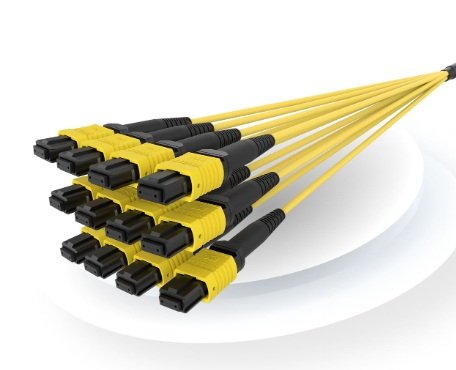
High-density optical infrastructure requires careful planning because a growing number of connections can quickly create challenges for space, organization, and maintenance. FSG Network provides fiber connectivity solutions for network environments that depend on structured and efficient optical infrastructure. Among the technologies used for multi-fiber applications, MPO and MTP-style connections can help consolidate several fiber pathways into compact interfaces. Understanding how these connector solutions work can help businesses plan cabling systems that are easier to deploy, manage, and expand.
An MPO MTP fiber connector combines multi-fiber connectivity principles with a connector format commonly used in high-density optical systems. MPO is a multi-fiber connector standard, while MTP is a specialized, enhanced version of the MPO connector family. Both are designed around multiple fibers positioned within a precision ferrule. Their compact configuration makes them useful where many optical connections need to be organized within limited rack or equipment space.
Understanding MPO and MTP Connectivity
MPO and MTP connectors are built around the concept of connecting several fibers through one interface. A precision ferrule holds the fiber ends in a defined arrangement, allowing corresponding fibers to align when compatible connectors are mated.
MTP connectors are manufactured by US Conec and are designed as an enhanced MPO connector solution, with design features intended to support improved mechanical and optical performance in compatible applications. While the terms are sometimes used interchangeably in the industry, buyers should still verify the exact connector specifications before selecting components.
The choice between different configurations depends on the equipment, cable assemblies, fiber type, fiber count, and application requirements. Treating all multi-fiber connectors as identical can lead to compatibility problems.
Why High-Density Networks Need Structured Connectivity
Modern data centers and communication facilities may contain extensive fiber infrastructure connecting switches, servers, patch panels, and optical equipment. As network capacity increases, traditional one-fiber-at-a-time connectivity can become physically demanding to organize.
Multi-fiber connectors can help consolidate optical pathways into smaller connection points. This can contribute to cleaner cabling arrangements and more efficient use of rack space. However, connector density should always be balanced with accessibility. Technicians need enough room to inspect, clean, replace, and troubleshoot connections when required.
A well-designed high-density system therefore considers both physical space and long-term serviceability.
Fiber Count and Connector Configuration
One of the first considerations when selecting a multi-fiber solution is fiber count. Different applications may require different numbers of optical channels, and the selected connector must correspond with the cable assembly and equipment interfaces.
Polarity is equally important. Optical fibers have defined transmit and receive paths, and these relationships need to remain correct across the complete connection. Multi-fiber systems can use different polarity methods, so the design should be documented before installation.
Connector gender, key orientation, fiber type, and end-face specifications should also be confirmed. These details may seem minor, but they can determine whether two components can properly mate and perform as intended.
MPO MTP Solutions for Data Centers
Data centers are a natural application for high-density multi-fiber connectivity because equipment racks often contain large numbers of optical ports. Compact connector systems can help reduce the physical complexity associated with managing individual fiber links.
An MPO MTP fiber connector can be incorporated into trunk cables, patching systems, cassettes, and other structured cabling arrangements, depending on the infrastructure design. These components can provide a standardized approach to managing groups of fibers between network locations.
Before deployment, network teams should map connection paths and confirm that every component supports the required transmission technology. Planning the complete link helps reduce unexpected compatibility issues during installation.
Cable Management and Installation
High-density connectivity places greater importance on cable management. Fiber assemblies should be routed carefully, with suitable bend-radius practices followed throughout the installation. Excessive pressure or sharp bends can damage cables or create maintenance difficulties.
Connectors also need protection from contamination. Dust and debris on optical end faces can interfere with signal transmission, so inspection and cleaning should be included in installation and maintenance procedures.
Labeling can further improve infrastructure management. When multiple multi-fiber assemblies are installed close together, clear identification of cable destinations and connector positions can save considerable time during future upgrades or troubleshooting.
Planning for Future Expansion
A major benefit of structured high-density cabling is the ability to plan for future network growth. Infrastructure teams can consider expected equipment additions, bandwidth requirements, and available rack capacity before selecting connector configurations.
Scalability does not mean installing the highest possible fiber count in every situation. Instead, the objective is to create an architecture that meets current requirements while leaving practical options for expansion.
Standardizing compatible components across a network can also simplify inventory management and technician training. Consistency may make future changes easier because teams can work with familiar connection formats and documented cabling patterns.
Selecting the Right Supplier and Components
When evaluating fiber connectivity products, buyers should look beyond terminology. Product specifications, manufacturing consistency, connector compatibility, fiber configuration, and intended application all deserve attention.
It is also important to verify whether the selected component is designed for the specific equipment and cable assembly being used. A visually similar connector may have different mechanical or optical characteristics.
FSG Network can be considered when researching fiber connectivity components for high-density optical infrastructure. Reviewing the technical requirements of the complete network before purchasing individual parts can support a more reliable deployment.
Building Efficient High-Density Infrastructure
As network capacity continues to increase, organized optical connectivity becomes an important part of infrastructure planning. Multi-fiber technologies can help consolidate connections, improve space utilization, and support structured cabling designs when appropriately implemented.
An MPO MTP fiber connector should always be selected according to the requirements of the complete optical link, including fiber count, polarity, connector configuration, equipment compatibility, and installation environment. With careful planning and proper maintenance, MPO and MTP solutions can provide a practical foundation for high-density networks that are easier to manage and prepared for future connectivity demands.

 English
 Arabic
 French
 Spanish
 Portuguese
 Deutsch
 Turkish
 Dutch
 Italiano
 Romaian
 Portuguese (Brazil)
 Greek