


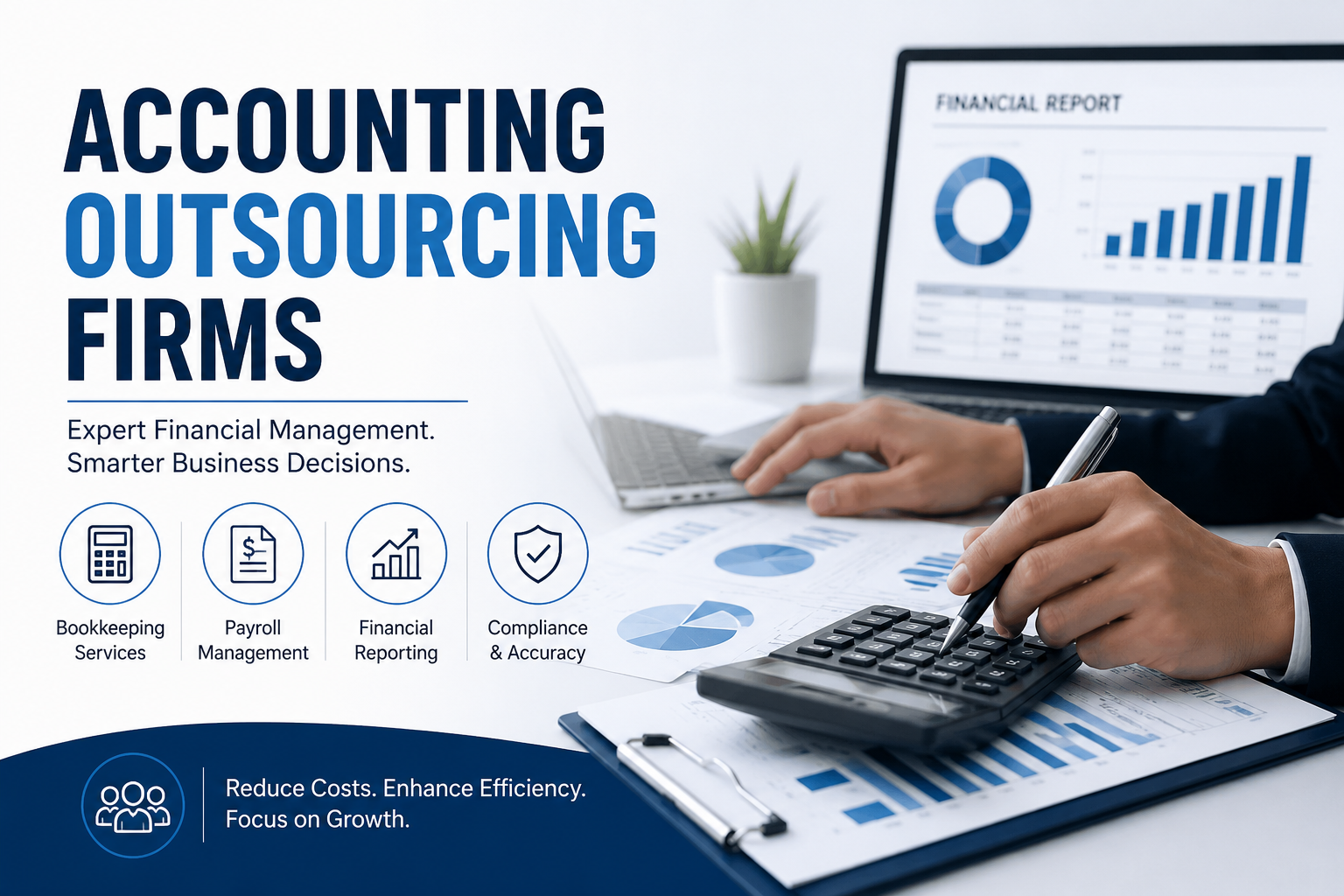
Managing business finances effectively becomes more challenging as a company grows. What starts with a handful of invoices and bank transactions can develop into a much larger workload involving bookkeeping, supplier payments, customer invoices, reporting and financial analysis. For many UK SMEs, an Accounting Outsourcing Firm can provide additional expertise and capacity without the need to build a large internal finance department. Outsourcing can also free up management time while giving businesses access to more consistent accounting processes.
Understanding the Role of Outsourced Accounting
Accounting outsourcing involves working with an external provider to manage selected financial responsibilities. The arrangement can be as simple or comprehensive as the business requires.
Some companies outsource bookkeeping and bank reconciliation, while others choose broader support covering accounts payable, accounts receivable, management accounts, financial reporting and month-end processes.
The important point is that outsourcing does not have to mean giving away complete financial control. Business owners can retain responsibility for approvals, strategy and decision-making while an external team manages agreed accounting tasks.
This approach can be particularly useful for smaller companies that need professional support but do not yet require a large permanent finance department.
Why UK Businesses Are Looking Beyond Traditional Finance Teams
Recruiting and retaining skilled finance staff can be challenging, particularly when a growing company needs additional capacity quickly.
At the same time, finance teams are expected to do more than simply record transactions. Business owners increasingly want timely reports, clearer cash-flow information and useful insight into financial performance.
Outsourcing can help bridge this gap by providing access to specialist support without requiring an immediate expansion of internal headcount. Recent UK guidance on accounting outsourcing highlights time savings, access to expertise and improved efficiency among the key reasons businesses consider the model.
Reducing the Pressure of Daily Accounting Tasks
Routine accounting work can consume a surprising amount of time.
Invoices need to be processed, transactions categorised, bank accounts reconciled and financial documents maintained. When these tasks are added to an employee's existing responsibilities, important work can quickly pile up.
An external accounting team can take responsibility for agreed activities and maintain them according to a regular schedule.
This can reduce the administrative burden on business owners and employees.
Instead of spending evenings catching up on accounts, an owner can concentrate on customers, sales, employees and strategic planning.
Keeping Financial Records Up to Date
Good financial decisions depend on reliable information.
If accounts are several weeks behind, management may not have a clear understanding of current revenue, expenses or outstanding payments.
Regular accounting support can help keep financial records current.
This makes it easier to identify unusual transactions, investigate discrepancies and prepare useful reports.
Up-to-date records can also make discussions with accountants, lenders, investors or other financial stakeholders more straightforward when accurate information is required.
Improving Cash-Flow Visibility
Cash flow is one of the areas where accurate accounting can make a significant difference.
A business might have strong sales but still experience pressure if customers pay late or large supplier bills become due unexpectedly.
An organised accounting system provides greater visibility over money coming into and leaving the business.
An outsourced provider can help maintain customer balances, supplier records and transaction information so that management has a clearer picture of upcoming financial commitments.
This does not eliminate cash-flow challenges, but it can give business owners better information for planning.
Making Management Reporting More Useful
Financial reports should do more than sit in a folder until year-end.
Regular management reporting can help owners understand how the business is performing throughout the year.
Reports may include profit and loss statements, balance sheets, cash-flow information, aged receivables and other measures relevant to the business.
An outsourced accounting team can help prepare these reports on an agreed schedule.
The benefit is that management can identify changes earlier rather than discovering them months after they occurred.
Supporting Better Business Decisions
Financial information becomes valuable when it helps management make practical decisions.
Suppose operating expenses have increased considerably. A detailed report can help identify which categories are responsible.
If revenue is growing but margins are falling, management may need to examine pricing or direct costs.
If outstanding customer invoices are increasing, the business may need to review its credit and collection procedures.
An accounting outsourcing arrangement can provide the organised information needed to investigate these situations.
The figures do not replace management judgement, but they provide a stronger foundation for it.
Handling Accounts Payable More Efficiently
Supplier management is another area where accounting outsourcing can help.
As a business grows, it may work with dozens of suppliers and receive numerous invoices each month.
Without a consistent process, invoices can be misplaced, payments delayed or records duplicated.
An outsourced accounting team can help maintain supplier records and monitor outstanding invoices.
This gives management a clearer view of what the company owes and which payments are approaching.
It can also reduce the amount of routine invoice administration handled by internal employees.
Improving Accounts Receivable Management
Getting customers to pay on time is important for maintaining healthy cash flow.
Businesses need accurate records showing which invoices have been issued, which have been settled and which remain outstanding.
An external accounting team can maintain these records and provide aged receivables information.
Management can then identify overdue balances and decide how they should be followed up.
Having a clear receivables process can be particularly valuable for businesses that are growing rapidly and dealing with a larger customer base.
Access to Specialist Accounting Knowledge
A small internal finance team cannot always cover every area of accounting expertise.
An external provider may have professionals with experience across bookkeeping, management reporting, accounts preparation and other financial processes.
This can give SMEs access to skills that might otherwise require several internal hires.
It can also be useful when a business enters a new stage of development and its accounting requirements become more sophisticated.
However, businesses should always check a provider's experience and ensure its services match their specific needs.
A Flexible Alternative to Hiring
Employing additional finance staff can involve more than just paying a salary.
Businesses also need to consider recruitment, training, software, equipment, benefits and ongoing management.
For a small company, the amount of work may not justify a full-time position.
Outsourcing can provide a more flexible arrangement.
A business can choose the level of support it needs and adjust the service as its workload changes.
This scalability is one reason outsourcing can work well for growing SMEs.
Making Better Use of Cloud Accounting
Cloud accounting has made collaboration between businesses and external finance teams much easier.
Authorised users can access financial records remotely, while invoices and receipts can be shared electronically.
This reduces the need for physical paperwork and can make communication more efficient.
Businesses should still take data security seriously. Financial information should only be accessible to authorised users, and documents should be transferred using appropriate secure systems.
Technology can improve the process, but it should always be supported by clear procedures and professional oversight.
When Should a Business Consider Outsourcing?
There is no single point at which every business should outsource its accounting.
However, certain warning signs can indicate that the existing finance process is no longer working efficiently.
These may include:
- Bookkeeping is frequently behind schedule.
- Bank reconciliations are delayed.
- Management reports take too long to prepare.
- The owner spends excessive time on financial administration.
- Internal finance employees are overloaded.
- Customer invoices are not being monitored consistently.
- The company is growing faster than its finance function.
- Management lacks current financial information.
When several of these issues appear together, reviewing the company's accounting structure can be worthwhile.
Choosing the Right Accounting Outsourcing Firm
The provider you choose can make a significant difference to the success of outsourcing.
Businesses should begin by identifying exactly which accounting tasks they want to delegate.
They can then assess potential providers based on:
- Relevant UK accounting experience
- Range of services
- Communication standards
- Technology and software compatibility
- Data security
- Scalability
- Pricing transparency
- Reporting capabilities
It is also important to understand who will be responsible for the work and how queries will be handled.
A clear agreement can prevent confusion and establish realistic expectations from the beginning.
Preparing for a Successful Transition
Moving accounting work to an external provider should be approached as a process rather than a one-day handover.
The business should first review its existing records and resolve obvious outstanding items.
Accounting software access should be arranged securely, and relevant documents should be collected.
Both sides should agree on responsibilities, deadlines and reporting requirements.
Regular communication during the initial stage can help identify problems quickly.
Once the workflow is established, the relationship should become much easier to manage.
Keeping Control After Outsourcing
One common concern among business owners is that outsourcing might mean losing control over financial information.
A well-structured arrangement should do the opposite.
Management should continue receiving regular reports and reviewing the company's financial position.
The external team handles the agreed accounting work, while the business owner remains responsible for decisions and approvals.
Regular financial reviews can ensure that management stays informed.
Final Thoughts
A strong finance function can support almost every part of a growing business. It provides information about revenue, costs, cash flow and profitability while helping management plan for the future.
For UK SMEs, an Accounting Outsourcing Firm can provide flexible access to professional accounting support without requiring the business to build a large internal finance department. Outsourcing can reduce routine administrative work, improve financial visibility and provide access to specialist expertise.
The best results come from choosing a provider carefully, defining responsibilities clearly and maintaining regular communication. With the right arrangement, businesses can keep their accounts organised, make better-informed decisions and give their internal teams more time to focus on the activities that drive long-term growth.

 Arabic
 French
 Spanish
 Portuguese
 Deutsch
 Turkish
 Dutch
Dutch
 Italiano
 Russian
 Romaian
 Portuguese (Brazil)
 Greek
Greek