


A Complete Skin Guide
Finding the best moisturizer in Pakistan can be confusing when skincare shelves are filled with creams, lotions, gels, and serums promising smooth and glowing skin. The right moisturizer, however, is not necessarily the most expensive or popular product. It should match your skin type, climate, daily routine, and specific skin concerns.
Pakistan's weather can vary greatly from hot and humid summers to dry and cooler winters. Your skin may therefore need a different level of hydration depending on the season. Understanding how moisturizers work and what ingredients to look for can help you make a smarter skincare choice.
Why Is Moisturizer Important for Your Skin?
Moisturizer does more than make the skin feel soft. It helps support the skin barrier, which protects the skin from environmental factors and helps reduce excessive moisture loss.
When the skin barrier becomes compromised, you may notice dryness, roughness, tightness, flaking, or increased sensitivity. Regular moisturizing can help maintain a healthier and more comfortable skin surface.
Even oily skin needs hydration. In fact, using an unsuitable product or over-drying the skin may make some people feel even more oily.
A good moisturizer helps maintain a balance between hydration and comfort without leaving the skin unnecessarily greasy.
How to Choose a Moisturizer for Your Skin Type
There is no universal moisturizer that works equally well for everyone. Start by identifying your skin type.
Moisturizer for Oily Skin
Oily skin tends to produce more sebum, which can leave the face looking shiny.
If you have oily skin, look for lightweight products such as gels, water-based moisturizers, or oil-free formulas. Ingredients such as hyaluronic acid and niacinamide may provide hydration without making the skin feel excessively heavy.
A non-comedogenic product can also be worth considering if you are prone to clogged pores.
Avoid choosing a very thick cream simply because your skin feels dry after cleansing. Instead, look for a lightweight formula that provides enough hydration without an overly greasy finish.
Moisturizer for Dry Skin
Dry skin usually needs more support because it lacks sufficient moisture and may have a weaker skin barrier.
Cream-based moisturizers are often more suitable for dry skin than very lightweight gels. Look for ingredients such as ceramides, glycerin, hyaluronic acid, shea butter, or urea, depending on your individual needs.
Applying moisturizer while the skin is slightly damp can also help reduce moisture loss and leave the skin feeling more comfortable.
Moisturizer for Combination Skin
Combination skin can be tricky because some areas may be oily while others feel dry.
A lightweight lotion or gel-cream can be a practical option. You may also adjust the amount of product depending on the area of your face.
For example, you might use a thinner layer around an oily T-zone and slightly more product on areas that become dry.
Moisturizer for Sensitive Skin
Sensitive skin needs a simple and gentle approach.
Look for products with fewer potential irritants and consider fragrance-free options if fragrance tends to cause discomfort. Ingredients that support the skin barrier, such as ceramides, can be useful.
Before applying a new product to your entire face, consider testing it on a small area first. If you experience persistent irritation, burning, or redness, stop using the product and seek professional advice when needed.
Understanding Important Moisturizer Ingredients
Reading an ingredient list can make choosing skincare easier.
Hyaluronic Acid
Hyaluronic acid is a humectant that helps attract and hold water in the skin. It is commonly used in lightweight moisturizers and hydrating serums.
It can be suitable for different skin types, especially when combined with a well-formulated moisturizer.
Ceramides
Ceramides are lipids naturally found in the skin barrier. Moisturizers containing ceramides can help support the skin barrier and reduce moisture loss.
They can be particularly useful for dry or barrier-compromised skin.
Glycerin
Glycerin is another well-known humectant. It helps attract water and is widely used in moisturizing products.
It can provide hydration without necessarily making a formula heavy.
Niacinamide
Niacinamide, also known as vitamin B3, is used in many skincare products. Depending on the formulation and concentration, it may support the skin barrier and help improve the appearance of uneven skin tone.
It can be found in moisturizers designed for a variety of skin types.
Moisturizer and Pakistan's Climate
Climate should be an important consideration when selecting skincare.
During hot and humid weather, heavy creams may feel uncomfortable and can make the face appear excessively oily. A lightweight moisturizer may be more practical during these months.
In colder or drier weather, your skin may need a richer formula to maintain comfort and reduce dryness.
Air conditioning can also contribute to a dry-feeling environment. If your skin feels tight after spending long hours in an air-conditioned room, adjusting your moisturizer may help.
The goal is not to use the same product regardless of the season. Pay attention to how your skin behaves and adjust your routine accordingly.
When Should You Apply Moisturizer?
Moisturizer can usually be applied after cleansing and after lightweight treatment products such as serums.
A simple morning routine might include:
-
Gentle cleanser
-
Hydrating serum, if needed
-
Moisturizer
-
Sunscreen
At night, moisturizer can be applied after cleansing and other suitable skincare treatments.
If your skin is very dry, applying moisturizer while the skin is slightly damp may help maintain hydration.
Can Oily Skin Use Moisturizer?
Yes. Skipping moisturizer because your skin is oily is a common skincare mistake.
Oily skin still requires water and a healthy skin barrier. The key is choosing an appropriate formula rather than avoiding moisturizer altogether.
Lightweight gel moisturizers, oil-free lotions, and non-comedogenic products may be more comfortable for oily skin.
If your face becomes extremely greasy after applying moisturizer, consider whether you are using too much product or choosing a formula that is too rich for your skin.
Moisturizer for Acne-Prone Skin
People with acne-prone skin often worry that moisturizer will cause breakouts. However, keeping the skin hydrated can still be important, especially if acne treatments leave the skin dry or irritated.
Look for lightweight, non-comedogenic formulas. Avoid automatically choosing products based on marketing claims alone.
If you are using active ingredients such as retinoids, benzoyl peroxide, or exfoliating acids, a moisturizer can help improve comfort when these products cause dryness.
For persistent or severe acne, a dermatologist can help create a suitable skincare routine.
Common Moisturizer Mistakes to Avoid
Using too much moisturizer is not necessarily better. A small amount that spreads comfortably may be enough for your face.
Another mistake is choosing products solely because they are labelled for a particular skin concern. Your actual skin type and tolerance matter more.
Some people also change products too frequently. Constantly switching skincare products makes it difficult to determine what is actually helping or irritating your skin.
Finally, moisturizer should not replace sunscreen. During the daytime, sunscreen remains an important separate step for protecting the skin from UV exposure.
What About QHC Moisturizers?
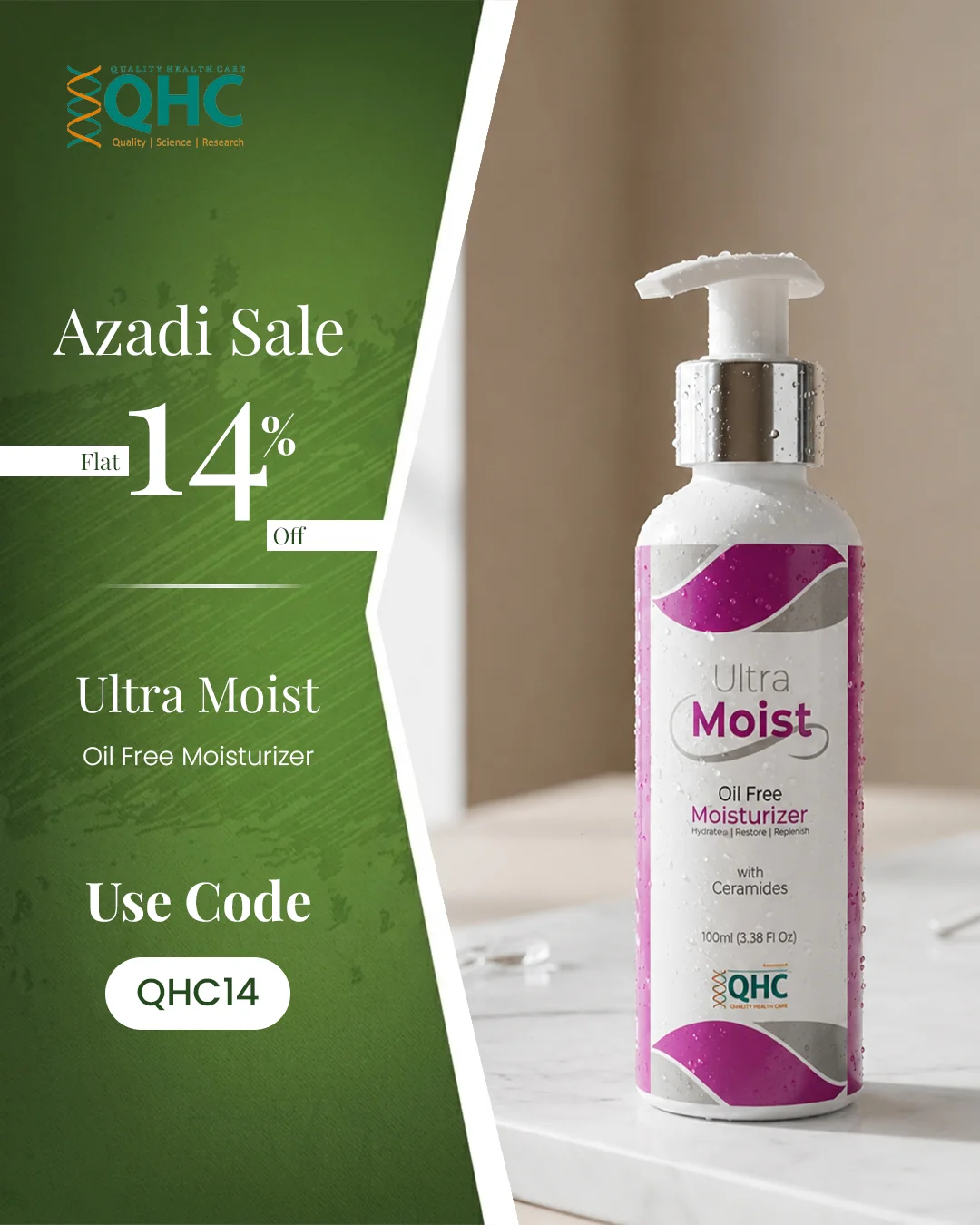
When exploring skincare products available in Pakistan, QHC may be one of the brands consumers consider. If you are looking at a QHC moisturizer, check the product's ingredients, texture, and intended skin type rather than choosing it based on the brand name alone.
A suitable moisturizer should feel comfortable, provide the hydration your skin needs, and fit naturally into your skincare routine.
Frequently Asked Questions
How often should I use moisturizer?
Most people can use moisturizer twice a day, after cleansing in the morning and evening. Your skin type and product formulation may determine whether you need it more or less often.
Is moisturizer necessary for oily skin?
Yes. Oily skin still needs hydration. Choose a lightweight, non-greasy formula that does not feel heavy on the face.
Which ingredients are good for dry skin?
Ceramides, glycerin, hyaluronic acid, and certain emollient or occlusive ingredients can help support dry skin. The ideal combination depends on how dry and sensitive your skin is.
Can I use the same moisturizer in summer and winter?
You can, but your skin's needs may change with the weather. A lightweight moisturizer may feel better during hot weather, while a richer cream may be more comfortable during dry or cold conditions.
How do I find the best moisturizer in Pakistan for my skin?
Start with your skin type, then consider the climate, texture, ingredients, and specific concerns you want to address. The most suitable product is one that provides enough hydration without causing discomfort, excessive oiliness, or irritation.
Overview
A good moisturizer should make your skincare routine simpler, not more complicated. Instead of following every new skincare trend, focus on what your skin actually needs.
Choose hydration according to your skin type, pay attention to useful ingredients, and adjust the texture according to the weather. Oily skin may prefer a lightweight gel, while dry skin may need a richer barrier-supporting cream.
Consistency also matters. Using a suitable moisturizer regularly can help maintain comfortable, hydrated skin and support the skin barrier over time.
Ultimately, the best moisturizer in Pakistan is the one that suits your skin type, works comfortably in your local climate, contains ingredients appropriate for your needs, and is practical enough to use consistently

 English
 Arabic
 French
 Spanish
 Deutsch
 Turkish
 Dutch
Dutch
 Italiano
 Russian
 Romaian
 Portuguese (Brazil)
 Greek
Greek