


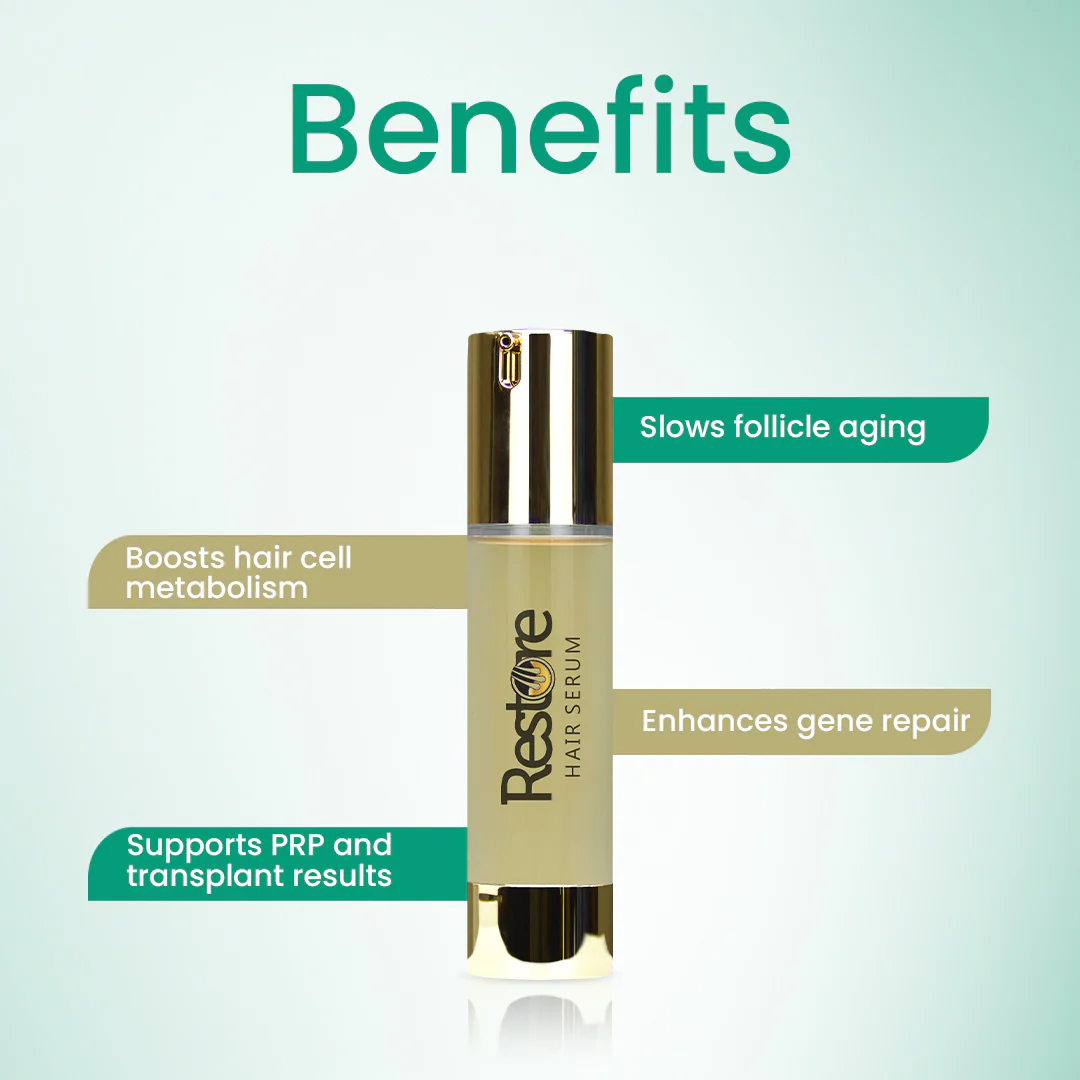
Hair fall, thinning, and weak-looking hair can be frustrating, especially when you are unsure which products are actually worth trying. A good hair care routine starts with understanding your scalp and the possible reasons behind hair changes. If you are considering QHC hair growth serum, it is useful to understand what a serum can realistically do and how to use it as part of a consistent hair care routine.
Hair serums are usually designed to support the scalp and improve the appearance and condition of hair. However, no cosmetic serum can guarantee hair regrowth for every person. Results can depend on the cause of hair loss, genetics, scalp health, nutrition, stress, and other factors.
What Is a Hair Growth Serum?
A hair growth serum is a concentrated topical product designed to be applied to the scalp or hair roots.
Depending on its formulation, a serum may contain ingredients intended to condition the scalp, support the appearance of stronger hair, improve hydration, or create a healthier environment for hair care.
Some products are designed specifically for the scalp, while others mainly improve the appearance and feel of the hair shaft.
This distinction is important because hair that looks healthier is not necessarily growing faster.
Why Does Hair Become Thin or Weak?
Hair changes can happen for many different reasons.
Temporary shedding may occur after periods of stress, illness, major lifestyle changes, or inadequate nutrition. Other people experience gradual thinning related to genetics or hormonal factors.
Hair can also appear weaker because of frequent heat styling, chemical treatments, tight hairstyles, rough brushing, or poor hair care practices.
Understanding the possible cause is important before relying on any single product.
If hair loss is sudden, severe, patchy, or accompanied by scalp symptoms, a dermatologist or qualified healthcare professional can help identify the underlying issue.
What Can a Hair Serum Do?
A well-formulated serum may have several useful roles in a hair care routine.
It may help condition the scalp, reduce dryness, improve the feel of the hair, or support a healthier-looking appearance.
Some formulations contain ingredients selected for scalp care and hair conditioning.
However, expectations should remain realistic. Cosmetic hair products are not a universal solution for every type of hair loss.
A serum can be one part of a broader routine, but it should not replace professional evaluation when there is persistent or unexplained hair loss.
Ingredients Commonly Found in Hair Serums
The ingredient list is one of the most useful things to check before buying a scalp serum.
Peptides
Peptides are used in various cosmetic formulations and may be included in hair and scalp products designed to support the appearance of healthier hair.
Their effectiveness depends on the specific ingredients, concentration, formulation, and regular use.
Caffeine
Caffeine is included in some scalp products because of its interest in hair and scalp care.
It is often marketed for supporting the appearance of stronger-looking hair, although individual products and results can vary.
Niacinamide
Niacinamide, also known as vitamin B3, is commonly used in skincare and scalp-care formulations.
It can support the skin barrier and may be useful in products designed to maintain a healthy scalp environment.
Botanical Ingredients
Some hair serums contain plant-derived extracts.
These ingredients may provide conditioning or antioxidant properties, depending on the specific botanical and formulation.
Natural ingredients are not automatically better or safer for everyone, so the complete ingredient list still matters.
How to Choose a Hair Growth Serum
Choosing a serum should begin with your actual hair and scalp needs.
Consider Your Scalp Type
If your scalp becomes oily quickly, a lightweight serum may feel more comfortable.
If your scalp is dry, you may prefer a formula that provides additional conditioning without leaving excessive residue.
People with sensitive scalps should pay close attention to fragrance and other ingredients that may cause irritation.
Check the Ingredient List
Do not rely only on the product name.
Read the ingredients and product instructions carefully. Look for information about how the product should be applied and how often it should be used.
Avoid purchasing products that make unrealistic promises such as guaranteed regrowth within a few days.
Hair growth is a biological process, and meaningful changes generally cannot be expected overnight.
Consider Your Routine
The best product is one you can use consistently.
If a serum is difficult to apply or leaves your scalp uncomfortable, you may stop using it.
A simple routine that you can follow regularly is usually more practical than a complicated routine filled with products.
How to Apply Hair Serum Correctly
Application depends on the product instructions, so always follow the directions provided with the specific serum.
Generally, scalp serums are applied directly to the scalp rather than simply coating the ends of the hair.
Part the hair into sections so the product can reach the scalp.
Use the recommended amount and gently massage it into the scalp if the instructions advise massage.
Avoid using excessive amounts. More product does not necessarily mean better results.
Wash your hands after application if required by the product directions.
When Should You Apply a Hair Serum?
Some scalp serums are designed for nighttime use, while others can be used during the day.
Follow the manufacturer's instructions rather than assuming that every serum should be used in the same way.
If the product is intended for daily use, consistency is more important than applying it several times a day.
Avoid changing the recommended frequency without a good reason.
How Long Does Hair Growth Take?
This is one of the most important questions to understand.
Hair does not grow dramatically overnight. The visible results of a hair care routine may take time, and the timeline can vary from person to person.
A person's genetics, age, health, nutrition, scalp condition, and cause of hair loss can all influence the appearance of hair density.
For this reason, be cautious about products that promise dramatic results within a very short period.
Take photos under similar lighting and conditions if you want to monitor gradual changes more objectively.
Hair Serum vs. Hair Oil
Hair serum and hair oil are not necessarily interchangeable.
Hair oils are often used to condition the hair shaft, reduce dryness, and improve softness and shine.
Scalp serums are generally formulated to deliver specific ingredients to the scalp or roots.
Some people may use both, but layering too many products can leave the scalp greasy or cause buildup.
Choose products based on your actual needs rather than using every available treatment.
Supporting Hair Health With Good Habits
A topical serum is only one part of hair care.
Your overall habits also matter.
Eat a Balanced Diet
Hair requires adequate nutrients for normal growth.
A balanced diet containing sufficient protein, vitamins, minerals, and healthy fats supports general health.
Do not take high-dose supplements simply because they are marketed for hair growth. If you suspect a nutritional deficiency, professional advice and appropriate testing may be more useful.
Avoid Excessive Heat
Frequent use of straighteners, curling irons, and high-heat blow-drying can damage the hair shaft.
Use reasonable temperatures and avoid unnecessary heat styling when possible.
Be Gentle With Wet Hair
Wet hair can be more vulnerable to breakage.
Avoid aggressive brushing or pulling. Use gentle handling and an appropriate comb or brush.
Avoid Very Tight Hairstyles
Repeated tension from tight ponytails, buns, braids, or extensions can contribute to hair breakage and, in some cases, traction-related hair loss.
Giving your scalp and hair a break from constant tension can be helpful.
Common Mistakes When Using Hair Serum
One common mistake is expecting immediate results.
Another is applying a large amount of product because more seems better.
Some people also apply serum only occasionally and expect consistent results. If a product is intended for regular use, following its recommended schedule is important.
Switching between multiple hair-growth products every few days can also make it difficult to know whether any one product is working for you.
Give your routine reasonable consistency unless you experience irritation or another problem.
When Should You See a Dermatologist?
Not every case of hair loss should be managed with cosmetic products alone.
Consider professional advice if you notice sudden or excessive shedding, clearly defined bald patches, scalp pain, persistent itching, scaling, redness, or rapidly progressing thinning.
A dermatologist can assess your scalp and help determine whether the problem may be related to genetics, hormones, nutritional issues, inflammation, medication, or another cause.
Identifying the cause is often more useful than repeatedly trying different cosmetic products.
Frequently Asked Questions
Can a hair serum stop hair loss?
A cosmetic serum cannot guarantee that it will stop hair loss. Its usefulness depends on the ingredients and the underlying reason for hair changes.
How often should I use a hair serum?
Follow the instructions provided with the specific product. Avoid using more frequently than recommended.
Can I use hair serum every day?
Some products are designed for daily use, while others are not. Check the product directions before establishing a daily routine.
Can hair serum make hair thicker?
A serum may improve the appearance and condition of hair, but actual changes in hair density depend on many factors, including the cause of thinning.
Is QHC hair growth serum suitable for everyone?
No single hair product is guaranteed to suit every person. Check the formulation and directions, consider your scalp type, and discontinue use if you experience irritation.
Conclusion
A hair growth serum can be a useful addition to a thoughtful hair and scalp care routine, but it should be viewed realistically. Consistent use, gentle hair care, a balanced diet, and attention to scalp health all contribute to better overall hair care.
If you choose QHC hair growth serum, follow its directions carefully and give your routine enough time to assess how your hair and scalp respond. If hair loss is sudden, severe, or persistent, professional evaluation is more important than relying on a cosmetic product alone.

 English
 Arabic
 French
 Spanish
 Portuguese
 Deutsch
 Turkish
 Italiano
 Russian
 Romaian
 Portuguese (Brazil)
 Greek
Greek