


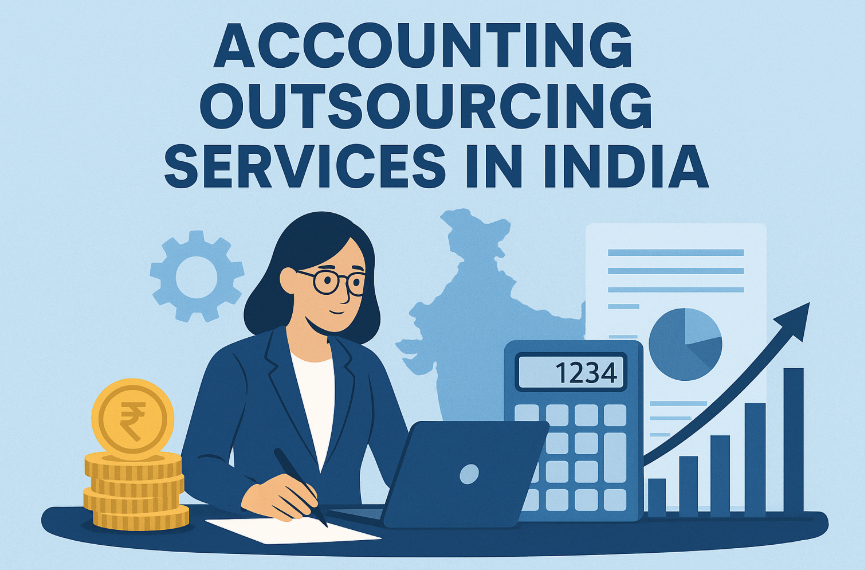
Managing accounting internally can become challenging when a business starts growing. More transactions, employees, customers, suppliers, and reporting requirements can quickly increase the workload for a finance team. Accounting Outsourcing Services in India provide U.S. businesses with an option to delegate routine and specialized accounting responsibilities to an external team. From bookkeeping and accounts payable to reconciliations and financial reporting, outsourcing can help companies manage their accounting workload while allowing internal employees to focus on financial planning, customers, and business growth.
What Is Accounting Outsourcing?
Accounting outsourcing involves transferring selected accounting responsibilities from an internal team to an external service provider.
The provider works according to agreed processes, deadlines, technology requirements, and reporting standards.
Depending on the business, outsourced accounting may include:
- Bookkeeping
- General ledger management
- Accounts payable
- Accounts receivable
- Bank reconciliation
- Payroll accounting support
- Financial reporting
- Month-end closing
- Year-end accounting
- Tax preparation support
The business remains responsible for overall financial decisions while the outsourced team handles the agreed operational activities.
Why U.S. Businesses Consider Outsourcing
Accounting departments can become expensive and difficult to scale.
Hiring experienced accounting professionals involves more than salary. Businesses may also need to consider benefits, recruiting expenses, training, office costs, technology, and employee turnover.
Outsourcing offers another approach.
Instead of building every accounting capability internally, a company can work with an external team and obtain support based on its actual workload.
This can be particularly useful for small and midsize businesses that need professional accounting assistance but do not require a large full-time finance department.
The Growing Need for Flexible Accounting Support
Business workloads rarely remain constant.
A company may have a relatively quiet month followed by a demanding period involving month-end closing, quarterly reporting, tax preparation, or year-end activities.
An internal accounting team may struggle to handle sudden increases in workload.
Outsourcing provides additional capacity when needed.
Businesses can outsource specific processes or increase the amount of support during busy periods rather than permanently increasing their payroll.
Common Accounting Functions Outsourced to India
Bookkeeping
Bookkeeping forms the foundation of accurate financial management.
Outsourced bookkeepers can record transactions, categorize expenses, reconcile accounts, and maintain financial records.
Consistent bookkeeping also makes it easier to prepare reliable financial statements.
Accounts Payable
Accounts payable outsourcing can help companies process supplier invoices and maintain accurate vendor records.
Typical activities include:
- Invoice entry
- Invoice verification
- Vendor statement reconciliation
- Payment preparation
- Payment status tracking
- Accounts payable reporting
A structured process can help reduce duplicate invoices and missed payments.
Accounts Receivable
Accounts receivable services focus on money owed to the company by customers.
Outsourced teams may assist with invoicing, payment posting, customer account reconciliation, aging reports, and collection follow-ups.
Effective receivables management can improve cash flow visibility.
Bank Reconciliation
Bank reconciliation compares transactions recorded in the accounting system with bank statements.
Regular reconciliation helps identify missing transactions, duplicate entries, and other discrepancies.
General Ledger Management
The general ledger contains the financial information used to prepare many business reports.
Maintaining accurate ledger accounts is essential for reliable financial statements and management reporting.
Financial Reporting
Businesses need financial reports to understand performance.
An outsourced accounting team may prepare reports such as:
- Profit and Loss Statements
- Balance Sheets
- Cash Flow Statements
- General Ledger Reports
- Accounts Receivable Aging
- Accounts Payable Aging
These reports provide management with useful information for decision-making.
How Outsourcing Can Improve Efficiency
Accounting includes many repetitive processes.
When internal employees spend much of their time entering transactions or reconciling accounts, they have less time available for analysis and planning.
Outsourcing can shift routine work to a dedicated team.
This allows internal finance professionals to concentrate on activities such as:
- Budgeting
- Forecasting
- Financial analysis
- Business planning
- Cost management
- Management reporting
The goal is not simply to reduce work. It is to make better use of the people already inside the organization.
Access to Accounting Technology
Technology is an important part of modern outsourced accounting.
Many providers work with cloud-based accounting platforms and financial management systems.
Common platforms may include:
- QuickBooks
- Xero
- Sage
- NetSuite
- Microsoft Dynamics
- Other cloud accounting systems
Cloud technology allows authorized teams in different locations to collaborate on financial records.
It can also support automated bank feeds, digital documents, recurring transactions, reporting, and workflow management.
U.S. Accounting Knowledge Still Matters
A U.S. business should not choose an outsourcing provider simply because it offers lower costs.
The provider needs to understand the company's accounting environment and applicable U.S. requirements.
This is particularly important for businesses with specific reporting, tax, payroll, or industry-related needs.
Before outsourcing, companies should ask about the provider's experience with U.S.-based clients and the types of accounting work its professionals regularly handle.
Data Security and Confidentiality
Accounting data is among the most sensitive information a company possesses.
Outsourced accounting teams may have access to:
- Bank information
- Customer records
- Vendor details
- Payroll information
- Financial statements
- Invoices
- Tax documents
Security should therefore be discussed before the relationship begins.
Businesses should review access controls, secure file-sharing methods, password policies, data backup procedures, and employee access.
Only authorized personnel should have access to financial information.
Managing Communication Across Locations
Working with an offshore accounting team requires clear communication.
Fortunately, modern collaboration tools make it easier for U.S. companies and international accounting teams to work together.
Businesses can use:
- Video meetings
- Project-management platforms
- Cloud accounting systems
- Secure document portals
- Messaging applications
A defined communication schedule can prevent small questions from becoming larger accounting problems.
What Should You Look for in a Provider?
Choosing an accounting outsourcing company should be approached carefully.
Relevant Experience
Ask whether the provider has experience working with businesses similar to yours.
Qualified Professionals
Understand who will perform the work and what level of accounting expertise they have.
Technology
Make sure the provider can work with your existing accounting platform.
Quality Control
Ask how work is reviewed before it is delivered.
Security
Review the provider's procedures for protecting financial information.
Communication
Determine who will be your primary contact and how issues will be escalated.
Scalability
Your accounting workload may increase as the business grows. Choose a provider that can accommodate additional responsibilities when necessary.
Avoiding Common Outsourcing Problems
Outsourcing can be highly effective, but poor planning can create unnecessary complications.
One common mistake is failing to define responsibilities.
Before work begins, the company and provider should agree on who handles each accounting task.
Another problem is insufficient documentation.
Processes should be clearly documented so outsourced staff understand company-specific procedures.
Businesses should also establish deadlines and reporting expectations.
How to Start the Outsourcing Process
A gradual approach can make the transition easier.
Start by identifying accounting tasks that consume the most internal time.
Next, determine which responsibilities can safely be outsourced.
Prepare process documentation and establish access to the required accounting systems.
Once the provider begins working, monitor performance closely during the initial period.
Regular reviews can identify errors, communication gaps, and opportunities to improve workflows.
When Is Outsourcing Most Useful?
Accounting outsourcing can be particularly useful when:
- The business is growing quickly.
- Internal accounting staff are overloaded.
- Recruiting qualified employees is difficult.
- Transaction volumes are increasing.
- Management wants more consistent bookkeeping.
- The company needs support during tax or year-end periods.
- Accounting costs are becoming difficult to manage.
- The business needs additional specialized accounting skills.
A hybrid model can also work well.
For example, a company might keep its controller or finance manager internally while outsourcing bookkeeping, reconciliations, and accounts payable.
Measuring the Value of Outsourcing
Businesses should establish clear performance measures.
Useful indicators include:
- Bookkeeping turnaround time
- Reconciliation completion
- Invoice processing time
- Reporting accuracy
- Number of accounting errors
- Month-end close duration
- Accounts payable processing time
- Accounts receivable collection performance
These measurements provide a practical way to determine whether outsourcing is improving the accounting function.
Building a Long-Term Partnership
The most successful outsourcing relationships develop over time.
Once a provider understands the company's processes, reporting requirements, accounting systems, and industry, it can often provide more efficient support.
Regular meetings can help both sides identify areas for improvement.
Businesses may also gradually outsource additional responsibilities once confidence has been established.
This creates a scalable accounting model that can evolve with the company.
Final Thoughts
Accounting Outsourcing Services in India can give U.S. businesses access to flexible accounting support for a wide range of financial responsibilities. From bookkeeping and accounts payable to financial reporting, reconciliations, and general ledger management, outsourcing can reduce routine workloads while helping businesses maintain organized financial records.
However, choosing an outsourcing partner should involve more than comparing costs. U.S. accounting knowledge, technology experience, data security, communication, quality control, and scalability all deserve careful consideration.
When these elements are managed properly, outsourcing can become a valuable extension of an internal finance team. It can provide additional capacity, improve accounting consistency, and give business owners and finance managers more time to focus on planning, analysis, and long-term growth.

 English
 Arabic
 French
 Spanish
 Portuguese
 Turkish
 Dutch
Dutch
 Italiano
 Russian
 Romaian
 Portuguese (Brazil)
 Greek
Greek